A single conversation can sometimes change the course of a person’s life, especially when it sparks an opportunity backed by determination and hard work. For North West farmer Mems Ramaila, a chance encounter with a German tourist at a restaurant in Vilakazi Street, Soweto, became the catalyst for building one of South Africa’s most inspiring women-led beekeeping businesses. What started as curiosity about the bees naturally found on her lucerne farm has grown into Bee African, a successful agribusiness producing premium honey and a range of value-added bee products. Her journey demonstrates how innovation, continuous learning and international collaboration can unlock new opportunities within South Africa’s agricultural sector. As the business continues to expand, Ramaila is not only creating a successful enterprise but also promoting environmental sustainability, education and economic empowerment. Her story serves as an example of how vision and perseverance can transform a simple idea into a thriving agricultural business.
Based near Brits in the North West Province, Ramaila originally focused on lucerne farming before considering how to make productive use of the bees that constantly swarmed around her property. Rather than viewing the insects as a normal part of the farming environment, she began asking how they could contribute to the growth of her business. Her curiosity led her to research beekeeping extensively, where she discovered the industry’s strong commercial potential as well as its important environmental benefits. Honey production offered an opportunity to diversify her farming operation while supporting biodiversity through pollination. This willingness to explore new possibilities laid the foundation for what would later become Bee African. Her experience highlights the importance of innovation and diversification in modern agriculture.
The turning point came in 2019 during a casual conversation with a German tourist while visiting Vilakazi Street in Soweto. During their discussion, the tourist introduced Ramaila to internationally acclaimed honey judge Arie Krieke, a connection that would prove invaluable to her future success. Later that same year, Krieke travelled to South Africa and spent three weeks on her farm sharing his knowledge of beekeeping and honey production. This hands-on mentorship gave Ramaila practical insights into managing bee colonies, producing quality honey and developing a sustainable beekeeping enterprise. Combined with the research she had already undertaken, the training equipped her with the confidence and technical skills needed to establish a successful business. The experience demonstrated how international knowledge sharing can accelerate agricultural development and entrepreneurship.
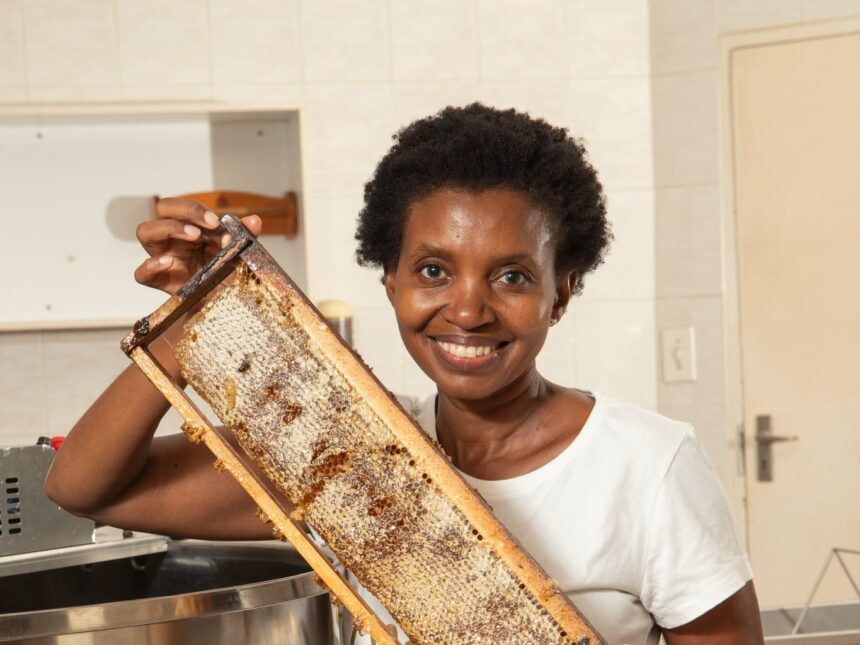
Bee African has since grown into a vibrant agribusiness with more than 50 beehives spread across the farm. The constant activity of bees across the property reflects the business’s steady growth and increasing production capacity. While honey remains a core product, the company has evolved beyond primary production by investing in value-added agro-processing. This approach enables the business to generate higher returns while offering customers a broader range of premium products. Diversification has also strengthened the company’s resilience by reducing its reliance on a single source of income. Today, Bee African stands as an example of how agricultural enterprises can create additional value through innovation and product development.
An important milestone in Ramaila’s business journey came through her participation in the Partnering in Business with Germany Programme. This initiative is supported by the Department of Trade, Industry and Competition, the German Federal Ministry for Economic Affairs and Climate Action and the German Corporation for International Cooperation. The programme aims to strengthen trade and investment relationships between South Africa and Germany while helping emerging South African exporters gain access to international markets. Through the programme, Ramaila travelled to Germany in 2025 for a three-week business development visit. The experience exposed her to international business practices, export opportunities and valuable industry networks that continue to support the growth of Bee African.
The visit to Germany proved to be a significant turning point for the business. In addition to learning about European market requirements, Ramaila secured a Memorandum of Agreement with respected German beekeeping company Kriel Honig. The partnership has already produced tangible benefits for Bee African and strengthened its technical capabilities. In February 2026, Kriel Honig owner Utha Bonowsky spent a month in South Africa training the Bee African team in value addition and the beneficiation of bee products. This practical knowledge enabled the business to expand beyond traditional honey production into manufacturing premium specialty products that appeal to higher-value markets. The collaboration illustrates how international partnerships can strengthen local agricultural businesses through skills transfer and innovation.
Following the specialised training, Bee African introduced a range of new products that significantly expanded its offering. The company now manufactures premium beeswax candles, honey condiments and several specialty bee-based products designed for consumers seeking quality food and wellness items. Rather than competing solely in the bulk honey market, the business has successfully positioned itself within the premium segment. According to Ramaila, consumer response has been overwhelmingly positive, with demand increasing rapidly through pop-up markets and other sales channels. The popularity of these products demonstrates growing consumer interest in locally produced, high-quality agricultural goods with added value. Product diversification has become a major driver of the company’s continued commercial success.
The increasing demand for Bee African’s products has also attracted the attention of major shopping centres, which have invited the business to showcase its products to a wider customer base. This growing market recognition reflects the strength of the company’s brand and the quality of its product range. Ramaila believes Bee African offers customers more than just honey because the business promotes health and wellness through natural bee products. Honey and related products are valued for their nutritional qualities and have long been associated with supporting overall wellbeing, including digestive health. Consumers increasingly appreciate products that combine quality, authenticity and natural ingredients. This changing consumer preference continues to create new opportunities for businesses operating within the premium food and wellness sector.
Despite its success, Ramaila believes significant opportunities remain for further expansion. One of her primary goals is to increase production and contribute to improving South Africa’s domestic honey supply. The country continues to rely heavily on imported honey, creating opportunities for local producers to strengthen national production capacity. However, she notes that access to land remains one of the biggest obstacles facing black farmers seeking to expand within the beekeeping industry. Addressing such barriers would enable more entrepreneurs to participate in the agricultural value chain while supporting rural economic development. Expanding local honey production would also strengthen food security and reduce dependence on imports.
Bee African’s impact extends beyond commercial success through its commitment to environmental education and community engagement. The company regularly welcomes school learners to the farm, where they learn about the critical role bees play in pollination, biodiversity and sustainable agriculture. These educational visits help young people develop a greater appreciation for environmental conservation and the importance of protecting pollinator populations. In addition, the business has diversified into manufacturing beekeeping equipment, producing customised gift boxes and offering educational farm experiences for visitors. These activities generate additional income while promoting awareness of sustainable farming practices. By combining business with education, Bee African is helping to inspire future generations of agricultural entrepreneurs and environmental stewards.
Although Bee African currently employs three people, Ramaila believes the business has the potential to create many more employment opportunities as it continues to grow. She remains optimistic about the future thanks to the support received from the Department of Trade, Industry and Competition and international partners. Her long-term vision includes expanding production, creating additional jobs and empowering more women and young people to participate in the beekeeping value chain. As one of the few women leading a successful enterprise in South Africa’s largely male-dominated beekeeping industry, she is helping to break barriers while creating new opportunities for others. Her story demonstrates that innovation, education and strategic partnerships can transform agricultural enterprises into engines of economic growth and community development. From a simple conversation in Soweto to an internationally connected agribusiness, Mems Ramaila has built Bee African into a powerful example of what is possible when curiosity is matched with determination, knowledge and a commitment to sustainable agriculture.
Join 'Farmers Mag' WhatsApp Channel
Get the latest Farming news and tips delivered straight to your WhatsApp
CLICK HERE TO JOIN