Agriculture can become more inclusive when farmers with disabilities are given access to knowledge, appropriate technology and opportunities to build sustainable businesses. Matebogo Victoria from Randfontein, Gauteng, is an example of a farmer who has used her experience as a deaf entrepreneur to create opportunities for herself and others in the deaf community. Her journey shows that disability does not remove a person’s ability to participate in farming, but the agricultural environment can create barriers that need to be addressed. These barriers include communication difficulties, inaccessible equipment, limited access to training and challenges in finding suitable business support. Victoria’s experience also highlights why disability-inclusive agriculture should focus on skills, practical access and business development rather than dependence on handouts.
Victoria began working the land with the intention of serving the deaf community and demonstrating what could be achieved through agricultural entrepreneurship. She established VoiceOut Deaf with the aim of providing services to the deaf community and creating opportunities in a sector where communication can be a major challenge. She said being deaf in a hearing world was difficult, and agriculture created additional obstacles because communication is important when dealing with suppliers, attending markets and interacting with neighbouring farmers. These everyday interactions can affect a farmer’s ability to obtain information, negotiate business arrangements and build relationships within the agricultural sector. Her response was to create an enterprise that could address some of these challenges while also helping other deaf people gain exposure to business.
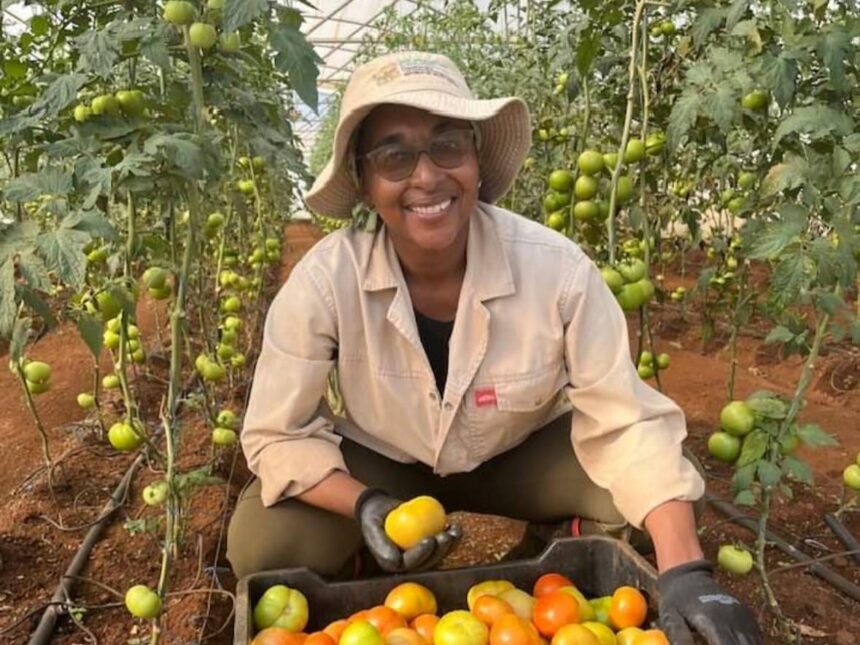
VoiceOut Deaf Farming was registered as a private company in 2017, although Victoria said the business had been operating since 2016. The enterprise focuses on vegetable production and has selected crops that Victoria identified as having significant market demand and being suitable for production. These include tomatoes, green peppers, red peppers and yellow peppers. The business also provides employment opportunities for members of the deaf community in the West Rand region and supports women, youth and people with disabilities among its employees. This approach connects farming with broader economic empowerment by using agricultural production as a platform for developing skills and creating work opportunities.
The challenges faced by deaf farmers can extend well beyond the physical work required on a farm. Victoria described the difficulty of learning agricultural terminology and understanding new technologies while also dealing with barriers to communication and access. She identified problems involving business practices that can reduce access for deaf people as well as inconsistent standards for interpreting services in different environments. She also highlighted difficulties with online training, including poor network connectivity that became particularly challenging during the Covid-19 period. These barriers can make it harder for deaf entrepreneurs to access the same agricultural knowledge and business information available to hearing farmers.
Access to education and agricultural knowledge is especially important because farming is a business that requires informed decisions. Victoria explained that she had to find ways to study further and learn more about agriculture before she could strengthen her operation. Her experience included losing crops after starting to plant without sufficient knowledge, which taught her the cost of entering agriculture without adequate preparation. She now encourages people to learn about the field they want to enter before seeking resources or starting an enterprise. Her message applies to both disabled and non-disabled entrepreneurs because farming requires an understanding of production, business practices and compliance.
Victoria’s approach to empowerment is therefore centred on knowledge and practical skills. She believes the deaf community needs stronger access to basic business fundamentals so that people can participate more effectively in the economy. Her deaf business development project uses vegetable farming to introduce members of the deaf community to entrepreneurship and the realities of running a business. This model is different from simply providing short-term assistance because it aims to build capabilities that people can use over time. Agricultural training, business education and practical experience can give emerging farmers a stronger foundation from which to develop sustainable enterprises.
Technology also has an important role to play in making farming more accessible to people with disabilities. Adaptive agricultural tools can reduce physical barriers and allow farmers to perform tasks that may otherwise be difficult. Examples include wheelchair-accessible farm equipment, voice-activated devices and specialised tractors designed to accommodate different mobility needs. For deaf farmers, accessible communication technologies and appropriate digital skills can also improve access to agricultural information and business services. The right technology does not remove the need for agricultural knowledge, but it can help ensure that physical or communication barriers do not unnecessarily prevent capable people from participating in farming.
Victoria has called for greater attention from government and the agricultural sector to ensure that people with disabilities are properly accommodated. She believes research should play a central role in identifying effective models and improving agricultural practices for people with disabilities. This could help identify practical solutions for farms, equipment, training programmes and digital services that are more accessible. She also pointed out that many farms are not designed with people with disabilities in mind and that agricultural tools can sometimes be too heavy or difficult to handle. Research and digital skills training could therefore help identify ways to make agricultural education, equipment and production systems more inclusive.
The need for disability-inclusive farming is not limited to providing accessible equipment. Farmers also need access to markets, agricultural information, financial knowledge, training and business networks. A farmer who cannot easily communicate with suppliers or access training may face disadvantages even when the physical production environment is suitable. Inclusive agricultural programmes should therefore consider the complete farming journey, from learning how to produce crops through to managing a business and reaching customers. Creating these opportunities can help people with disabilities become active participants in the agricultural economy rather than being viewed only as beneficiaries of support programmes.
Victoria’s story also demonstrates the importance of representation in agriculture. By building her own farming enterprise and creating opportunities for deaf people, she is showing that people with disabilities can contribute to food production and rural economic activity. Her experience challenges the idea that disability should automatically limit a person’s role in farming. At the same time, her story does not ignore the real barriers that disabled farmers face, including inaccessible tools, communication challenges and gaps in training. The lesson is that inclusion requires both individual determination and changes that make agricultural systems more accessible.
For aspiring farmers, Victoria’s advice is practical and direct. A disability should not be treated as the defining factor in deciding whether someone can enter agriculture, but it is important to understand the requirements of the business. Farmers need knowledge of what they intend to produce, how they will manage their operation and what standards they must meet. They also need to understand that agricultural production involves risks, and mistakes made without adequate preparation can result in financial losses and wasted crops. Seeking agricultural knowledge before investing heavily in production can help emerging farmers make better decisions and build more realistic business plans.
Matebogo Victoria’s journey from Randfontein shows how farming can become a tool for empowerment when people have the opportunity to develop their skills and build enterprises. Her work through VoiceOut Deaf Farming connects vegetable production with employment, entrepreneurship and greater participation by the deaf community. Her experience also makes clear that disability-inclusive agriculture requires more than encouragement because farmers need practical access to education, technology, communication services and suitable equipment. Research into adaptive farming tools and digital skills can help identify solutions that make agricultural work more accessible without lowering expectations for business performance. A more inclusive agricultural sector will be one where people with disabilities have the knowledge, tools and opportunities to build productive businesses and contribute meaningfully to food production.
Join 'Farmers Mag' WhatsApp Channel
Get the latest Farming news and tips delivered straight to your WhatsApp
CLICK HERE TO JOIN