Sustainable farming practices are becoming increasingly important in South Africa as farmers face challenges such as climate change, water scarcity and rising input costs. Agriculture remains a key sector in South Africa, supporting food security, employment and rural development across both commercial and small-scale farming systems. However, traditional farming methods alone are no longer enough to maintain productivity under changing environmental conditions. Farmers are now required to adopt practices that protect natural resources while still ensuring profitable production. Sustainable agriculture offers a balanced approach that supports both economic growth and environmental protection.
One of the most important sustainable farming practices is soil conservation. Healthy soil is the foundation of successful farming because it supports crop growth and nutrient availability. Farmers are encouraged to use methods such as crop rotation, cover cropping and reduced tillage to maintain soil fertility and prevent erosion. These practices help improve soil structure and increase its ability to retain moisture, which is especially important in drought-prone areas. In regions of South Africa where rainfall is unpredictable, protecting soil health directly improves long-term agricultural productivity. Good soil management also reduces the need for expensive chemical fertilisers over time.
Water conservation is another critical component of sustainable agriculture. Many farming areas in South Africa experience water shortages, making efficient water use essential for survival and productivity. Farmers are increasingly adopting drip irrigation systems, rainwater harvesting and moisture monitoring technologies to reduce water waste. These systems deliver water directly to plant roots, improving efficiency and reducing evaporation losses. Proper scheduling of irrigation also ensures that crops receive the right amount of water at the right time. Sustainable water management helps farmers reduce costs while protecting one of the country’s most valuable natural resources.
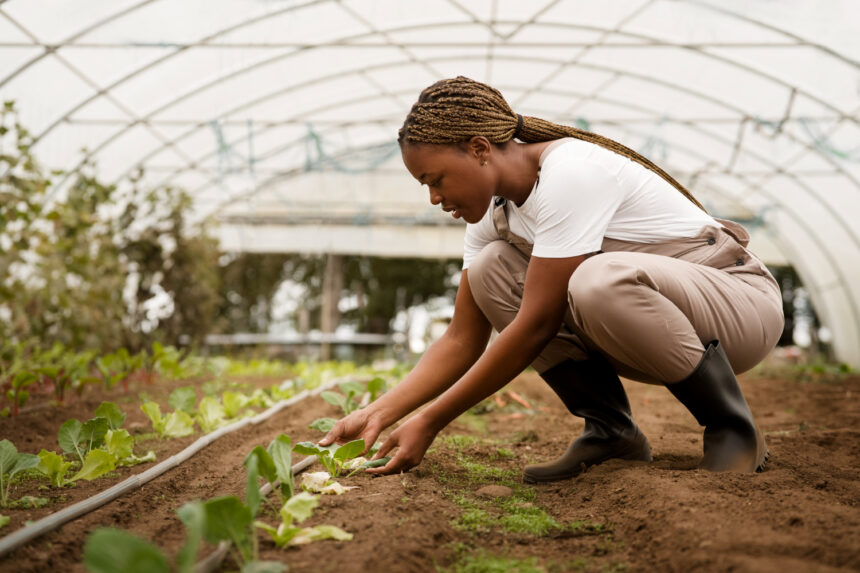
Crop diversification plays a major role in improving resilience and reducing farming risks. By growing different types of crops, farmers reduce their dependence on a single income source and improve soil health through natural nutrient cycling. Crop rotation also helps break pest and disease cycles, reducing the need for chemical pesticides. Many farmers are now combining staple crops with high-value vegetables and legumes to improve profitability. This approach not only strengthens farm income but also improves local food availability. Diversified farming systems are more stable during climate shocks such as droughts or floods.
Livestock integration is another sustainable practice that is widely used in mixed farming systems. Integrating crops and livestock allows farmers to recycle nutrients through manure, which improves soil fertility naturally. Animals such as cattle, goats and chickens contribute to a more efficient farming ecosystem when managed properly. Poultry manure, for example, can be used as organic fertiliser for vegetable production. This reduces dependence on synthetic fertilisers and lowers production costs. Integrated farming systems also create multiple income streams, which improves financial stability for farmers.
The use of technology and innovation is also transforming sustainable farming practices in South Africa. Precision agriculture tools such as soil sensors, drones and mobile farming applications help farmers make informed decisions based on real-time data. These technologies improve efficiency by reducing waste and optimising resource use. Many farmers are also adopting climate-smart agriculture techniques that focus on adapting to changing weather patterns. Renewable energy solutions, such as solar-powered irrigation systems, are becoming more common in rural farming areas. Technology helps bridge the gap between traditional farming knowledge and modern agricultural demands.
Sustainable farming also depends on responsible pest and disease management. Instead of relying heavily on chemical pesticides, farmers are encouraged to use integrated pest management strategies. These include biological control methods, natural predators and crop monitoring techniques to reduce pest populations. This approach protects beneficial insects and reduces environmental damage caused by chemicals. It also improves food safety and reduces production costs over time. Healthier ecosystems contribute to stronger and more resilient farming systems.
Community involvement and agricultural training are essential for promoting sustainable farming practices. Extension services, farmer cooperatives and training programmes help farmers learn new techniques and improve productivity. Knowledge sharing between farmers also strengthens local agricultural systems and encourages innovation. In rural areas, sustainable farming practices contribute to job creation and improved household food security. Farmers who adopt sustainable methods often become role models within their communities, encouraging wider adoption of best practices. Education remains a key driver of long-term agricultural transformation.
Sustainable farming practices offer a clear path toward stronger, more resilient agriculture in South Africa. They help farmers protect natural resources while maintaining productivity and profitability in a changing environment. By focusing on soil health, water efficiency, crop diversity and innovation, farmers can reduce risks and improve long-term outcomes. These practices also support national goals of food security, rural development and economic stability. As more farmers adopt sustainable methods, agriculture in South Africa becomes better prepared to meet future challenges while supporting both people and the environment.
Join 'Farmers Mag' WhatsApp Channel
Get the latest Farming news and tips delivered straight to your WhatsApp
CLICK HERE TO JOIN