

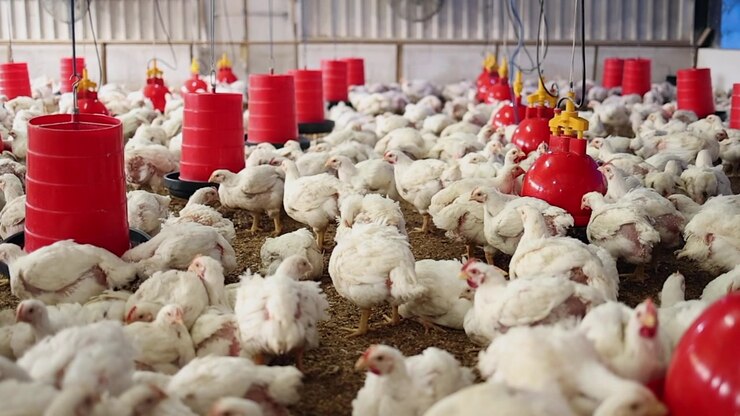
Southern Africa’s poultry industry is being urged to move beyond a model that largely separates small survivalist producers from large integrated companies and deliberately develop a stronger middle tier of businesses. Ishmael Sunga, CEO of the Southern African Confederation of Agricultural Unions, argues that the sector needs a new generation of professionalised, medium-scale enterprises capable of supplying formal markets, creating jobs and expanding ownership across the poultry value chain. The proposal places young women and men at the centre of efforts to develop this emerging enterprise class. It also shifts attention from simply increasing the number of poultry producers to building businesses that can operate sustainably and compete commercially. For the region’s poultry sector, the development of this so-called missing middle could become an important part of efforts to broaden participation in agricultural value chains.
The missing middle refers to the space between micro and small enterprises operating at survival level and large companies with significant control across areas such as feed, production, processing, distribution and market access. Sunga argues that this space remains underdeveloped, leaving many emerging poultry businesses without the scale and capabilities needed to become established commercial enterprises. These businesses may have moved beyond the level where basic micro-enterprise support is appropriate, but still struggle to secure affordable finance, meet formal standards consistently or win large commercial contracts. The challenge is therefore broader than a shortage of funding because businesses also need suitable infrastructure, management capacity, reliable markets, biosecurity systems and stronger bargaining power. Without these foundations, promising enterprises can remain trapped below the scale required to participate effectively in formal value chains.
Poultry provides several opportunities for developing medium-scale enterprises because businesses can operate across many different parts of the value chain. Entrepreneurs can participate in broiler and egg production, feed distribution, hatcheries, day-old chick supply, veterinary services, poultry housing and other technical services. There are also opportunities in slaughtering, cold storage, transportation, packaging, aggregation, branding and distribution. This means that building the missing middle does not require every young entrepreneur to become a poultry farmer because commercially viable businesses can be developed around the services and infrastructure that support production. A broader enterprise base could therefore create opportunities for ownership and employment across the poultry economy rather than concentrating participation at the farm level.
Young women and men are being positioned as an important part of this enterprise development strategy because they represent the next generation of business leadership in the agricultural sector. Their ability to use digital tools, mobile payments, online marketing, data systems and emerging technologies can help poultry businesses improve how they manage operations and connect with customers. Young entrepreneurs can also use digital platforms to maintain business records, monitor production, communicate with suppliers and identify market opportunities. Women entrepreneurs have additional opportunities to build on their involvement in food trading, community supply networks and local distribution systems. Supporting these entrepreneurs with commercial skills, technical knowledge and access to appropriate infrastructure could help create businesses capable of moving beyond informal trading into structured participation in poultry value chains.
Professionalisation is another important part of developing the missing middle because commercial growth requires businesses to operate with systems that can withstand the demands of formal markets. Poultry enterprises need proper production planning, financial controls, traceability, biosecurity protocols, quality assurance and reliable record-keeping. They also need the ability to manage contracts, meet customer requirements and maintain consistent production standards. These requirements are particularly important when businesses want to supply retailers, processors, wholesalers, public institutions or food-service companies. Professionalisation can therefore help turn emerging poultry operators into businesses that are more capable of demonstrating their performance to financiers and potential commercial partners.
The development of stronger medium-scale enterprises will require more than training programmes and business motivation. Entrepreneurs need an enterprise-development environment that brings together finance, infrastructure, technical assistance, market access and business support. Staged finance could allow businesses to progress from start-up support and expansion funding to working capital, asset finance and commercial credit as they demonstrate stronger performance. Shared infrastructure such as hatcheries, abattoirs, cold rooms, feed depots and logistics hubs could also help reduce some of the barriers faced by individual enterprises. Structured market agreements with retailers, wholesalers, processors, public institutions and food-service businesses could provide emerging companies with clearer routes into formal markets.
Different stakeholders also have distinct roles to play in building this enterprise base. Policymakers and regulators can align youth, agriculture, small-business and industrial development measures while reducing unnecessary barriers to formalisation and maintaining strong animal health and food safety requirements. Development organisations can move beyond short-term project support by combining incubation, coaching, certification, infrastructure access and market linkages within longer-term enterprise programmes. Development finance institutions and commercial lenders can explore financing models that connect funding to business performance, commercial agreements and clear professionalisation milestones. Industry players can contribute through supplier-development initiatives, technical support, structured purchasing arrangements and opportunities for local businesses to participate in formal supply chains.
Producer organisations and training institutions can also help create a stronger pipeline of entrepreneurs by providing mentorship, peer learning, certification, business coaching and practical exposure to commercial poultry operations. This support can help young business owners understand the difference between producing poultry and running a commercially sustainable enterprise. Entrepreneurs need to understand production costs, pricing, customer requirements, disease risks, cash flow and contractual obligations if they are to grow beyond small-scale operations. Practical experience can also help them identify opportunities outside primary production where specialised businesses may be able to serve the wider poultry industry. Building these capabilities is essential if the missing middle is to become a functioning part of the regional poultry economy rather than remaining a development concept.
The proposed approach also recognises that transformation cannot be measured only by the number of people who enter poultry production. The strength of the sector will also depend on whether new enterprises can grow, employ people, access formal markets and develop sustainable commercial relationships. A poultry industry with more medium-scale businesses could create additional routes for young entrepreneurs to build ownership while also strengthening links between smaller producers and larger companies. It could also provide opportunities for businesses to specialise in areas such as logistics, processing, inputs, marketing and technical services. This broader approach would make enterprise development part of the entire poultry value chain rather than treating it solely as a smallholder farming initiative.
For Southern Africa’s poultry industry, the missing middle represents a structural challenge that requires coordinated action across government, finance, industry, producer organisations and development institutions. Sunga’s proposal places professionalisation, youth and women’s enterprise development, market access and commercial discipline at the centre of that effort. The objective is not simply to create more small poultry projects, but to help viable businesses reach a scale where they can operate professionally and participate meaningfully in formal markets. Developing this layer of enterprises could broaden ownership, support employment and strengthen participation across the poultry value chain. The future transformation of Southern Africa’s poultry industry will therefore depend not only on how much the sector produces, but also on how successfully it creates commercially sustainable businesses between survivalist production and large-scale integrated operations.
Join 'Farmers Mag' WhatsApp Channel
Get the latest Farming news and tips delivered straight to your WhatsApp
CLICK HERE TO JOIN




