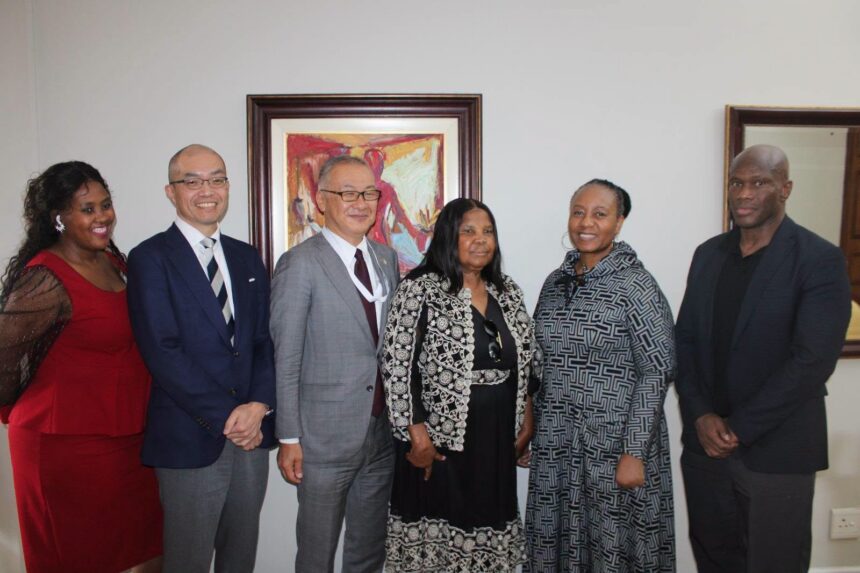
Deputy Minister of Agriculture Nokuzola Capa held a bilateral engagement with His Excellency Shimizu Fumio, Ambassador of Japan to South Africa, at the Industrial Development Corporation (IDC), with discussions centred on strengthening cooperation in agriculture and food security. The engagement focused on identifying opportunities for greater collaboration in investment, agricultural value chains and sustainable agricultural development. Food security remains closely linked to the ability to build productive agricultural systems, strengthen value chains and attract investment into areas that can support long-term production. The meeting provided an opportunity to consider how partnerships between South Africa, Japan and other development stakeholders can contribute to these objectives. The discussions also placed investment and cooperation within the wider goal of supporting inclusive economic growth through agriculture.
A key focus of the engagement was the need to strengthen agricultural value chains and create opportunities for investment across different parts of the agricultural economy. Strong value chains connect farmers and producers with markets, infrastructure, processing facilities, logistics and other services required to move agricultural products from production to consumers. Investment in these areas can help address constraints that affect agricultural development and can support greater participation in agricultural markets. Cooperation with international partners can also provide opportunities to mobilise financial and technical resources for projects that contribute to sustainable agricultural production. The discussions between Deputy Minister Capa and Ambassador Shimizu therefore highlighted the importance of partnerships that extend beyond individual agricultural projects and support broader value chain development.
The engagement also highlighted plans to bring together CEOs from SADC Development Finance Institutions and a wide range of strategic partners. These include Special Economic Zone authorities, corridor management institutions, utilities, multilateral development banks, development partners, private-sector investors and operators, insurers and guarantee providers. Bringing these stakeholders into the same platform can help improve coordination between institutions involved in developing and financing major economic projects. Each group can play a different role, from providing infrastructure and finance to supporting risk management, investment and project implementation. Greater coordination can help create a clearer pathway for projects that require multiple forms of support before they can reach implementation.
A proposed collaboration would focus on aligning a corridor-to-SEZ investment pipeline and identifying priority initiatives with potential for development. Economic corridors can connect areas of production with markets, infrastructure and industrial centres, while SEZs can provide platforms for investment and industrial activity. Aligning these elements can help identify projects that have links to agricultural production, processing, logistics and other parts of the value chain. The discussions also proposed establishing a follow-through mechanism to help move priority projects towards bankability over the next 12 to 18 months. This approach places emphasis on turning identified opportunities into structured projects that can attract the necessary investment and financing.
The involvement of development finance institutions will be important in supporting projects that require significant capital and long-term planning. Development finance institutions can help assess projects, structure funding and work with other investors and partners to address financing requirements. Insurers and guarantee providers can also play a role in managing certain project risks and supporting investor confidence. At the same time, private-sector investors and operators can bring capital, technical expertise and operational capacity to projects that reach the required stage of development. Bringing these stakeholders together creates a framework for addressing different aspects of agricultural and infrastructure investment in a coordinated manner.
The proposed collaboration also has implications for food security because investment in agricultural infrastructure and value chains can support the movement of food from producers to markets. Stronger production systems need reliable infrastructure, appropriate financing, functioning markets and efficient logistics to operate effectively. Agricultural investment can also support opportunities for farmers and businesses involved in processing, storage, transport and other activities within the value chain. By connecting agricultural development with broader infrastructure and investment planning, stakeholders can address multiple factors that influence the performance of the sector. The discussions therefore placed food security within a wider framework of sustainable investment and economic development.
For South Africa and the broader SADC region, cooperation between governments, development finance institutions, private companies and international partners can support the development of projects that cross institutional and geographic boundaries. Agricultural value chains often depend on infrastructure and markets that extend beyond individual communities or countries. Coordinated investment planning can help identify opportunities that contribute to regional trade, production and economic activity while supporting agricultural development. The proposed engagement between SADC development finance institutions and other stakeholders reflects an effort to create stronger links between financing, infrastructure and investment opportunities. Moving these initiatives forward will depend on continued coordination, detailed project preparation and the ability to develop projects that meet the requirements of potential financiers and investors.
The bilateral engagement between Deputy Minister Nokuzola Capa and Ambassador Shimizu Fumio placed food security, investment and agricultural value chain development at the centre of discussions on future cooperation. The proposed involvement of development finance institutions, SEZ authorities, corridor institutions, utilities, development partners and private-sector stakeholders provides a broad platform for advancing investment opportunities. The planned 12 to 18-month follow-through period also gives stakeholders a defined timeframe for identifying priorities and working towards project bankability. The focus on stronger partnerships and coordinated investment reflects the need for practical collaboration to support sustainable agricultural development. As these discussions progress, the emphasis remains on unlocking investment, strengthening agricultural value chains and supporting food security and inclusive economic growth.
Join 'Farmers Mag' WhatsApp Channel
Get the latest Farming news and tips delivered straight to your WhatsApp
CLICK HERE TO JOIN