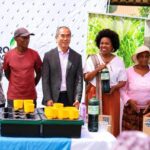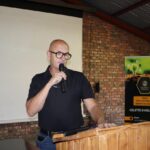
Heavy rains sweeping across the Eastern Cape could not dampen the enthusiasm of the Ngonyama community in Ward 2 of Dutywa, within the Mbhashe Local Municipality, as residents gathered in large numbers for the official opening of the Ngonyama Shearing Shed. The community came together to witness an important development aimed at supporting local livestock farmers and strengthening wool production in the area. The facility was officially opened by Eastern Cape MEC for Agriculture Nonceba Kontsiwe alongside Mbhashe Executive Mayor Dr. Samkelo Janda. The event highlighted the role of agricultural infrastructure in supporting rural livelihoods and creating opportunities for farming communities. It also demonstrated the importance of continued investment in livestock production as part of efforts to strengthen agricultural activity in rural areas.
The opening of the Ngonyama Shearing Shed represents an important step for sheep farmers who depend on wool production as a source of income. A properly equipped shearing facility can provide farmers with a more suitable environment to handle sheep during the shearing process and prepare wool for the market. Better infrastructure can also contribute to improved organisation and more efficient livestock management within farming communities. For producers, developments such as this can create opportunities to improve the quality and value of their agricultural output. The facility therefore has significance beyond the opening ceremony because it provides infrastructure that can support the community’s ongoing farming activities.
A major contribution to the project came from the Department of Agriculture, which invested 10 Dohne Merino rams to help boost the community’s wool clip. The introduction of quality breeding animals can support efforts to strengthen sheep production and improve the characteristics of future flocks. Dohne Merino sheep are particularly associated with wool and meat production, making them relevant to farmers seeking to develop productive sheep enterprises. The investment gives farmers access to additional breeding resources that can contribute to the development of their livestock operations. For the Ngonyama community, this support adds another important element to the infrastructure provided through the shearing shed.
The combination of the shearing shed and the investment in breeding stock creates an opportunity for the community to strengthen different parts of the wool production process. Farmers require healthy and productive livestock, appropriate infrastructure and effective management practices to build sustainable sheep farming enterprises. A shearing shed provides a dedicated space for an important stage of wool production, while breeding animals can contribute to the development of stronger and more productive flocks. These interventions can work together to support farmers as they seek to increase production and improve their participation in the wool value chain. Continued attention to animal health, flock management, shearing practices and wool quality will also remain important as the project develops.
The strong community turnout despite the heavy rainfall reflected the importance attached to the project by residents and local agricultural stakeholders. Community participation can play an important role in ensuring that agricultural infrastructure remains useful and supports the needs of the farmers it was intended to serve. The presence of MEC Nonceba Kontsiwe and Executive Mayor Dr. Samkelo Janda also highlighted the involvement of government leadership in supporting agricultural development at local level. Their participation brought attention to the need for continued collaboration between provincial and local government and rural farming communities. Such cooperation can help identify agricultural needs and support initiatives that contribute to stronger rural economies.
Wool production remains an important agricultural activity for many sheep farmers, particularly in rural communities where livestock farming forms part of household livelihoods. A stronger wool production system can create opportunities for farmers to generate income from their livestock while making better use of available agricultural resources. Infrastructure such as the Ngonyama Shearing Shed can help create a more organised environment for shearing and may support efforts to improve handling and preparation of wool. However, the long-term success of the project will also depend on effective management, regular use of the facility and continued support for farmers. Training, animal health services, breeding programmes and access to markets can further complement the investment in infrastructure and livestock.
The opening of the Ngonyama Shearing Shed marks a significant development for the Ngonyama community in Ward 2 of Dutywa and provides local sheep farmers with new infrastructure to support their wool production activities. The Department’s investment in 10 Dohne Merino rams adds further support by creating an opportunity to strengthen the community’s breeding programme and increase its wool clip over time. Despite the challenging weather, community members turned out to celebrate a project that has the potential to contribute to agricultural production and rural livelihoods. The event also reinforced the importance of investing in practical agricultural infrastructure alongside livestock development and farmer support. As the Ngonyama community takes forward this initiative, the shearing shed and breeding stock can provide a foundation for farmers to build more productive sheep enterprises and participate more effectively in the wool value chain.
Join 'Farmers Mag' WhatsApp Channel
Get the latest Farming news and tips delivered straight to your WhatsApp
CLICK HERE TO JOIN