

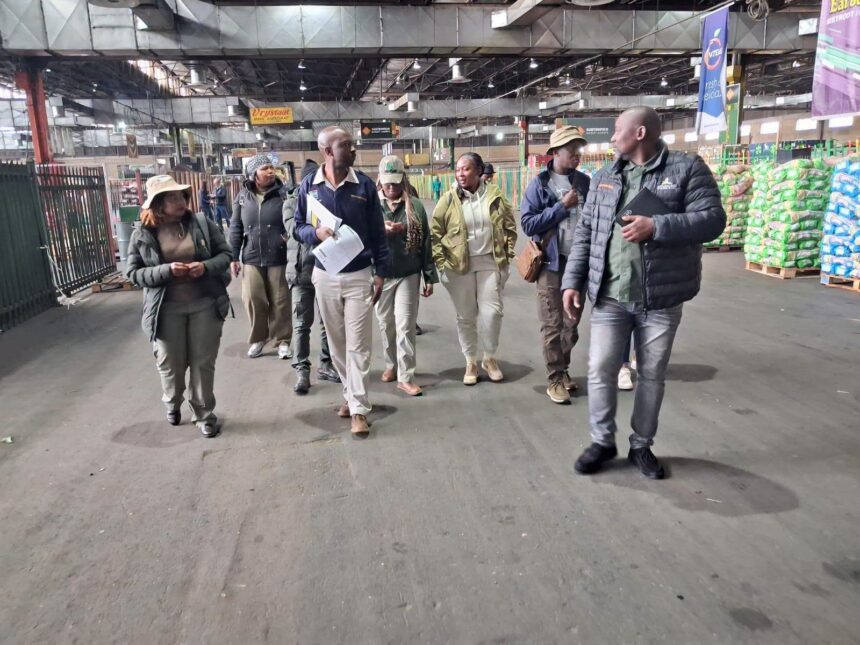
The continuation of the SHEP Approach Training of Trainers (ToTs) Workshop placed farmers and agricultural trainers closer to the realities of the market through practical activities and hands-on learning. The training focused on helping participants understand how farmers can use market information to make better decisions about what to produce, when to produce it and where to sell it. Instead of focusing only on production, the SHEP Approach encourages farmers to understand customer needs and market opportunities before making important farming decisions. This approach can help producers reduce the risk of growing products without a clear market and improve their ability to respond to what buyers want. The latest training day combined market visits, group discussions, presentations and practical exercises to strengthen participants’ ability to apply these principles when supporting farmers.
One of the main activities was a practical market survey, which took participants into different markets to observe how agricultural products are sold and what customers are looking for. Participants were divided into four groups, with Group 1 visiting Midway Butchery as a formal market and Group 2 visiting Mangaung Fresh Produce, also a formal market. Groups 3 and 4 visited fruit and vegetable stalls operating in the informal market. Visiting both formal and informal markets gave participants an opportunity to see different trading environments and understand how market requirements can vary. The exercise showed the importance of gathering information directly from buyers and sellers rather than making production decisions based only on assumptions.
During the market surveys, participants looked at several factors that farmers need to consider when planning their production. These included customer preferences, products available, prices, quality requirements and other conditions affecting the sale of agricultural produce. This information can help farmers identify which products have demand and understand the standards they may need to meet when supplying particular markets. For example, knowing what customers prefer can influence the type, quality, size or quantity of produce that a farmer chooses to grow. Understanding prices and competing products can also help producers think more carefully about their production costs and potential markets before committing resources to a particular crop or commodity.
After completing the market visits, the groups returned to analyse the information they had collected. Each group discussed its observations and identified market opportunities, challenges and important lessons from the market it had visited. The groups then presented their findings to the other participants, allowing everyone to learn from the different market experiences. Comparing the findings from formal markets with those from informal markets helped demonstrate that farmers can explore different routes to market depending on their products, customers and business needs. The exercise also reinforced the value of communication, observation and research when making farming decisions.
The training then focused on Crop and Commodity Selection and Ranking, presented by Ms. Mpho Mudau from the National Department of Agriculture’s Extension Support Services. The session introduced participants to the importance of carefully selecting crops or commodities based on relevant market and production considerations. Farmers need to consider factors such as demand, available resources, production conditions and potential market opportunities when deciding what to produce. Participants took part in practical group activities that allowed them to apply the concepts discussed during the presentation. A quiz, question-and-answer session and interactive discussions further helped participants strengthen their understanding of crop and commodity selection and ranking.
Another key session focused on the Crop and Commodity Calendar and was facilitated by Ms. Mmaphuti Setati from the National Department of Agriculture’s Animal Production division. A crop or commodity calendar can help farmers plan their activities according to production cycles and market requirements. Understanding timing is important because producing a good crop is only part of running a successful farming business. Farmers also need to consider when products are likely to be available, when customers may need them and how production schedules can affect market opportunities. Through practical group activities, quizzes, questions and discussions, participants explored how the calendar can support the application of the SHEP Approach in agricultural planning.
The practical nature of the training is important because farmers need information that they can use when making decisions on their own farms. Market surveys can help producers understand buyers before they invest in production, while crop and commodity selection can help them focus their resources on suitable opportunities. Ranking different options can also help farmers identify which products deserve greater attention based on the information available to them. Crop and commodity calendars can then help farmers organise production activities and consider timing when planning for the market. Together, these tools provide a structured approach that can help farmers move from simply producing agricultural goods to producing with a specific market in mind.
The continuation of the SHEP Approach Training of Trainers Workshop therefore provided participants with practical skills that can be passed on to farmers and agricultural producers. The combination of market visits, market analysis, crop and commodity selection, ranking and calendar planning gave participants an opportunity to connect training concepts with real agricultural markets. The lessons from the day highlighted the importance of knowing the customer, understanding market requirements and planning production around identified opportunities. By strengthening the capacity of trainers to use these tools, the programme can support farmers in making more informed decisions about their agricultural businesses. The ultimate focus remains on helping producers become more market-oriented, plan with greater purpose and use reliable market information to guide what they produce and how they take their products to market.
Join 'Farmers Mag' WhatsApp Channel
Get the latest Farming news and tips delivered straight to your WhatsApp
CLICK HERE TO JOIN




