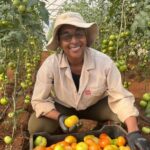
Nonopa Tenza, the owner of Kevinot Farming in Matatiele in the Eastern Cape, has become an inspiring example of determination, resilience and rural entrepreneurship. Her remarkable journey from a successful corporate career in Johannesburg to becoming an award-winning commercial farmer demonstrates that bold decisions can create lasting opportunities for individuals and communities alike. An accountant by profession, Nonopa previously worked for one of South Africa’s big four financial services organisations before making the life-changing decision to pursue farming. Inspired by the belief that “it always seems impossible until it’s done,” a famous quote by Nelson Mandela, she chose to leave behind the security of a well-paying job to revive abandoned farmland belonging to her father-in-law. Today, Kevinot Farming stands as proof that vision, hard work and strategic support can transform neglected land into a thriving agricultural business that creates employment, strengthens food production and contributes to rural development.
The decision to leave the corporate world was not simply a career change but a commitment to building a future rooted in agriculture and community development. Rather than seeking opportunities in urban centres, Nonopa invested her skills and determination in revitalising rural land that had long remained unproductive. Her journey reflects the growing role that young entrepreneurs and professionals are playing in transforming South Africa’s agricultural sector through innovation, sound business management and long-term planning. By applying the financial and organisational skills developed during her accounting career, she was able to approach farming as both a business and a vehicle for social impact. Her story demonstrates that agriculture offers significant opportunities for individuals willing to embrace challenges and invest in sustainable rural enterprises.
Kevinot Farming has developed into a diversified agricultural operation focused on both crop and livestock production. The farm produces yellow maize while also raising cattle and sheep, creating multiple income streams that strengthen the business against changing market conditions. In addition to these core activities, the farm cultivates lucerne and teff grass, which are used to feed its livestock while surplus bales are sold to neighbouring farms. This integrated farming approach improves efficiency by reducing feed costs while creating additional revenue opportunities. Diversification has become an important factor in the farm’s continued growth and long-term sustainability.
Like many emerging commercial farms, Kevinot Farming faced significant obstacles during its early stages. The property lacked basic infrastructure required for efficient agricultural production, making the journey far from easy. There was no fencing to secure livestock, livestock handling facilities were inadequate, farming equipment was unavailable and there were no suitable storage facilities. Even the farmhouses had fallen into a state of disrepair, requiring extensive rehabilitation before normal farming operations could begin. These challenges could easily have discouraged many entrepreneurs, but Nonopa remained committed to rebuilding the farm step by step.
A major turning point came through support provided by the Eastern Cape Rural Development Agency (ECRDA), which serves as an implementing agency of the Department of Agriculture. Through its Structured Rural Finance and blended finance programmes, ECRDA provided the financial assistance needed to help Kevinot Farming establish a solid foundation for future growth. This support enabled the purchase of a tractor, fencing materials and livestock while also providing assistance for crop production. One of the first livestock investments included 42 sheep consisting of two rams and 40 pregnant ewes, creating the basis for expanding the farm’s sheep enterprise. Access to this financial support allowed the farm to overcome many of its initial barriers and accelerate its development.
The impact of these investments is clearly reflected in the farm’s impressive growth. What began as a struggling operation has developed into a productive commercial farming business with more than 135 cattle and 279 sheep. Improved infrastructure, better equipment and expanded livestock numbers have strengthened the farm’s production capacity while improving its long-term sustainability. Continued investment in crop production has also enhanced the farm’s ability to support its livestock while generating additional income from feed sales. The steady expansion of Kevinot Farming demonstrates how targeted financial support combined with strong leadership can transform rural agricultural enterprises.
Beyond agricultural production, Kevinot Farming has become an important source of employment within the Matatiele community. The farm currently provides work for 15 people through a combination of full-time, part-time, seasonal and internship positions. During busy periods such as planting and harvesting, the workforce expands by an additional 20 or more employees to meet increased labour demands. These employment opportunities provide income for local families while helping develop agricultural skills within the community. Rural job creation remains one of the most valuable contributions made by successful farming enterprises, particularly in areas where employment opportunities are often limited.
Kevinot Farming’s contribution extends beyond economic development by supporting education and community wellbeing. The farm regularly welcomes learners from a local primary school for educational tours, giving young people the opportunity to learn about modern farming practices and food production. It also contributes beans grown on the farm to the school’s feeding scheme, helping improve nutrition for learners while strengthening ties between the farm and the surrounding community. These initiatives demonstrate that successful agricultural businesses can create positive social impact alongside commercial success. By investing in future generations, the farm is helping inspire greater interest in agriculture while supporting community development.
The business has also established reliable market channels that support its continued growth. Maize produced on the farm is supplied to Kokstad Milling and buyers in Pietermaritzburg before being sold to Cargill for delivery to Epol, where it is used in livestock feed production. Livestock is marketed through AAM Livestock Agents and Auctioneers, Farmers Livestock Agents auctions, local communities, abattoirs and established buyers such as Karan Beef. Access to stable markets enables the farm to generate sustainable income while reducing the uncertainty often associated with agricultural production. Strong marketing partnerships remain essential for ensuring that farmers can convert successful harvests and livestock production into long-term business success.
Kevinot Farming’s achievements have earned widespread recognition both nationally and internationally. Among its many accomplishments are graduating from the 2025 United Nations Food and Agriculture Organization Accelerator Programme, winning the 2024 African Women in Business Award for Agriculture, the 2023 MTN Business SME Jumpstarter competition and the 2023 AWIEF Agri Entrepreneur Award in Kigali, Rwanda. The farm was also recognised as one of the Top Three Female Commercial Farmers of the Year in the Eastern Cape in 2023, named Female Commercial Farmer of the Year for the Alfred Nzo District in the same year and received the inaugural Presidential Award for Rural-based SMME of the Year in 2022. These honours recognise not only the farm’s commercial achievements but also its contribution to rural entrepreneurship, innovation and community development. They highlight the growing influence of women leaders within South Africa’s agricultural sector.
Reflecting on the farm’s journey, Nonopa Tenza expressed her gratitude for the support received from ECRDA, noting that the financial assistance arrived at a critical stage of the business’s development. She explained that the investment provided the foundation needed to grow Kevinot Farming into the successful enterprise it is today. According to Nonopa, the support has enabled the business to create jobs, uplift the local community and contribute to economic activity within the rural area. Her appreciation reflects the importance of partnerships between government agencies and emerging farmers in driving agricultural development. Such collaborations can unlock opportunities that benefit both individual businesses and entire communities.
Kevinot Farming has become far more than a successful agricultural enterprise. It represents the power of determination, strategic investment and community focused leadership to transform rural economies. From abandoned farmland to an award-winning commercial operation, the farm’s journey demonstrates what can be achieved when entrepreneurship is supported by practical financial assistance and a clear long-term vision. Through crop production, livestock farming, job creation, education and community support, Kevinot Farming continues to make a meaningful contribution to the Eastern Cape’s agricultural landscape. As Nonopa Tenza’s inspiring story continues to motivate aspiring farmers across South Africa, Kevinot Farming stands as a beacon of hope that shows rural enterprises can thrive, strengthen communities and help build a more prosperous future for the next generation.
Join 'Farmers Mag' WhatsApp Channel
Get the latest Farming news and tips delivered straight to your WhatsApp
CLICK HERE TO JOIN