For Dr Thiofhi Muthikhitha, a successful career in agriculture began with the decision to walk away from a degree that many people would have considered a prestigious opportunity. Just two weeks into studying Mechanical Engineering at Wits University, a classroom exercise prompted him to reconsider whether he had chosen the right career path. New students were asked to share their backgrounds and consider whether their chosen fields of study connected with their lived experiences. When Muthikhitha reflected on growing up in a village where he helped his parents farm successfully without formal agricultural training, he realised that agriculture had always been part of his life. That moment changed the direction of his career and ultimately led him to become an agricultural engineer, entrepreneur, consultant and macadamia farmer in Limpopo.
Muthikhitha did not hesitate once he realised that agriculture was where his interests and experience belonged. He abandoned the Mechanical Engineering course at Wits University and enrolled for an Agricultural Engineering degree at the University of Venda. The decision was unusual because the university had only recently introduced the course, making Muthikhitha the first and only student enrolled in Agricultural Engineering during that academic year. Being the sole student in a new programme presented its own challenges, but it also gave him the opportunity to pursue a field that was closely connected to his upbringing and ambitions. Looking back, he has no regrets about leaving Wits and believes the difficult decisions he made eventually created the foundation for his career in agriculture.
His journey did not end with obtaining an agricultural qualification. Muthikhitha went on to earn a doctorate from the University of KwaZulu-Natal and established Agricre, a business whose name is derived from Agriculture and Rural Engineers. Through the company, he spent several years working as an agricultural consultant and connecting macadamia nut, avocado and honey farmers with markets. This work exposed him to the opportunities and challenges faced by small-scale farmers who often produce good agricultural products but struggle to access reliable and profitable markets. His experience working directly with producers helped him understand that agricultural development requires more than technical knowledge. Farmers also need market connections, business skills, sustainable production methods and opportunities to add value to what they produce.
A major turning point in Muthikhitha’s business journey came in 2022 when he partnered with the United Kingdom-based Rainforest Concern to establish a foundation focused on training farmers in sustainable fruit production. Rainforest Concern is a British conservation charity that works to protect threatened natural habitats, biodiversity and the interests of indigenous people. The partnership allowed Muthikhitha and his team to bring together 53 subtropical fruit farmers from the Vhembe district in Limpopo. The farmers received training on productive and sustainable farming methods designed to improve the performance of their agricultural businesses. The initiative demonstrated how farmer training can create opportunities to improve both production practices and long-term sustainability.
The foundation also used Radio Phalaphala to reach farmers who could not necessarily attend training sessions in person. This approach significantly expanded the reach of the agricultural education programme and demonstrated the potential of community radio as a tool for farmer development. Muthikhitha recalls that the foundation’s 30-minute educational programme, which aired at 4:30 in the morning, attracted approximately 54,000 listeners at one point. The large audience showed that farmers and rural communities were interested in accessible information that could help them improve their agricultural activities. By combining direct training with radio education, the initiative created a wider platform for sharing practical knowledge about sustainable farming.
The training programme eventually developed into a commercial opportunity for Agricre. After helping farmers improve their production practices, the company began marketing fruit produced by farmers who had become more sustainable and commercially viable producers. This created a direct connection between farmer development and market access. Instead of focusing only on improving production, Agricre helped farmers understand the importance of having a buyer and a reliable route to market. This approach is particularly important for small-scale farmers because access to profitable markets can determine whether increased production results in increased income. Muthikhitha’s experience showed that farmer development and commercial agriculture can work together when producers receive the right technical support and market connections.
An international opportunity emerged in 2023 when Muthikhitha received support from the Department of Trade, Industry and Competition, known as the dtic, to participate in the Partnering in Business with Germany Programme. The programme is a partnership between the South African government and the German government through the German Corporation for International Cooperation, commonly known as GIZ. It was designed to promote trade and investment relationships between Germany and South Africa while helping emerging South African exporters develop the skills and connections needed to access the German market. For Muthikhitha, the programme provided an opportunity to take the agricultural products he had been working with into an international business environment. His experience demonstrates how export development programmes can create opportunities for South African agricultural entrepreneurs who are ready to enter international markets.
During his three weeks in Germany, Muthikhitha negotiated with representatives of Rewe, a major German supermarket chain with approximately 3,800 stores across the country. Those discussions eventually contributed to a deal with a distributor that resulted in Agricre exporting 518 tonnes of macadamia nuts to Germany. Importantly, the company was able to source much of the product from small-scale farmers it had worked with and helped develop. The export deal created an opportunity for these farmers to participate in an international value chain rather than relying exclusively on local markets. It also demonstrated the commercial potential that can emerge when farmer development, market access and export opportunities are brought together.
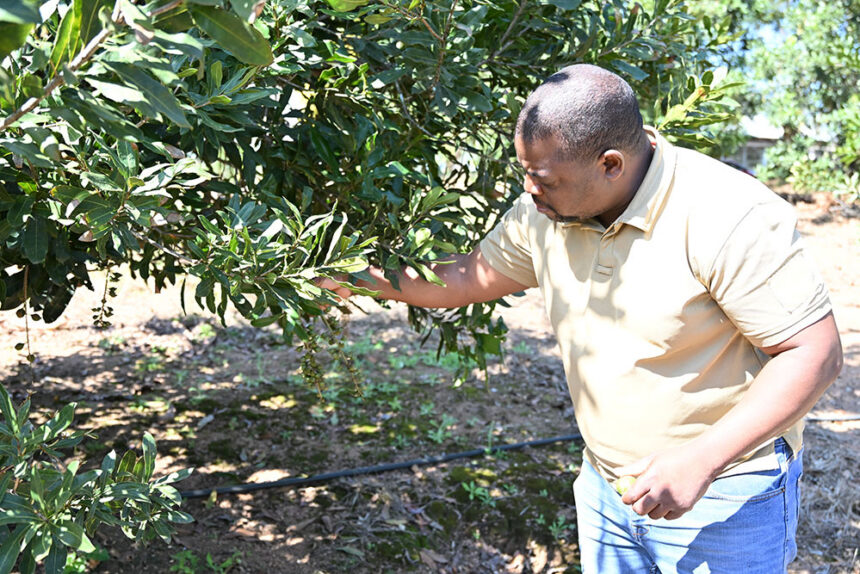
The success of the export deal changed Muthikhitha’s view of where the greatest opportunities in the local agricultural economy could be found. He recognised the strong demand for macadamia nuts in the Vhembe region and decided to invest directly in production. He purchased a 27-hectare macadamia farm near Makhado in Limpopo, which is planted with approximately 11,700 trees and has a production capacity of about 37 tonnes of nuts. The farm has created permanent employment for six people and provides work for as many as 20 seasonal workers. His move from agricultural consultant to commercial farmer represents another stage in a journey that began with his decision to leave Mechanical Engineering and follow his connection to agriculture.
Muthikhitha has also recognised that producing agricultural commodities is only one part of the business opportunity. He identified agro-processing as an area with strong potential to increase the value generated from macadamia nuts. Agricre has moved into processing macadamia nuts and producing pure macadamia oil through cold pressing. The process involves pressing the nuts without adding other ingredients, creating an oil that the company markets for uses including cooking, skin care and hair care. According to Muthikhitha, beauty parlours have become an important customer base for the product because of the demand for macadamia oil in beauty and personal care applications.
The move into processing illustrates the importance of value addition for agricultural businesses. Farmers and agricultural entrepreneurs can potentially generate greater returns when they process raw products into goods that can be sold directly to consumers or specialised markets. Processing can also create additional employment opportunities and allow businesses to diversify their revenue streams. In Muthikhitha’s case, macadamia production provides the raw material while processing creates additional products that can be marketed domestically and internationally. His experience demonstrates how agricultural businesses can grow by moving further along the value chain rather than relying solely on the sale of raw commodities.
Agricre’s ambitions now extend beyond its initial markets, with the company gradually increasing its presence in South Africa while exploring international opportunities. In October last year, Muthikhitha participated in an exhibition in Johannesburg with assistance from the dtic. The event helped the business secure orders from Japan, Egypt and Saudi Arabia, providing further evidence of the international demand for South African agricultural products. Export markets can provide significant opportunities for agricultural businesses, but they also require consistent quality, reliable supply, appropriate packaging and an understanding of international customer requirements. Muthikhitha’s experience shows how participation in trade development programmes and exhibitions can help emerging agricultural businesses establish relationships with international buyers.
The company is also exploring additional macadamia products as part of its diversification strategy. Muthikhitha says Agricre is experimenting with products such as macadamia milk and flour, which could create additional markets for the crop and provide further opportunities for value addition. Diversification can help agricultural businesses reduce their dependence on a single product and create new sources of revenue. The farm is also using available land for cash crops and vegetable production, with Marketing and Sales Manager Mashudu Rambau responsible for this part of the operation. Combining tree crops with other agricultural activities allows the business to make broader use of its land while creating additional production and employment opportunities.
Muthikhitha’s story also highlights the importance of recognising agriculture as a business rather than viewing it only as a means of producing food. His career combines agricultural engineering, farmer training, consulting, marketing, exports, commercial farming and agro-processing. Each stage of his journey built on the previous one and allowed him to identify new opportunities within the agricultural value chain. His experience also shows that formal education can be valuable when it is combined with practical experience, entrepreneurship and an understanding of market demand. For young people considering careers in agriculture, his journey demonstrates that the sector offers opportunities well beyond traditional farming.
His success has also created benefits for other farmers and the wider community. The 518-tonne export deal created a route into international markets for small-scale producers who had received training through his foundation. His current farm provides permanent and seasonal employment in Makhado while the growing business creates potential for additional jobs as production and processing expand. By investing in agro-processing and new products, Agricre can potentially create further opportunities throughout the value chain. Muthikhitha says the company’s goal is to continue growing and create more employment opportunities for people in the area.
The journey from a village farm to a doctorate, consulting business and commercial macadamia operation has not been without difficulties. Muthikhitha describes his career as a long journey involving trials, challenges and considerable effort. However, he believes the decision to follow his passion for agriculture was ultimately worthwhile. His experience is a reminder that career decisions do not always follow a straight path and that practical experience can reveal opportunities that may not be obvious at first. The lesson from his story is particularly relevant to young people who may be considering agriculture as a career but have not yet explored the full range of opportunities available.
Dr Thiofhi Muthikhitha’s story is ultimately about recognising an opportunity, developing the skills to pursue it and creating value for others along the way. What began with a lecture at Wits University led him to agricultural engineering, a doctorate, farmer development, international trade, commercial farming and macadamia processing. His work with small-scale farmers demonstrates how training and market access can help producers become more sustainable and commercially successful. His own farm and processing business show how value addition and diversification can create new opportunities for growth and employment. By following the agricultural path he says “found” him, Muthikhitha has built a business that connects farming, research, entrepreneurship and international markets while making a growing contribution to the agricultural economy of Limpopo.
Join 'Farmers Mag' WhatsApp Channel
Get the latest Farming news and tips delivered straight to your WhatsApp
CLICK HERE TO JOIN