
A family-owned farming enterprise in Randfontein, on Gauteng’s West Rand, is demonstrating how agriculture can create employment, supply fresh food and open doors to future business growth. Operating across 11 hectares, LOLS Farm is run by the Selialia family, who have invested their own resources to establish a business focused on producing vegetables and potatoes for the market. The farm’s name reflects the family’s three sons, Lerato, Onthatile and Letsoso, while the letter “S” represents their surname. The business operates in partnership with Kopana Holdings, a youth- and black-owned investment company, bringing together family entrepreneurship and investment in agriculture. As the operation develops, the Selialias are seeking additional funding to increase production, expand their activities and create further opportunities for people in their community.
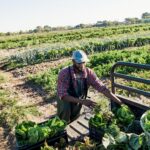
LOLS Farm currently grows spinach, chomolia, onions and Mondial potatoes, which are commonly used to produce chips. These crops allow the family to supply different segments of the fresh produce market and respond to varying consumer needs. Running a farm that produces several commodities requires careful coordination, as each crop has its own planting, growing, harvesting and handling requirements. Farmers must also consider water availability, labour, input costs and the timing of deliveries to ensure that their produce reaches buyers in good condition. For the Selialia family, managing these demands is part of building a sustainable agricultural business that can continue operating and growing over the long term.
Beyond producing food, the farm makes a contribution to employment in the area surrounding Badirile township. About 80 percent of its workforce comes from the neighbouring community, helping ensure that a significant share of its employment opportunities reaches local residents. For people living nearby, farm work can provide income while offering practical experience in agricultural activities such as planting, crop care, harvesting and preparing produce for sale. Employment created by local businesses can also benefit the wider community when workers spend their earnings at nearby shops and service providers. Through its farming activities, LOLS Farm is connecting food production with household livelihoods and economic activity in the surrounding area.
Finding the right buyers is an important part of the farm’s business strategy, particularly when large volumes of a crop are available in the market. The Selialia family has adapted its approach to spinach sales in response to an oversupply of the vegetable at Joburg Market. Rather than sending all its spinach to the wholesale market, the farm gives priority to informal traders operating in nearby townships before delivering the remaining produce to Joburg Market. This approach creates an additional sales channel and helps connect locally grown vegetables with customers in surrounding communities. It also demonstrates the importance of flexibility in farming, where producers may need to adjust their selling strategies as supply and demand change.
The experience with spinach illustrates a wider challenge for vegetable producers, as a successful harvest does not always guarantee a good financial return. When many farmers bring the same crop to market at the same time, competition can increase and selling prices may fall. Produce that remains unsold can also become a financial loss, particularly when it is perishable and has already required spending on labour, water and other inputs. Developing relationships with informal traders and other buyers can help farmers reach more customers and reduce their dependence on a single market. For LOLS Farm, using different routes to sell spinach provides a practical way to respond to market conditions while serving customers beyond the wholesale trading environment.
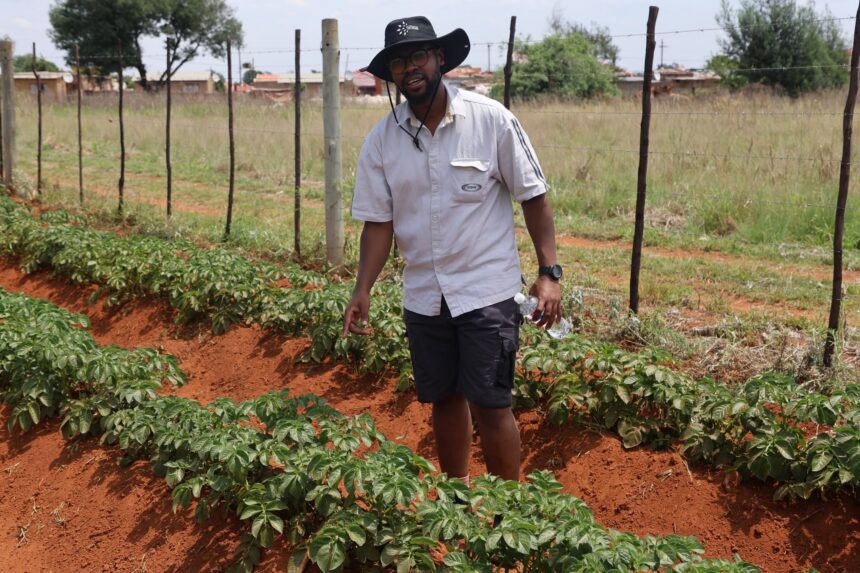
Potatoes provide another route to market for the Selialia family, with Mondial potatoes supplied directly to Joburg Market. According to the family, demand for the potatoes is strong enough for the crop to move quickly through the market. Potatoes are widely consumed in South Africa and are used in household meals, restaurants and food businesses, making them an important part of the fresh produce trade. However, growing them commercially requires careful decisions about production inputs, crop management, harvesting and the timing of sales. Farmers must also manage costs and remain aware that market demand and prices can change, affecting the profitability of each harvest.
The Selialias established their farming operation using money they received through their own corporate payouts, allowing them to invest in the business and begin producing crops. Their decision to use their own resources reflects a commitment to developing an agricultural enterprise with the potential to grow beyond its current size. However, increasing production can require substantial additional investment in land preparation, equipment, farming inputs, infrastructure and labour. The family is therefore looking for funding that would help it expand operations and take advantage of further opportunities in agriculture. Access to suitable finance could support growth, although careful planning will remain necessary to ensure that new expenditure is matched by production capacity and realistic market demand.
Lerato Selialia has explained that the family wants to build a business that can develop further, provide employment and eventually explore additional agricultural commodities. This ambition reflects a longer-term view of farming as an enterprise that can create lasting value rather than simply produce crops for immediate sale. Expanding a farm successfully requires an understanding of both production and business management, including how to control expenses, maintain quality and establish reliable relationships with buyers. It also means investing in resources that can support increased output without placing unnecessary pressure on the business. By seeking further funding and considering new opportunities, the Selialia family is working towards a stronger and more diverse agricultural operation.
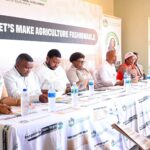
A recent engagement with Joburg Market representatives gave the family an opportunity to discuss its farming activities and explain its experiences as a supplier. During the visit, the farmers raised concerns about aspects of the supply process, bringing attention to practical issues that can affect their experience when selling produce through the market. Joburg Market management said it would consider these concerns as part of efforts to improve the supplier experience. Direct discussions of this kind can help market officials understand the challenges farmers encounter and identify areas where processes or communication may need improvement. They also give emerging producers an opportunity to share their experiences with the organisations that connect them to buyers.
Wholesale markets are important to agricultural businesses because they bring together producers and buyers in an organised trading environment. For emerging farmers, access to such markets can create opportunities to sell larger volumes and reach customers beyond their immediate communities. At the same time, farmers need to understand market procedures, delivery requirements, product quality expectations and the costs associated with transporting produce. Clear information and constructive relationships with market management can help suppliers make better decisions and manage their operations more effectively. Continued engagement between Joburg Market and farmers such as the Selialias may help strengthen communication and improve understanding of the needs of producers who are still building their businesses.
The farm’s experience also highlights the opportunities and difficulties facing black-owned emerging agricultural businesses in South Africa. Farmers can contribute to food production, job creation and rural and township economies, but expanding a commercial operation often depends on access to finance, infrastructure, technical support and suitable markets. Each commodity brings its own risks, and producers must understand the costs involved before deciding to increase production or introduce new crops. Market access alone may not be enough if farmers lack the resources to meet buyers’ requirements consistently. Combining investment opportunities with practical support and stronger business relationships can help emerging farmers build operations that are better prepared for long-term growth.
The Selialia family is already planning for the next stage of LOLS Farm’s development. Its ambitions include expanding onto additional fenced land, while fruit trees have already been planted as part of its longer-term plans. Bringing more land into production could create opportunities to increase output, but it will also require sufficient funding, labour, water and other resources to manage the expansion. Fruit trees generally need ongoing care and time to mature before they provide substantial harvests, making them a longer-term investment for the business. By exploring additional production opportunities, the family is seeking to broaden its agricultural activities and reduce its reliance on a limited range of crops.
LOLS Farm’s progress in Randfontein shows how determined entrepreneurship can contribute to food supply, employment and the development of emerging farmers. The Selialia family has established a diverse crop operation, employed people from the surrounding community and developed different ways of reaching buyers, including informal traders and Joburg Market. Its journey also demonstrates the practical challenges involved in managing oversupply, financing expansion and navigating wholesale market processes. With plans to cultivate more land, develop fruit production and explore further commodities, the family is looking towards a future of continued growth. Access to appropriate funding, stronger market relationships and ongoing engagement with Joburg Market could help the farm expand its contribution to agriculture and create further economic opportunities for the West Rand community.
Join 'Farmers Mag' WhatsApp Channel
Get the latest Farming news and tips delivered straight to your WhatsApp
CLICK HERE TO JOIN