Honeybush has developed from a wild indigenous plant into a cultivated agricultural crop and a distinctive South African tea product. Found naturally only in South Africa, Honeybush has a long history of use as both a beverage and a medicinal plant. Its journey into commercial cultivation reflects the combined importance of scientific research, traditional knowledge and opportunities for rural agriculture. Research conducted through ARC Infruitec-Nietvoorbij has contributed to knowledge and technologies that support the cultivation, harvesting and processing of Honeybush. Today, the crop offers farmers and communities an opportunity to participate in a growing value chain while helping preserve and develop a uniquely South African agricultural product.
Honeybush is closely connected to South Africa’s indigenous plant resources and has traditionally been collected from natural areas. Its use as a beverage has continued over generations, while its history as a medicinal plant has also contributed to its cultural importance. The move from wild harvesting to cultivation represents an important change in how the plant can be produced and managed. Cultivation provides farmers with greater control over production while creating a basis for more consistent harvesting and processing. This transition has required research into the plant itself as well as practical methods that farmers can use in the field.
Scientific research has played an important role in developing Honeybush as a cultivated crop. ARC Infruitec-Nietvoorbij has worked on generating knowledge and technologies covering different stages of the Honeybush production process. This includes areas such as species selection, seed germination and plant production, as well as harvesting and processing. Such research is important because a plant that grows naturally in the wild may require different approaches when it is produced as an agricultural crop. Developing reliable cultivation practices helps farmers move from collecting naturally occurring plants towards planned and managed production.
Species selection is an important starting point for Honeybush cultivation. Farmers need practical knowledge about which plant material is suitable for production and how it can be established successfully. Research into species and plant production helps create a stronger foundation for farmers who want to cultivate Honeybush rather than depend solely on wild harvesting. Seed germination is another important part of this process because successful establishment begins with producing healthy plants. Knowledge gained through research can help farmers understand these early production stages and apply appropriate methods when establishing Honeybush fields.
The development of planting material has helped make the transition to cultivation more practical. Producing Honeybush as a crop requires farmers to understand how plants are established and managed before they reach harvesting stage. Research-based guidance can give producers a clearer understanding of the steps involved in raising plants for agricultural production. This knowledge is particularly valuable for farmers and communities that are moving into Honeybush cultivation for the first time. It allows the crop to be approached as a managed agricultural enterprise rather than only as a naturally occurring resource.
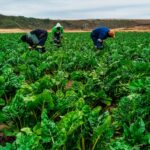
Harvesting is another important stage in the Honeybush value chain. Farmers need to understand when and how the plant should be harvested to support the production process and maintain the desired quality of the raw material. Research and practical training can help producers develop harvesting practices that are appropriate for cultivated Honeybush. This is important because the quality of the final tea depends on what happens from the field through to processing. Good harvesting practices therefore form part of the broader effort to establish Honeybush as a reliable agricultural product.
Processing gives Honeybush its important connection to the tea market. Once harvested, the plant must be processed into a product that meets the expected quality requirements for consumers and buyers. Research into Honeybush processing has contributed to the development of knowledge and technologies that can help farmers and processors handle the crop appropriately. Understanding processing is especially important as Honeybush moves further along the agricultural value chain. It is not enough to produce the crop in the field because the raw material must also be transformed into a quality product suitable for the market.
Quality standards are central to the development of any agricultural product intended for wider markets. Honeybush needs consistent cultivation, harvesting and processing practices if it is to maintain its position as a distinctive South African tea. Research can help establish practical approaches that support quality throughout the production chain. Training farmers and communities in these practices also helps ensure that knowledge is not limited to research institutions but reaches people involved directly in production. This connection between research and farming is an important part of building a sustainable Honeybush industry.
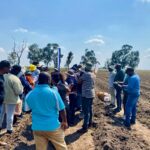
Technology transfer has been another important part of the Honeybush development story. Research becomes more useful to farmers when the knowledge and technologies generated through scientific work can be shared in practical ways. Hands-on training allows farmers and communities to see how cultivation, harvesting and processing practices can be applied. This approach can make technical information easier to understand and use in real farming conditions. It also helps strengthen the skills needed to manage Honeybush production beyond the initial stages of establishing the crop.
The shift from wild harvesting to cultivation can also create opportunities for more structured agricultural production. Wild harvesting depends on naturally occurring plants and the conditions in which they grow. Cultivation allows farmers to establish Honeybush as part of a planned production system and manage it as an agricultural crop. This creates opportunities to develop farming enterprises around a crop that is indigenous to South Africa. It can also support more consistent access to raw material for processing and value-added products.
Sustainability is an important consideration as Honeybush production develops. The plant has traditionally been obtained from natural environments, making responsible management important for the long-term future of the resource. Cultivation can provide an alternative production pathway by reducing reliance on wild harvesting while creating opportunities for farmers to grow the crop themselves. Sustainable harvesting practices also remain important for maintaining the resource and supporting responsible production. The combination of cultivation knowledge, harvesting guidance and processing technology can help build a Honeybush value chain that considers both agricultural opportunities and long-term resource management.
For rural communities, Honeybush can offer opportunities beyond the production of a raw agricultural product. Cultivation can create farming activities, while harvesting and processing can provide additional points of participation in the value chain. Value-added Honeybush products can also create opportunities to move beyond the sale of unprocessed plant material. The extent of these opportunities will depend on factors such as production capacity, market demand and access to appropriate processing and commercial channels. Nevertheless, the development of Honeybush as a cultivated crop has created a foundation for greater participation by farmers and communities in the tea industry.
The story of Honeybush also demonstrates why indigenous crops can benefit from scientific research. Plants that have long been known and used by local communities can have agricultural and commercial potential when their production requirements are properly understood. Research can help answer practical questions about how such plants can be cultivated, harvested and processed while maintaining quality. Farmers can then use this knowledge to develop production systems suited to the crop. In this way, science can support the transition of indigenous plant resources into viable agricultural opportunities without losing sight of their traditional significance.
Honeybush’s development into a distinctive South African tea also creates an opportunity to strengthen awareness of indigenous agricultural products. The crop is naturally associated with South Africa because it occurs only within the country. Its identity as a locally originating tea product gives it a distinctive place within the agricultural and food sector. Continued attention to cultivation, quality and processing can help support its development as a recognised agricultural commodity. For farmers, this creates an opportunity to participate in a crop with a strong connection to South African plant heritage and a growing commercial value chain.
From the first stages of seed germination to the final processing of harvested material, Honeybush production depends on knowledge at every step. Farmers need practical guidance on plant selection, establishment, production, harvesting and processing. The work done through ARC Infruitec-Nietvoorbij has contributed to building that knowledge and transferring it to farmers and communities through research and hands-on training. This has helped support the movement of Honeybush from predominantly wild harvesting towards cultivation and value-added production. The result is a crop that connects indigenous plant knowledge with modern agricultural research and commercial opportunity.
Honeybush’s journey from a wild indigenous plant to a cultivated crop and distinctive South African tea shows how science, tradition and agriculture can work together to create new opportunities. Research has helped develop practical knowledge for producing, harvesting and processing Honeybush while training has supported farmers and communities in applying that knowledge. Cultivation offers a pathway for sustainable production while value addition creates opportunities beyond the farm gate. As the Honeybush industry continues to develop, the crop can remain connected to its South African origins while providing opportunities for agricultural enterprises and rural communities. From seedling to harvest and from the field to the teapot, research continues to play an important role in turning Honeybush into a viable and distinctive South African agricultural product.
Join 'Farmers Mag' WhatsApp Channel
Get the latest Farming news and tips delivered straight to your WhatsApp
CLICK HERE TO JOIN