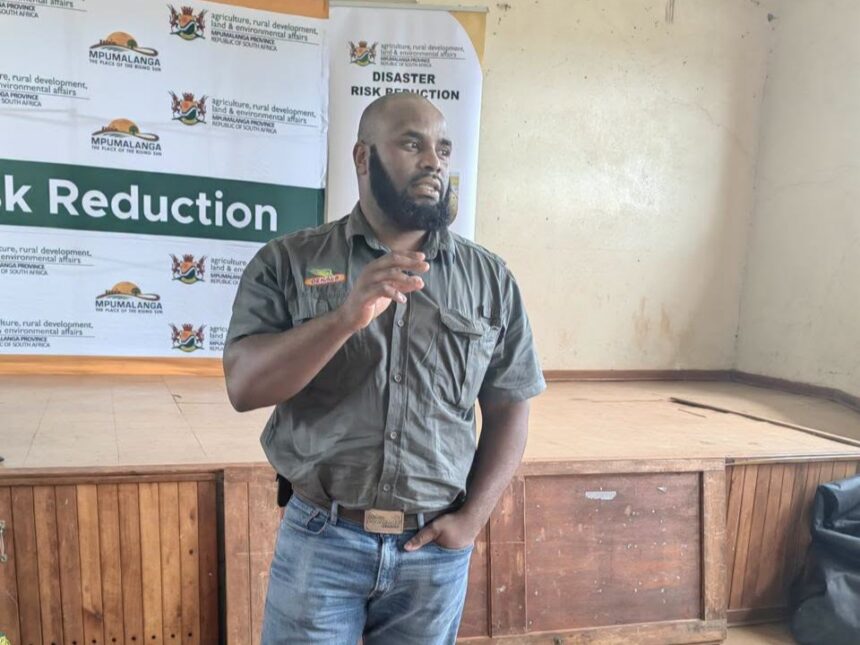
Local farmers and community members in Leroro gathered at the community hall for a LandCare Awareness Campaign organised by the Department of Agriculture, Rural Development, Land and Environmental Affairs (DARDLEA). The campaign provided an opportunity for farmers to share information, discuss agricultural challenges and learn about practical ways to improve farming practices while protecting the environment. It focused on the importance of managing natural resources responsibly and adopting methods that support long-term agricultural productivity. Farmers also received information about conservation agriculture and maize varieties that can better withstand hot weather and drought conditions. These discussions were particularly relevant as farming communities continue to face difficult conditions associated with the El Niño phenomenon.
LandCare plays an important role in encouraging responsible land management and helping communities understand the connection between environmental protection and agricultural production. Healthy soil, reliable water resources and well-managed agricultural land are essential for farmers who depend on natural resources to produce food and support their livelihoods. When land becomes degraded, farmers can experience lower productivity and greater difficulty maintaining their crops. Awareness campaigns help bring these challenges into focus and provide opportunities to discuss practical responses. The Leroro gathering offered farmers a platform to learn about approaches that can protect the land while supporting more sustainable farming activities.
One of the key topics introduced during the campaign was conservation agriculture. This approach focuses on protecting soil health and reducing unnecessary disturbance to agricultural land. Farmers were introduced to three important practices, namely minimum soil disturbance, crop rotation and maintaining soil cover. These methods can help improve soil structure, support moisture retention and reduce the risk of soil erosion. They also encourage farmers to manage their fields in ways that protect the natural resources needed for continued production.
Minimum soil disturbance involves reducing the amount of soil turning and cultivation required when preparing land for planting. Excessive soil disturbance can damage soil structure and leave the surface more exposed to erosion. By limiting disturbance, farmers can help maintain the soil’s natural condition and protect its ability to support crop growth. This practice can also contribute to better soil moisture management, which is important in areas affected by irregular rainfall. For farmers facing dry conditions, protecting the soil can form an important part of adapting their farming methods.
Crop rotation was another conservation agriculture practice highlighted during the awareness campaign. It involves growing different crops on the same piece of land in planned sequences rather than planting the same crop continuously. Different crops use soil nutrients in different ways and can help interrupt the build-up of certain pests and diseases. Crop rotation can also contribute to improved soil fertility when farmers select suitable crops for their conditions. This approach encourages better planning and helps farmers avoid relying on a single crop throughout every planting season.
Maintaining soil cover is also important for protecting agricultural land. Leaving crop residues or using suitable cover crops can help shield the soil from direct sunlight and the impact of heavy rainfall. Soil cover can reduce erosion, limit moisture loss and support healthier soil conditions. These benefits are especially relevant during periods of high temperatures and limited rainfall. Farmers who maintain soil cover can strengthen their efforts to protect fields against some of the effects of changing weather conditions.
The campaign also introduced farmers to maize varieties that are more tolerant of hot weather and drought conditions. Maize remains an important crop for many farming households, making the ability to manage climate-related production risks particularly important. High temperatures and insufficient rainfall can affect crop development and reduce harvests. Drought-tolerant maize varieties may help farmers manage some of these risks when selected and planted under suitable conditions. Access to information about these varieties can help farmers make more informed decisions when planning their planting seasons.
The information was especially useful as farmers continue to face challenges associated with the El Niño phenomenon. El Niño can influence rainfall patterns and contribute to dry conditions in parts of southern Africa. For agricultural communities, reduced rainfall and higher temperatures can place pressure on crops, livestock and available water resources. Farmers may need to adjust planting decisions, select suitable crop varieties and manage soil moisture more carefully. Understanding the relationship between weather conditions and farming practices can help communities prepare for difficult growing seasons.
The Leroro LandCare Awareness Campaign demonstrated the value of bringing agricultural information directly to local communities. Farmers need practical knowledge that they can apply to their fields and adapt to their specific circumstances. Discussions at community level also create opportunities for farmers to raise concerns, exchange experiences and consider different approaches to common challenges. Combining environmental awareness with information about crop production can help communities understand that sustainable farming and environmental protection are closely connected. This kind of engagement can support better decisions about the use and care of agricultural land.
As climate pressures continue to affect agricultural production, initiatives that promote conservation agriculture and climate-resilient farming practices remain important. The lessons shared in Leroro highlighted the need to protect soil health, use suitable crop varieties and manage land responsibly. Minimum soil disturbance, crop rotation and maintaining soil cover offer practical approaches that farmers can consider as part of their production plans. Information about heat-tolerant and drought-tolerant maize varieties also gives farmers additional knowledge when preparing for challenging weather conditions. Through continued awareness and information-sharing, LandCare initiatives can help strengthen local farming practices while supporting the protection of natural resources for future generations.
Join 'Farmers Mag' WhatsApp Channel
Get the latest Farming news and tips delivered straight to your WhatsApp
CLICK HERE TO JOIN