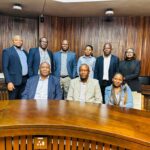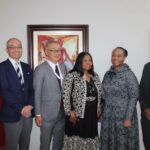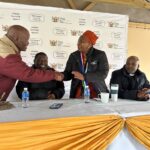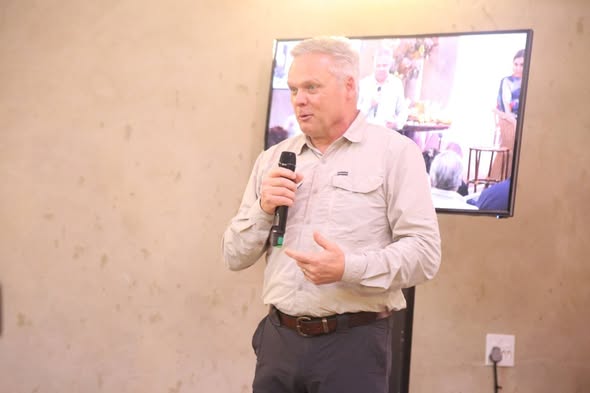
Agriculture Minister Willie Aucamp met with farmers and local stakeholders in Humansdorp and Patensie as the Kouga agricultural community continues to deal with the effects of severe weather, foot-and-mouth disease and ongoing land ownership concerns. The meetings took place on Friday, 18 September, with Kouga Executive Mayor Hattingh Bornman joining the minister during engagements with farmers. The discussions focused on issues that directly affect production, farm recovery and the long-term sustainability of agriculture in the region. Farmers were given an opportunity to raise concerns directly with national government while Aucamp provided updates on the government’s response to some of the challenges facing the sector. The engagements also highlighted the importance of cooperation between national government, local authorities and farmers as the agricultural community works through a difficult period.
The impact of the May floods was one of the major issues discussed during Aucamp’s visit to Kouga. Severe weather and flooding caused significant damage in the area, with more than 10% of the citrus crop in the Gamtoos Valley damaged after the Gamtoos River burst its banks. The affected area was subsequently classified as a disaster, although the municipality highlighted that a disaster classification is different from a formal declaration of a state of disaster. Aucamp indicated that he had already engaged with the Eastern Cape Department of Agriculture regarding the provincial assessment of the flood damage. He also undertook to engage with Cooperative Governance and Traditional Affairs Minister Velenkosini Hlabisa about whether the affected area could be considered for a state of disaster declaration, which could strengthen the support available to farmers and communities recovering from the damage.
For farmers in the affected parts of Kouga, the flood damage comes with consequences that extend beyond the immediate loss of crops. Damage to agricultural production can affect income, employment, input purchases and the ability of farmers to prepare for the next production cycle. Citrus producers in the Gamtoos Valley, in particular, have had to deal with crop losses following the river flooding, while other farmers have faced the broader consequences of severe weather. The recovery process therefore requires more than an assessment of physical damage because farmers also need clarity on available assistance and the processes for accessing it. The discussions in Humansdorp and Patensie placed these concerns directly before national government while highlighting the need for coordinated disaster support.
Foot-and-mouth disease was another central issue during the meetings, reflecting the continued pressure that the disease places on South Africa’s livestock sector. Aucamp provided farmers and stakeholders with an update on the national response and discussed measures being implemented to manage and reduce the spread of FMD. He stressed that government cannot manage the outbreak alone and called for cooperation between farmers, government, industry and other stakeholders. The minister also encouraged farmers to vaccinate cattle as part of efforts to protect herds and manage the spread of the disease. Aucamp said government would continue vaccinating in areas experiencing new outbreaks and would assist farmers who cannot afford vaccination, reinforcing the role of vaccination and coordinated disease management in protecting livestock businesses.
FMD remains particularly important for farmers because an outbreak can affect animal health, movement, trade and farm income. Disease control also requires farmers to follow biosecurity measures and work closely with animal health authorities when outbreaks occur. Vaccination forms part of the broader response, but farmers still need to monitor their herds and comply with movement controls and other disease management requirements where applicable. Aucamp’s engagement with Kouga farmers comes as the national government continues working with the agricultural sector to manage what has been described by the minister as the country’s largest FMD outbreak. The Department of Agriculture has also continued to frame cooperation between government and producers as an important part of the response.
Land ownership and tenure security also remain important issues for farmers seeking to build sustainable agricultural businesses. Secure land rights can provide farmers with greater certainty when making long-term investments in infrastructure, livestock, orchards, irrigation systems and other productive assets. Aucamp has previously identified the transfer of title deeds to farmers as an area requiring attention, linking ownership security with farmers’ ability to develop their land and strengthen their financial position. He has also spoken about plans to identify farmers and conduct due diligence before transferring government-owned agricultural land to beneficiaries. These discussions place land tenure alongside disease management, disaster recovery and market access as issues that can influence the ability of farmers to operate and expand their businesses.
The participation of Kouga Executive Mayor Hattingh Bornman added a local government perspective to the discussions. Bornman welcomed the minister’s visit and highlighted the contribution farmers make to the local and regional economy through production, employment and livelihoods. He also welcomed the opportunity for farmers to raise their concerns directly with the national Department of Agriculture rather than relying only on administrative channels. Direct engagement can help government better understand how national policies and support programmes affect farmers at local level. For a farming community dealing with flood damage, livestock disease risks and land-related concerns, this type of engagement provides an opportunity to place practical challenges on the agenda of both national and local authorities.
The meetings in Humansdorp and Patensie therefore brought several interconnected agricultural challenges into one discussion. Flood recovery affects farmers’ ability to restore production, while FMD places additional pressure on livestock producers and requires continued cooperation on disease control. Land ownership and tenure security affect farmers’ ability to plan for the long term and invest with greater certainty. Each issue requires different interventions, but progress on all three can influence the resilience of farming businesses and the communities that depend on them. The meetings also reinforced the importance of communication between farmers and government, particularly when producers need timely information about disaster assistance, disease control measures and land administration.
Agriculture remains a significant part of the Kouga economy, supporting production, jobs and livelihoods across the region. The concerns raised during Aucamp’s visit show that farmers need practical support that addresses both immediate disruptions and longer-term structural challenges. Flood-affected producers need effective recovery assistance, livestock farmers need continued support in managing FMD and farmers dealing with insecure tenure need progress on land ownership processes. The value of the engagements will ultimately depend on how discussions translate into action, assessments, support and clear follow-up processes. For the farming community of Humansdorp and Patensie, continued engagement between farmers, Kouga Municipality and national government will remain important as the region works to protect production and strengthen agricultural resilience.
Join 'Farmers Mag' WhatsApp Channel
Get the latest Farming news and tips delivered straight to your WhatsApp
CLICK HERE TO JOIN