Tobacco farming has played an important role in South Africa’s agricultural sector for many decades, providing income for commercial and small-scale farmers while contributing to rural economies. Although the industry has changed significantly in recent years due to evolving consumer trends, stricter regulations and increasing health awareness, tobacco remains a valuable cash crop for producers operating in suitable regions. Successful tobacco farming requires careful planning, specialised knowledge and consistent management throughout the growing season. Farmers must understand everything from soil preparation and variety selection to harvesting and curing techniques to produce high-quality tobacco leaves. For those considering entering the industry, gaining a thorough understanding of the crop and the market is essential before making a financial investment.
South Africa’s climate allows tobacco to be cultivated successfully in several provinces, provided environmental conditions are favourable. Areas with warm temperatures, moderate rainfall and well-drained soils generally offer the best conditions for healthy tobacco growth. Provinces such as Limpopo, Mpumalanga, KwaZulu-Natal and parts of the Eastern Cape have historically supported tobacco production because of their suitable growing environments. Tobacco plants require fertile soils with good drainage, as excessive moisture can lead to root diseases and reduced leaf quality. Before planting, farmers are encouraged to conduct soil tests to determine nutrient levels and make any necessary adjustments to improve soil fertility and pH.
Choosing the right tobacco variety is one of the most important decisions a grower can make. Different varieties are bred for specific climatic conditions, disease resistance and end uses, including cigarettes, cigars, pipe tobacco and other tobacco products. Selecting cultivars that are well suited to local environmental conditions improves the chances of producing high-quality leaves with strong market value. Farmers should also purchase certified seed or seedlings from reputable suppliers to reduce the risk of poor germination or disease problems. Proper nursery management during the seedling stage is essential because healthy young plants establish more successfully after transplanting into the field.
Land preparation begins several weeks before planting and involves clearing weeds, ploughing the soil and incorporating organic matter or recommended fertilisers. Tobacco is usually transplanted into prepared fields once seedlings have developed sufficient strength and weather conditions are favourable. Adequate spacing between plants allows for good air circulation, reduces disease pressure and supports healthy leaf development. Irrigation may be required during dry periods, particularly in areas with inconsistent rainfall. Maintaining proper soil moisture throughout the growing season helps produce larger, higher-quality leaves while avoiding plant stress.
Crop management requires constant attention throughout the production cycle. Farmers must monitor fields regularly for pests such as aphids, cutworms and hornworms, as well as diseases that can significantly reduce yield and leaf quality. Integrated pest management practices, including regular field inspections, biological controls and responsible pesticide use where necessary, help minimise losses while supporting sustainable production. Weed control is equally important because weeds compete with tobacco plants for nutrients, water and sunlight. Timely fertiliser applications based on soil analysis also play a major role in achieving healthy plant growth and maximising yields.
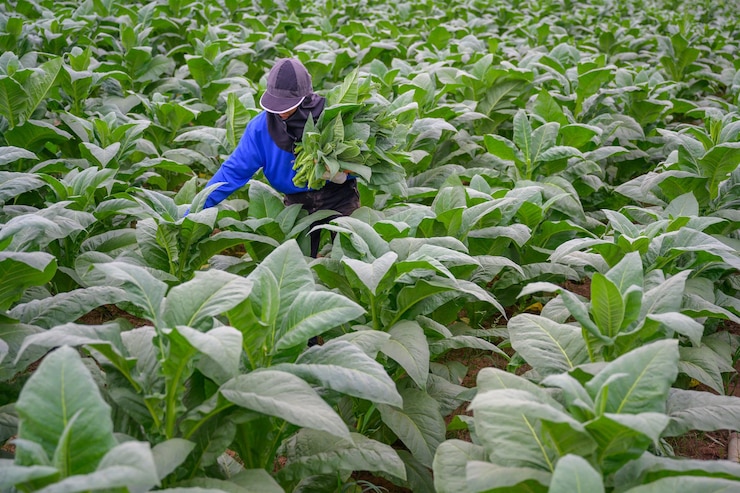
Harvesting tobacco is a labour-intensive process that requires careful timing. The leaves are typically harvested in stages as they mature from the bottom of the plant upward, ensuring that each leaf reaches the desired level of ripeness before being picked. After harvesting, the leaves undergo a curing process, which is one of the most critical stages in tobacco production. Depending on the tobacco variety, curing methods may include flue-curing, air-curing, fire-curing or sun-curing, each producing distinct characteristics in the finished product. Proper curing develops the colour, texture and chemical composition that determine the quality and value of the harvested tobacco.
Once curing is complete, the tobacco leaves are graded according to factors such as colour, size, texture and overall quality before being prepared for sale. Buyers typically pay premium prices for well-cured, uniform leaves that meet industry standards. Farmers must also store cured tobacco carefully in controlled conditions to preserve quality before marketing their crop. Building strong relationships with processors and licensed buyers can improve market access and create more stable business opportunities. Understanding market requirements and maintaining consistent quality are key factors in achieving long-term profitability.
Prospective tobacco farmers should also be aware of the regulatory environment governing tobacco production in South Africa. Tobacco cultivation, processing and marketing are subject to various agricultural, labour and environmental regulations that producers must follow. Farmers are encouraged to stay informed about current legislation, licensing requirements where applicable and industry standards that affect production and sales. In addition, many growers are adopting more sustainable farming practices to improve environmental stewardship, conserve natural resources and maintain soil health. Responsible farming methods help ensure the long-term viability of agricultural land while supporting efficient production.
Tobacco farming remains a specialised agricultural enterprise that requires significant knowledge, careful management and ongoing investment. Success depends on selecting suitable land, growing the right varieties, maintaining healthy crops and producing leaves that meet strict quality standards. While the industry faces changing market conditions and increasing regulation, experienced producers continue to identify opportunities by focusing on quality, efficiency and sustainable production practices. Farmers considering tobacco cultivation should conduct thorough research, develop a sound business plan and seek technical guidance before entering the industry. With proper planning and effective management, tobacco farming can continue to provide economic opportunities for South African producers operating in suitable regions.
Join 'Farmers Mag' WhatsApp Channel
Get the latest Farming news and tips delivered straight to your WhatsApp
CLICK HERE TO JOIN