Coffee is one of the world’s most valuable agricultural commodities, and interest in growing it has steadily increased among South African farmers. While countries such as Brazil, Ethiopia and Vietnam dominate global coffee production, South Africa offers unique opportunities for cultivating premium, specialty coffee in selected regions with suitable climates. Rising consumer demand for locally produced, high-quality coffee has encouraged more farmers to explore coffee cultivation as a profitable diversification option. Although coffee farming requires patience, careful planning and a long-term investment, it has the potential to generate attractive returns when managed effectively. Understanding the basic requirements for successful coffee production is the first step for anyone considering entering this growing sector.
Coffee is primarily produced from two species, Arabica and Robusta, each with different characteristics and growing requirements. Arabica coffee is widely regarded as producing superior flavour and aroma, making it the preferred choice for specialty coffee markets. It thrives in cooler climates at higher elevations and generally requires more careful management than Robusta. Robusta is more tolerant of heat, pests and diseases while producing higher yields, but it is often used in instant coffee and commercial blends because of its stronger flavour and higher caffeine content. In South Africa, Arabica is the dominant variety because many suitable growing regions provide the cooler conditions needed to produce high-quality beans.
South Africa’s coffee industry remains relatively small compared to major coffee-producing countries, but it has established a reputation for producing premium, locally grown coffee. Suitable production areas are found mainly in parts of KwaZulu-Natal, Mpumalanga, Limpopo and the Eastern Cape, where favourable temperatures, adequate rainfall and well-drained soils support coffee cultivation. Some producers also use irrigation to supplement rainfall during dry periods and maintain healthy plant growth. The country’s diverse climate means that careful site selection is essential before establishing a coffee plantation. Farmers who choose suitable locations are more likely to produce quality beans that meet the expectations of specialty coffee buyers.
Climate plays a crucial role in successful coffee production. Arabica coffee generally performs best in areas with average annual temperatures between 18 and 24 degrees Celsius and annual rainfall of approximately 1,200 to 2,000 millimetres that is distributed reasonably well throughout the year. Although coffee plants require regular moisture, they do not tolerate waterlogged conditions, making proper drainage essential. Protection from strong winds and extreme temperatures also contributes to healthier plants and improved bean quality. In some regions, farmers establish windbreaks and use shade trees to create favourable growing conditions while protecting young coffee plants from environmental stress.
Soil quality is another important factor influencing coffee production. Coffee grows best in fertile, well-drained soils that are rich in organic matter and have a slightly acidic pH. Before planting, farmers should conduct soil tests to determine nutrient levels and identify any deficiencies that require correction. Incorporating compost and organic matter improves soil structure while increasing moisture retention and supporting beneficial microorganisms. Proper soil preparation provides young coffee plants with the nutrients and growing conditions needed to establish strong root systems. Ongoing soil management remains essential throughout the productive life of the plantation.
Selecting high-quality planting material is critical for establishing a successful coffee enterprise. Farmers should purchase certified seedlings or seeds from reputable nurseries that supply healthy, disease-free plants suited to local growing conditions. Choosing improved cultivars can increase productivity while improving resistance to common pests and diseases. Proper spacing between plants allows sufficient sunlight penetration, airflow and access for maintenance activities such as pruning and harvesting. Careful establishment during the first few years lays the foundation for productive coffee trees that can remain commercially viable for decades.
Coffee farming requires patience because the crop does not produce a commercial harvest immediately after planting. Most Arabica plants begin producing small yields after three to four years, while full production is generally reached after five to seven years. During this establishment period, farmers must invest in irrigation, weed control, fertilization, pruning and pest management without receiving significant income from the crop. Developing a realistic financial plan is therefore essential before starting a coffee farming business. Long-term planning helps producers manage cash flow while waiting for the plantation to reach full productivity.
Effective crop management plays a major role in producing high-quality coffee beans. Regular pruning encourages healthy plant growth, improves air circulation and maintains manageable tree height for harvesting. Fertilization programmes should be based on soil analysis to ensure plants receive balanced nutrition throughout the growing season. Weed control reduces competition for water and nutrients, while irrigation supports production during dry periods when rainfall is insufficient. Farmers who consistently monitor their plantations are better able to identify problems early and maintain healthy, productive trees.
Like many agricultural crops, coffee is vulnerable to pests and diseases that can reduce both yield and quality if left unmanaged. Common challenges include insects that damage leaves and berries, fungal diseases and environmental stress caused by prolonged drought or excessive rainfall. Integrated pest management strategies combine regular monitoring, good orchard hygiene, biological controls and responsible pesticide use where necessary. Preventative management is generally more effective and economical than attempting to control severe infestations after they have spread. Healthy, well-maintained coffee trees are naturally more resilient and better able to withstand production challenges.
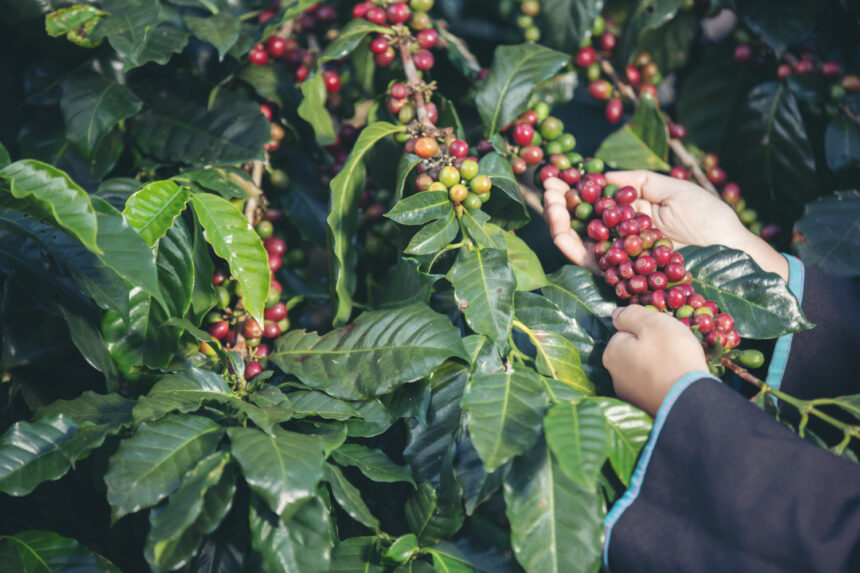
Harvesting coffee requires careful timing because only ripe cherries produce the highest-quality beans. Many specialty coffee producers hand-pick ripe cherries to ensure consistent quality, although mechanical harvesting may be suitable in some larger operations. After harvesting, coffee cherries must be processed promptly to preserve flavour and prevent spoilage. Processing methods such as washed, natural and honey processing each produce distinctive flavour characteristics that influence the final product. Careful processing, drying and storage are essential for producing premium coffee capable of achieving higher prices in specialty markets.
Marketing is an important consideration for new coffee growers in South Africa. Many producers focus on supplying specialty coffee roasters, boutique cafés and local retailers that value high-quality, locally grown products. Some farms also diversify their income by offering coffee tourism experiences, farm tours and direct sales to consumers. Building a strong brand based on quality, sustainability and traceability can help farmers differentiate their products in a competitive marketplace. As consumer interest in locally produced coffee continues to grow, opportunities for premium South African coffee are expected to expand.
Growing coffee in South Africa offers promising opportunities for farmers willing to invest in quality production and long-term planning. Although coffee cultivation requires suitable climatic conditions, careful management and several years before full production is achieved, it has the potential to become a profitable high-value crop. Success depends on selecting the right location, maintaining healthy soils, using quality planting material and following sound agronomic practices throughout the life of the plantation. Farmers who focus on producing premium-quality coffee while adopting sustainable farming methods can position themselves to benefit from the growing demand for locally produced specialty coffee. As South Africa’s coffee industry continues to develop, innovative producers have an exciting opportunity to contribute to a niche agricultural sector that combines value, quality and long-term growth.
Join 'Farmers Mag' WhatsApp Channel
Get the latest Farming news and tips delivered straight to your WhatsApp
CLICK HERE TO JOIN