

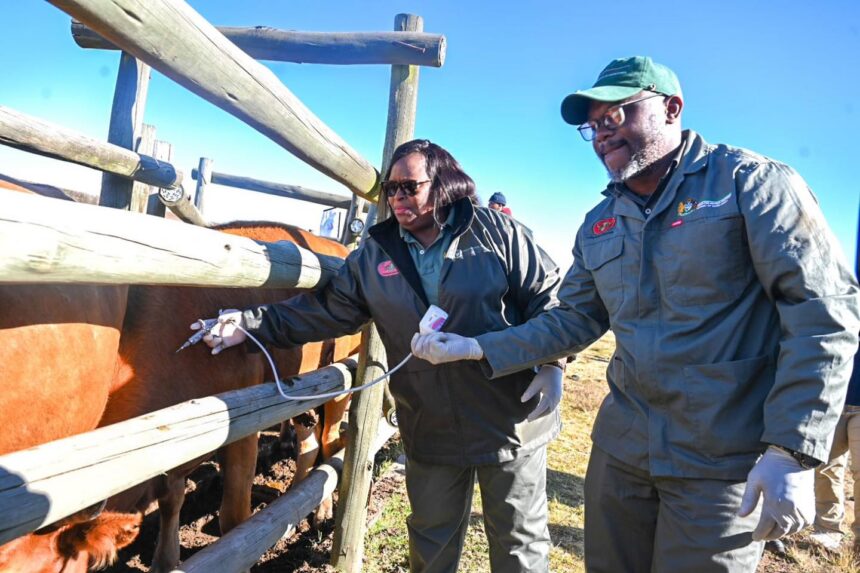
The KwaZulu-Natal Department of Agriculture and Rural Development has reached a significant milestone in its fight against Foot-and-Mouth Disease (FMD), vaccinating more than 1.35 million animals since launching its mass vaccination campaign in late February 2026. The large-scale initiative is aimed at containing the spread of the highly contagious livestock disease that has severely affected South Africa’s agricultural sector. The campaign has become one of the province’s most ambitious animal health interventions, involving extensive veterinary operations across multiple districts. By protecting millions of cattle and other susceptible animals, the department hopes to restore confidence in the livestock industry while supporting farmers whose livelihoods have been threatened by the outbreak. The continued progress of the vaccination programme demonstrates the province’s commitment to safeguarding animal health and strengthening food security.
Veterinary-led vaccination operations are currently taking place in the Alfred Duma Local Municipality within the uThukela District, where teams are expected to continue their work until 13 July 2026. The campaign has already been successfully completed in the neighbouring Okhahlamba and Inkosi Langalibalele Local Municipalities, where 50,173 and 72,924 animals were vaccinated respectively. These figures reflect the extensive planning and coordination required to reach thousands of livestock owners across rural communities. Veterinary teams have worked closely with local authorities, farming organisations and community members to ensure that animals are brought to designated vaccination points. Their efforts have played a vital role in expanding the reach of the campaign and reducing the risk of further disease transmission.
The vaccination programme has already achieved full coverage in six districts across KwaZulu-Natal. These districts include Ugu, Harry Gwala, uMkhanyakude, Zululand, uMgungundlovu and eThekwini, marking an important achievement in the province’s disease control strategy. Successfully vaccinating livestock across such a wide geographical area highlights the effectiveness of the coordinated response led by the Department of Agriculture and Rural Development. Each completed district brings the province closer to limiting the spread of Foot-and-Mouth Disease and protecting the broader livestock industry. The department’s systematic approach has ensured that resources are deployed efficiently while maintaining high vaccination coverage.
Following the completion of operations in uThukela District, veterinary teams are scheduled to move to King Cetshwayo and iLembe Districts before concluding the first phase of the campaign in Amajuba and uMzinyathi Districts. Officials anticipate that Phase 1 of the province-wide vaccination programme will be completed by the end of August 2026. This phased rollout allows veterinary teams to maintain high operational standards while ensuring that every targeted area receives adequate attention. The strategy also enables authorities to monitor progress and respond quickly to any emerging challenges during the campaign. Completing the first phase on schedule will represent another important milestone in KwaZulu-Natal’s efforts to control the outbreak.
KwaZulu-Natal MEC for Agriculture and Rural Development, Mrs Thembeni kaMadlopha-Mthethwa, has praised the dedication of veterinary professionals, livestock farmers’ associations and community members for their active participation in the campaign. She noted that farmers have expressed satisfaction with the progress made so far and welcomed the positive feedback received from various communities. According to the MEC, livestock owners in areas such as uMbumbulu, within the eThekwini District, have contacted the department to express their appreciation for the work being carried out by the veterinary teams. She said the positive response from farmers demonstrates growing confidence in the vaccination programme and the department’s commitment to protecting the livestock sector. Continued cooperation between government and farming communities remains essential for the campaign’s long-term success.
The MEC also highlighted the strong public response to the department’s call for livestock owners to bring their cattle to local dip tank facilities for vaccination. She pointed to Okhahlamba as a clear example of this support, explaining that while the area’s cattle census stood at approximately 47,000 animals, veterinary teams vaccinated more than 50,000. This indicates that livestock owners beyond those formally registered with dip tanks also participated in the programme, ensuring broader community protection. The higher-than-expected turnout reflects increasing public awareness of the importance of disease prevention and the willingness of farmers to work alongside government. Such widespread participation strengthens the effectiveness of the vaccination campaign and reduces the likelihood of disease hotspots remaining untreated.
Foot-and-Mouth Disease continues to have serious economic and agricultural consequences for South Africa. The outbreak has disrupted international trade by triggering restrictions on exports of cloven-hoofed animals and their products, placing additional financial pressure on livestock producers and businesses throughout the agricultural value chain. The severity of the outbreak ultimately contributed to the declaration of a national disaster, highlighting the scale of the challenge facing the country. Beyond direct financial losses, the disease has affected rural livelihoods, food production and investor confidence within the livestock industry. Effective disease control measures such as mass vaccination are therefore critical to rebuilding the sector and restoring access to international markets.
The KwaZulu-Natal Department of Agriculture and Rural Development’s vaccination campaign represents one of the province’s most significant efforts to combat Foot-and-Mouth Disease. With more than 1.35 million animals already vaccinated and six districts fully covered, the programme continues to make steady progress toward protecting livestock across the province. The strong cooperation between veterinary teams, farmers and local communities has been central to the campaign’s success and offers hope that the spread of the disease can be brought under control. As the remaining districts prepare for vaccination, the department remains focused on completing Phase 1 by the end of August while maintaining support for livestock owners. The continued success of this initiative will be essential for safeguarding farmers’ livelihoods, strengthening the agricultural economy and helping South Africa recover from the damaging effects of the Foot-and-Mouth Disease outbreak.
Join 'Farmers Mag' WhatsApp Channel
Get the latest Farming news and tips delivered straight to your WhatsApp
CLICK HERE TO JOIN




