

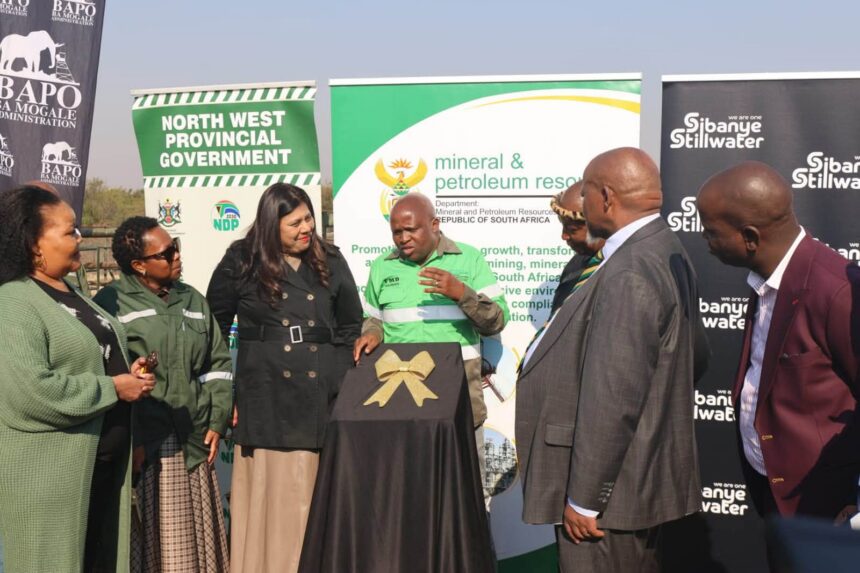
The Bapo Ba Mogale Community has received a significant boost to its agricultural and economic development following the official handover of two Social and Labour Plan (SLP) projects by the Minister of Mineral and Petroleum Resources, Mr Gwede Mantashe. The projects, implemented by Sibanye-Stillwater, include a Livestock Improvement Programme and a Bee Farming Project with a combined investment of more than R8 million. These initiatives are intended to strengthen sustainable livelihoods, create employment opportunities and promote long-term economic growth within the community. They also demonstrate the important role that responsible mining companies can play in supporting the development of communities where they operate. By investing in agriculture and enterprise development, the projects aim to deliver benefits that extend well beyond the lifespan of mining activities.
The handover forms part of Sibanye-Stillwater’s Social and Labour Plan commitments under the Mineral and Petroleum Resources Development Act (MPRDA). Social and Labour Plans are designed to ensure that mining companies contribute meaningfully to the social and economic development of host communities while promoting inclusive growth. Through these obligations, mining companies are expected to invest in projects that improve living conditions, create jobs and strengthen local economies. The Livestock Improvement Programme and Bee Farming Project reflect these objectives by focusing on sectors with the potential to generate sustainable income for community members. Such investments help build resilience by encouraging economic activities that can continue to grow independently over time.
The Livestock Improvement Programme has been introduced to strengthen livestock production within the Bapo Ba Mogale Community by improving the quality, health and productivity of animals. Livestock farming remains an important source of income and food security for many rural households, making investments in this sector particularly valuable. Improved breeding practices, better animal health management and enhanced farming techniques can increase productivity while helping farmers produce higher-quality livestock for local and commercial markets. The programme is also expected to support skills development by providing farmers with practical knowledge that can improve the long-term sustainability of their operations. As livestock productivity increases, farming households may benefit from stronger incomes and greater economic stability.
Alongside livestock development, the Bee Farming Project introduces an additional income-generating opportunity for members of the community. Beekeeping is increasingly recognised as a sustainable agricultural activity because it requires relatively modest land resources while offering multiple revenue streams through the production of honey, beeswax and other bee-related products. In addition to its commercial value, beekeeping plays an important role in supporting agriculture through pollination, which improves the productivity of crops and natural vegetation. By developing skills in modern beekeeping practices, community members will have the opportunity to establish small businesses that contribute to household incomes and local economic growth. The project also promotes environmental sustainability by encouraging the protection of healthy ecosystems that support bee populations.
The combined investment of more than R8 million highlights the scale of the commitment made toward improving opportunities for the Bapo Ba Mogale Community. Funding for infrastructure, equipment, training and project implementation provides a strong foundation for long-term success. However, the true value of these initiatives extends beyond the financial investment, as they focus on building skills, promoting self-reliance and creating opportunities that can benefit future generations. Sustainable development depends not only on infrastructure but also on empowering people with the knowledge and resources needed to manage successful enterprises. These projects aim to create exactly that kind of lasting impact.
Minister Gwede Mantashe’s participation in the official handover underscores the importance of collaboration between government, mining companies and local communities in driving inclusive development. The mining sector has long been recognised as a major contributor to South Africa’s economy, but there is growing emphasis on ensuring that mining activities also create meaningful and lasting benefits for surrounding communities. Partnerships such as this demonstrate how mining investments can support diversification into agriculture and other productive sectors that strengthen local economies. By encouraging projects that generate employment and entrepreneurship, Social and Labour Plans can help communities become more resilient and less dependent on a single industry. This approach supports broader national goals of reducing poverty, promoting economic inclusion and improving rural livelihoods.
The successful implementation of these projects also reflects the importance of community participation and local ownership. Sustainable development initiatives achieve greater success when beneficiaries actively participate in planning, implementation and long-term management. As members of the Bapo Ba Mogale Community develop new agricultural skills and business opportunities, they will be better positioned to expand these initiatives and create additional employment within the local area. Continued support through training, mentorship and market access will further strengthen the long-term viability of both the livestock and beekeeping programmes. These efforts have the potential to inspire similar projects in other mining communities across South Africa.
The official handover of the Livestock Improvement Programme and Bee Farming Project marks an important milestone in the ongoing development of the Bapo Ba Mogale Community. With an investment exceeding R8 million, these initiatives provide practical opportunities to strengthen agriculture, create sustainable livelihoods and stimulate local economic growth. The partnership between the Department of Mineral and Petroleum Resources and Sibanye-Stillwater demonstrates how collaboration can produce lasting benefits that extend beyond mining operations. By investing in skills development, enterprise creation and community empowerment, the projects lay the foundation for a more resilient and diversified local economy. As these programmes continue to grow, they have the potential to improve the quality of life for many families while contributing to a stronger and more sustainable future for the Bapo Ba Mogale Community.
Join 'Farmers Mag' WhatsApp Channel
Get the latest Farming news and tips delivered straight to your WhatsApp
CLICK HERE TO JOIN




