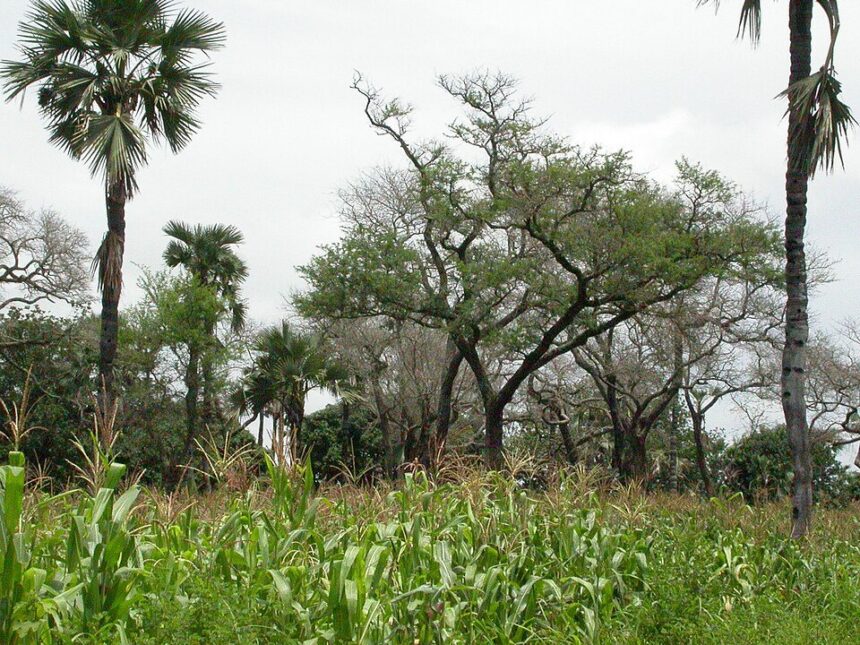
Agroforestry is gaining recognition as one of the most promising farming systems for small-scale farmers in South Africa. By combining trees with crops and livestock on the same piece of land, farmers can improve productivity while protecting natural resources. This integrated approach offers economic, environmental and social benefits that are particularly valuable in a country facing climate change, water scarcity and land degradation. Small farms often have limited resources, making it essential to adopt farming methods that maximize the use of available land. Agroforestry provides an opportunity to increase income, strengthen food security and build more resilient farming businesses without requiring large-scale expansion.
One of the greatest advantages of agroforestry is its ability to improve soil health over time. Trees help reduce soil erosion by holding the soil together with their root systems and protecting the land from heavy rainfall and strong winds. Fallen leaves and organic matter decompose naturally, adding nutrients back into the soil and improving its fertility. Healthier soils retain moisture more effectively, reducing the need for frequent irrigation and helping crops survive during dry periods. For small farmers who depend on every hectare of productive land, these improvements can result in stronger crop yields and lower production costs.
Agroforestry also plays an important role in conserving water, which is one of South Africa’s most valuable agricultural resources. Tree roots improve water infiltration, allowing rainfall to soak into the soil rather than running off the surface. This helps recharge groundwater while reducing erosion and nutrient loss. The shade provided by trees also lowers soil temperatures, reducing evaporation and helping crops retain moisture for longer periods. These benefits become increasingly important as many parts of South Africa continue to experience recurring droughts and unpredictable weather patterns.
Diversifying farm income is another major benefit of agroforestry. Instead of relying on a single crop or livestock enterprise, farmers can generate revenue from multiple products produced on the same land. Fruit trees, timber species, medicinal plants, nuts and honey production can all be integrated into an agroforestry system alongside traditional crops. This creates several income streams that reduce financial risk if one enterprise performs poorly due to market conditions or adverse weather. Diversification also improves the long-term financial stability of small farming businesses by spreading production across different agricultural activities.
Livestock farmers can also benefit from agroforestry through improved grazing systems. Trees provide natural shade that protects animals from extreme heat, reducing stress and improving overall animal welfare. Some tree species also produce leaves or pods that can be used as supplementary feed during periods when grazing is limited. Improved pasture conditions beneath suitable tree species can support healthier livestock while reducing pressure on grazing land. Integrating livestock into agroforestry systems creates a balanced farming approach that improves productivity while conserving natural resources.
Biodiversity is another important advantage associated with agroforestry. Trees attract birds, pollinators and beneficial insects that contribute to healthier agricultural ecosystems. Increased biodiversity helps improve natural pest control, reducing the need for excessive chemical pesticides. Pollinating insects such as bees also improve the productivity of fruit trees and many crop species. Healthier ecosystems are generally more resilient to pests, diseases and changing environmental conditions. This makes agroforestry an environmentally responsible farming practice that supports sustainable agricultural production.
Agroforestry also contributes to climate change mitigation by capturing carbon dioxide from the atmosphere and storing it in trees and soil. This process, known as carbon sequestration, helps reduce greenhouse gas concentrations while improving environmental sustainability. As global attention increasingly focuses on climate-smart agriculture, agroforestry offers practical solutions that benefit both farmers and the environment. Small-scale farmers who adopt these systems contribute to national climate resilience while strengthening their own farming operations. Future opportunities linked to carbon markets may also provide additional income for farmers participating in environmental restoration initiatives.
Choosing the right tree species is essential for successful agroforestry. Farmers should select trees that are well suited to local climate conditions, soil types and farming objectives. Indigenous tree species are often recommended because they are naturally adapted to local environments and support native biodiversity. Fruit trees can provide both food and additional income, while nitrogen-fixing species improve soil fertility and benefit surrounding crops. Careful planning ensures that trees complement rather than compete with crops for sunlight, water and nutrients. Good design is key to maximizing the benefits of an agroforestry system.
Government departments, agricultural organizations and research institutions are increasingly promoting agroforestry as part of sustainable rural development. Training programmes, extension services and demonstration farms help farmers understand how to establish and manage integrated farming systems successfully. Access to technical knowledge is particularly important for beginners who may be unfamiliar with tree management and long-term planning. Collaboration between researchers, extension officers and farming communities encourages innovation and improves adoption rates. Continued investment in farmer education will play an important role in expanding agroforestry across South Africa.
The potential of agroforestry for small farms in South Africa is significant because it combines economic opportunity with environmental sustainability. Farmers who integrate trees into their farming systems can improve soil health, conserve water, diversify income and strengthen resilience against climate change. The approach also supports biodiversity, enhances livestock production and contributes to long-term food security. As agriculture continues to adapt to changing environmental and economic conditions, agroforestry offers a practical pathway toward more productive and sustainable farming. With proper planning, technical support and continued investment, agroforestry can become an important driver of rural development and long-term success for small-scale farmers across South Africa.
Join 'Farmers Mag' WhatsApp Channel
Get the latest Farming news and tips delivered straight to your WhatsApp
CLICK HERE TO JOIN