

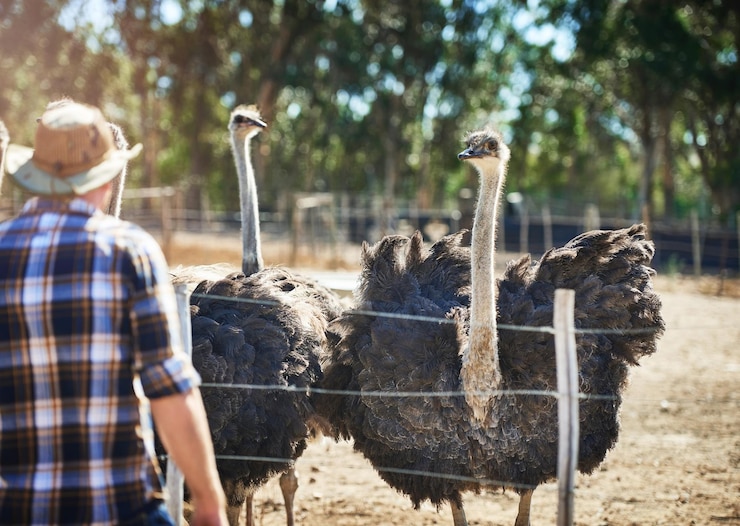
Ostrich farming in South Africa is one of the most established and profitable livestock industries in the country, offering beginners a unique opportunity to enter high-value agricultural production. The country is the global leader in ostrich farming, with strong export markets for meat, leather and feathers. Many new farmers are attracted to ostriches because the birds produce multiple revenue streams and can be raised on relatively dry land unsuitable for many other livestock systems. However, success requires careful planning, strong animal management skills and an understanding of production cycles. Beginners who approach ostrich farming as a structured business rather than a casual venture are more likely to achieve long-term profitability.
The first step in starting ostrich farming is selecting suitable land with enough space and appropriate environmental conditions. Ostriches require large open areas because they are active birds that need room to move freely and reduce stress. In South Africa, regions such as the Western Cape and parts of the Northern Cape are well known for ostrich production due to their semi-arid climates. The land must be well drained and free from excessive moisture because wet conditions can lead to disease and poor bird health. Beginners should also ensure that the farm is securely fenced to prevent escapes and protect birds from predators.
Infrastructure is another critical component of successful ostrich farming. Farmers need to invest in secure enclosures, feeding systems, watering points and handling facilities. Proper fencing is essential because ostriches are strong and can easily damage weak barriers. Shade structures should also be provided to protect birds from extreme heat, especially during the summer months. Hatcheries and incubation facilities are required for those who plan to breed ostriches commercially. These systems must be carefully managed to maintain temperature and humidity levels for successful egg incubation.
Choosing the right breeding stock is a major factor in determining the success of an ostrich farming operation. Beginners should purchase healthy birds from reputable breeders who can provide records of genetics and health history. Strong breeding pairs improve egg production rates and increase the likelihood of healthy chicks. Farmers typically select birds based on traits such as growth rate, feather quality and disease resistance. Proper selection ensures that the farm develops a strong genetic foundation for future production cycles. Investing in quality breeding stock at the start reduces long-term production risks.
Feeding and nutrition play a central role in ostrich growth and productivity. Ostriches require a balanced diet that includes grains, protein sources, minerals and vitamins to support healthy development. Young chicks need specially formulated feed to promote bone strength and prevent leg deformities. As they mature, their diet is adjusted to match their growth stage and production goals. Clean water must always be available because dehydration can quickly affect health and performance. Poor nutrition leads to reduced growth rates and lower-quality meat and feathers.
Health management is essential in ostrich farming because birds are susceptible to diseases and stress-related conditions. Regular veterinary checks help identify health issues early and prevent outbreaks that could affect the entire flock. Vaccination programs and biosecurity measures are important for maintaining herd health. Farmers must also monitor for parasites and respiratory infections, which can spread quickly in poorly managed systems. Clean housing conditions and proper waste management reduce the risk of disease transmission. Beginners should work closely with animal health professionals to develop effective health management plans.
Breeding and reproduction are key components of a successful ostrich farming business. Ostriches reach breeding age at around two to three years, depending on their growth rate and health status. During the breeding season, pairs or groups are managed to encourage egg production. Eggs are either naturally incubated or placed in artificial incubators for controlled hatching. Hatchery management requires careful attention to temperature, humidity and turning schedules to ensure high hatch rates. Successful breeding programs increase farm productivity and support long-term expansion.
Marketing is an important consideration for beginners entering the ostrich industry. Ostrich meat is known for being lean and healthy, which creates demand in international and local markets. The leather industry also values ostrich hides for luxury products such as handbags, shoes and accessories. Feathers are used in fashion and decorative industries, adding another income stream for farmers. Farmers must understand market requirements and quality standards to secure better prices. Building relationships with buyers, exporters and processors improves market access and profitability.
Financial planning is essential because ostrich farming requires significant initial investment in infrastructure, breeding stock and feed. Costs can be high during the early stages before birds reach production age. However, once established, ostrich farming can generate strong returns due to diversified income streams. Beginners should prepare detailed budgets and consider long-term cash flow planning before starting operations. Access to agricultural finance or support programmes can help reduce startup pressure. Proper financial management ensures business stability during the early years of production.
Ostrich farming in South Africa offers a unique opportunity for beginners willing to invest time, capital and effort into learning proper livestock management. Success depends on selecting suitable land, building strong infrastructure, maintaining good animal health and understanding market demands. Farmers who follow structured production systems can build profitable and sustainable businesses over time. The industry also contributes significantly to exports, rural development and job creation across the agricultural sector. With careful planning and disciplined management, ostrich farming can become a rewarding and long-term agricultural venture for new farmers in South Africa.
Join 'Farmers Mag' WhatsApp Channel
Get the latest Farming news and tips delivered straight to your WhatsApp
CLICK HERE TO JOIN




