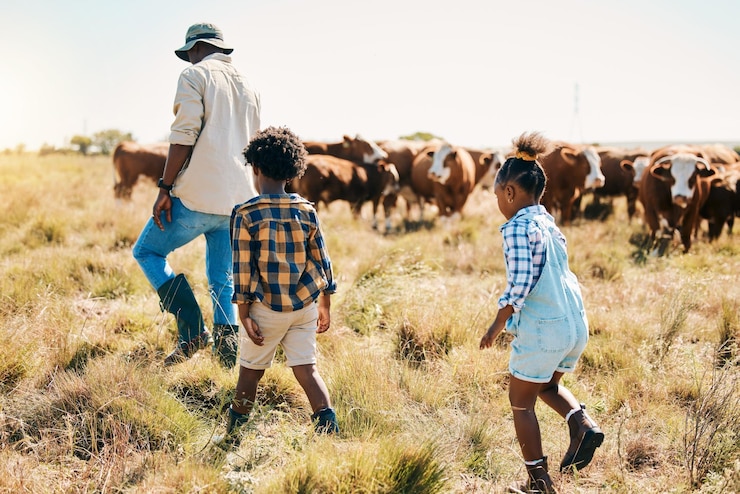
Farm life in South Africa offers children valuable learning experiences, exposure to nature and early understanding of agriculture. However, farms also contain many hazards that can put children at risk if safety rules are not clearly understood and followed. Equipment, livestock, chemicals and water sources all require careful supervision to prevent accidents. Parents and farm managers carry the responsibility of creating a safe environment where children can move and learn without unnecessary danger. A strong safety culture helps protect children while still allowing them to experience farm life in a meaningful way.
One of the most important aspects of farm safety is controlling access to dangerous areas. Machinery such as tractors, ploughs and harvesters should never be operated or accessed by children without supervision. These machines can move quickly and have blind spots that make them especially risky. Livestock handling areas also require strict supervision because animals like cattle and horses can behave unpredictably. Children should be taught to observe animals from a safe distance unless an adult is present. Clear boundaries around work areas help reduce the risk of accidental injury.
Water sources on farms are another serious safety concern. Dams, irrigation canals, reservoirs and tanks can pose drowning risks, especially for young children. These areas should be fenced or clearly marked to prevent unsupervised access. Children must be taught early about the dangers of water bodies on farms, even if they appear calm or shallow. Supervision is essential whenever children are near water used for farming operations. Simple safety measures such as barriers and warning signs can prevent tragic accidents.
Chemical storage and handling areas require strict safety control. Fertilisers, pesticides and cleaning agents must always be stored in locked facilities that are inaccessible to children. Exposure to these substances can cause serious health problems, including poisoning or burns. Children should never be allowed to handle or play near chemical containers. Farmers must ensure that all containers are clearly labelled and securely sealed after use. Education about the dangers of chemicals helps children understand why these areas are off limits.
Livestock safety is another key part of protecting children on farms. Animals such as bulls, rams and stallions can become aggressive, especially during feeding or breeding periods. Children should be taught to avoid approaching animals from behind or entering enclosures without supervision. Even calm animals can react unexpectedly when startled or stressed. Safe behaviour around animals includes moving slowly, avoiding loud noises and respecting feeding times. Learning these habits early reduces the risk of injury and builds respect for animals.
Farm tools and equipment also present potential hazards if not handled properly. Sharp tools such as knives, shears and spades should be stored safely after use. Children should only use tools that are appropriate for their age and ability under direct supervision. Teaching correct handling techniques helps prevent cuts, punctures and other injuries. Equipment sheds should be kept organised and locked when not in use. Good storage habits reduce clutter and make farms safer for everyone.
Education plays a central role in farm safety for children. Parents and farm workers should regularly discuss safety rules in simple and clear language. Practical demonstrations help children understand risks better than instructions alone. Schools in rural areas can also support safety education by including farm safety topics in their lessons. Repetition and consistent reminders help reinforce safe behaviour over time. When children understand the reasons behind safety rules, they are more likely to follow them.
A strong culture of supervision and responsibility is essential on every farm. Adults must always know where children are and what they are doing, especially during busy farming activities. Assigning safe play areas away from work zones allows children to enjoy farm life without unnecessary exposure to danger. Regular safety checks around the farm help identify risks such as broken fences or open water points. Creating a safe environment requires constant attention and commitment from everyone involved in farm operations.
Farm safety for children in South Africa is about balance between learning and protection. Farms provide excellent opportunities for growth, responsibility and connection with nature, but they also require careful risk management. By controlling access to hazards, educating children and maintaining strong supervision, farmers can significantly reduce accidents. Safe practices ensure that children benefit from farm life while staying protected from harm. A well managed farm environment allows children to grow up safely while developing a positive understanding of agriculture.
Join 'Farmers Mag' WhatsApp Channel
Get the latest Farming news and tips delivered straight to your WhatsApp
CLICK HERE TO JOIN