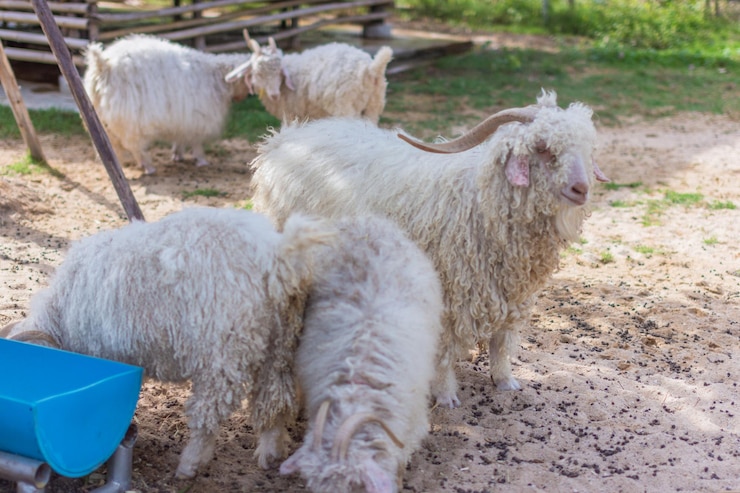
Speciality fibre production is slowly gaining attention in South Africa as farmers look for high-value agricultural opportunities beyond traditional livestock and crop systems. Alpaca and Angora fibre farming sit within this niche sector, offering premium natural fibres that are in demand in fashion, textile manufacturing, and luxury markets. These fibres are known for their softness, durability, and insulating properties, which make them highly desirable for high-end garments and specialty products. In South Africa, interest in these animals is growing as producers explore diversification strategies to improve income stability and reduce reliance on conventional farming outputs. The sector remains small but shows strong potential for expansion where climate, management capacity, and market access align effectively.
Alpacas are originally from South America and are valued primarily for their fleece, which is lightweight, warm, and hypoallergenic. Angora production in South Africa is associated mainly with Angora goats, which produce mohair, one of the world’s most valuable natural fibres. Both fibre types require specific management systems, including careful breeding, shearing cycles, and nutrition programmes to maintain fibre quality. South Africa already has a strong global reputation in mohair production, which gives Angora fibre farmers a competitive advantage in international markets. Alpaca farming, while still emerging locally, is being introduced by private breeders and small-scale farmers interested in niche livestock markets.
Climate plays an important role in determining the suitability of alpaca and Angora production systems. Alpacas adapt well to a wide range of environments, including cooler highland regions and semi-arid areas, as long as they have adequate shelter and pasture quality. Angora goats are more widely suited to South Africa’s semi-arid regions such as the Eastern Cape and parts of the Karoo, where dry conditions support high-quality mohair growth. Farmers must carefully manage grazing pressure, water availability, and seasonal weather changes to maintain herd health and fibre consistency. Proper housing and parasite control also form essential parts of production systems for both fibre types.
The production process for speciality fibres requires attention to detail from birth through to shearing and fibre processing. Alpacas are typically sheared once a year, while Angora goats may be sheared twice annually depending on fibre growth rates and climatic conditions. Fibre quality is assessed based on fineness, length, colour, and uniformity, which directly influences market pricing. After shearing, fibre must be cleaned, sorted, and processed before it enters spinning or textile manufacturing chains. In South Africa, mohair already benefits from established auction systems and export channels, while alpaca fibre often relies on smaller, specialised niche markets and direct buyers.
Market opportunities for alpaca and Angora fibre are expanding due to global demand for natural and sustainable textiles. Consumers in international markets increasingly prefer biodegradable fibres over synthetic materials, which positions mohair and alpaca fibre favourably. South Africa’s mohair industry already exports significant volumes to Europe and Asia, where it is used in luxury fashion and upholstery products. Alpaca fibre, although smaller in scale locally, is gaining traction in boutique textile markets and handcrafted goods sectors. Farmers who invest in quality breeding stock and fibre processing standards are more likely to access premium pricing structures.
Despite these opportunities, speciality fibre production also presents challenges that farmers must consider carefully. High initial investment costs for breeding animals, fencing, housing, and shearing equipment can limit entry for small-scale farmers. Skills development is also essential, as fibre production requires technical knowledge in animal husbandry, genetics, and fibre grading. Market access can be inconsistent for alpaca producers due to the limited scale of local processing infrastructure. Angora producers, while better integrated into existing value chains, still face global price fluctuations and competition from other producing countries such as Australia and New Zealand.
Support structures in South Africa are gradually evolving to assist emerging fibre producers. Agricultural extension services, private breeding associations, and industry bodies play an important role in providing training and technical guidance. Research institutions are also exploring genetic improvement, disease management, and fibre quality enhancement to improve productivity in the sector. Access to export markets remains a key advantage for Angora producers, while alpaca farmers are encouraged to develop cooperative models to improve bargaining power. Financial institutions and development programmes are beginning to recognize speciality fibre farming as a viable diversification option in rural economies.
Speciality fibre production offers South African farmers a unique opportunity to enter high-value, export-driven agricultural markets. Alpaca and Angora systems both require careful management, technical knowledge, and long-term planning to achieve profitability. The sector aligns well with global trends toward sustainable and natural textile production, giving South African farmers a competitive advantage where quality standards are met consistently. While challenges such as high startup costs and limited infrastructure exist, the potential for growth remains strong in suitable regions. With improved support, training, and market integration, speciality fibre production can become an important contributor to rural development and agricultural diversification in South Africa.
Join 'Farmers Mag' WhatsApp Channel
Get the latest Farming news and tips delivered straight to your WhatsApp
CLICK HERE TO JOIN