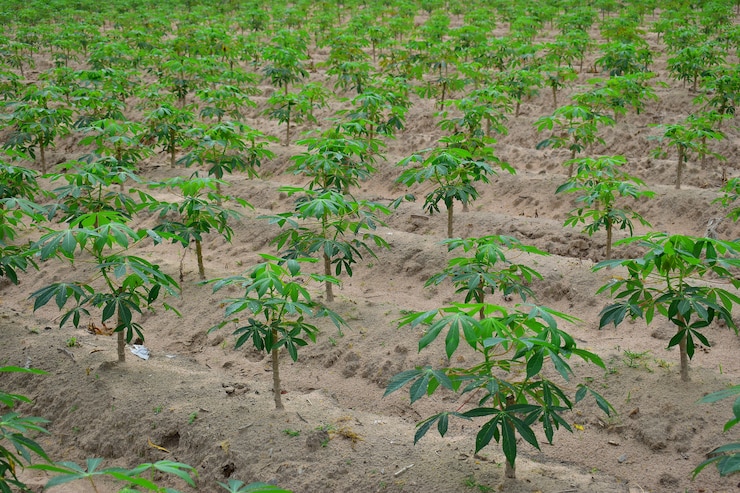
Cassava has become one of the most discussed root crops in African agriculture, especially as farmers look for crops that can handle climate stress and still deliver reliable yields. In South Africa, interest in cassava is growing due to its ability to tolerate drought, poor soils, and unpredictable rainfall patterns. The crop is widely grown in tropical regions, and it is known for producing high starch content that can be used in food, animal feed, and industrial products. Farmers are now asking whether cassava can fit into commercial farming systems or small scale operations in different provinces. The answer depends on soil conditions, climate, market access, and your production goals as a farmer.
Cassava grows best in warm climates with temperatures between 25°C and 29°C and requires at least 8 months of frost free growing conditions. In South Africa, regions such as Limpopo, Mpumalanga, KwaZulu Natal, and parts of the Eastern Cape offer more suitable conditions compared to colder or frost prone areas. The crop performs well in sandy or loamy soils but can still produce in low fertility soils where other crops fail. One of its strongest advantages is its ability to survive drought once established, making it a strong option for areas facing water scarcity. However, cassava does not tolerate waterlogged soils, so drainage is important for healthy root development and yield stability.
From a production perspective, cassava requires careful planning because it has a long growing cycle, usually between 10 and 18 months depending on the variety. This means farmers must be prepared for delayed income compared to crops like maize or vegetables that mature faster. Planting material is also a key factor since cassava is propagated through stem cuttings rather than seed. Healthy, disease free cuttings are essential for achieving good yields and preventing the spread of viral diseases. Weed control is also critical in the early stages because cassava grows slowly at first and can be outcompeted by aggressive weeds. Once established, it becomes more resilient and requires less intensive management.
Market demand is one of the most important factors when deciding whether cassava is suitable for your farm. In South Africa, cassava is not yet as widely consumed as staple crops like maize, but demand is increasing in niche markets. It is used in starch production, animal feed manufacturing, gluten free food products, and industrial applications such as bioethanol. This creates opportunities for farmers who can link into agro processing value chains rather than relying only on fresh produce markets. However, access to reliable buyers is still developing, which means farmers should secure contracts or partnerships before scaling production.
Cassava also plays an important role in food security because it can be harvested when needed and stored in the ground for long periods. This flexibility allows farmers to manage harvest timing based on market conditions or household needs. It also reduces post harvest losses compared to crops that must be harvested immediately after maturity. In addition, cassava is gaining attention as a climate resilient crop that can support rural livelihoods under changing environmental conditions. Research institutions and agricultural programs continue to explore improved varieties that offer higher yields, better disease resistance, and improved nutritional value.
Despite its advantages, cassava is not suitable for every farming system in South Africa. Farmers in cooler regions or areas with frost risk may struggle to achieve viable production. The long growth period can also affect cash flow, especially for farmers who depend on quick turnover crops. Limited local market infrastructure can make it difficult to sell raw cassava at profitable prices without processing facilities nearby. These challenges mean that cassava should be considered as part of a diversified farming strategy rather than a single crop solution for most producers.
Cassava can be a strong option for farmers who operate in warm regions, have access to suitable soils, and can connect with processors or stable buyers. It offers resilience against drought and low fertility conditions, making it valuable in areas where other crops struggle. However, success depends on careful planning, access to quality planting material, and a clear understanding of market demand. Farmers who integrate cassava into a broader crop system can reduce risk while opening new income opportunities. In conclusion, cassava can be the right crop for your farm in South Africa if your conditions match its biological needs and you have a clear market strategy to support production.
Join 'Farmers Mag' WhatsApp Channel
Get the latest Farming news and tips delivered straight to your WhatsApp
CLICK HERE TO JOIN