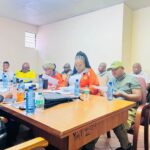
The final District Women in Agriculture Imbizo brought female farmers, young people, community leaders and government representatives together at the Bluegumbush Multi Purpose Centre in Qwaqwa. Hosted by Free State MEC for the Department of Agriculture, Rural Development and Environmental Affairs, Elzabe Rockman, the gathering focused on the challenges and opportunities facing women in agriculture. The objective was to create a space where female farmers could share their experiences and identify practical ways to strengthen their agricultural businesses. Discussions covered horticulture, crop production, animal production, poultry and commonage management, alongside concerns about safety, stock theft and animal diseases. The engagement also formed part of a broader process leading to the Provincial Women in Agriculture Imbizo scheduled for 13 and 14 October 2026 in Bloemfontein.
MMC for Local Economic Development in Maluti-a-Phofung Local Municipality, Councillor Masechaba Mosia-Lakaje, warmly welcomed the farmers and other participants attending the event. She placed particular emphasis on the participation of women and young people in agriculture. Her message to young people was that they should learn from their parents and become active participants in the agricultural sector. This approach recognizes the value of agricultural knowledge passed between generations while encouraging younger people to develop their own role in farming and related businesses. Councillor Mosia-Lakaje also described agriculture as a backbone of local economic development and expressed her appreciation to MEC Rockman for supporting the engagement with farming communities.
The Imbizo opened with a candlelight ceremony led by Reverend TK Tantsi, which focused attention on gender-based violence against women and children. The ceremony added a social protection dimension to an event primarily focused on agriculture and rural economic development. Gender-based violence affects families and communities and remains an important issue that requires awareness and collective action. The Department used the session to encourage communities, particularly men, to take responsibility for protecting women and children and respecting their dignity. The message also encouraged individuals and communities to value themselves and stand together against violence.
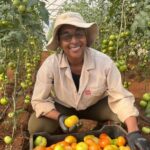
Women farmers used the Imbizo to share their experiences across several areas of agricultural production. Participants spoke about horticulture, crop production, animal production and poultry farming, showing the wide range of activities in which women are involved. These experiences provided an opportunity to demonstrate the contribution female farmers make to agricultural production and rural economies. At the same time, farmers were able to raise practical problems that can affect their ability to operate and grow their businesses. Giving farmers a direct platform to explain these challenges can help government understand the conditions affecting agricultural producers at community level.
Commonage management emerged as one of the concerns raised by participants. Commonage areas can be important resources for farmers who rely on shared land for agricultural activities, particularly livestock production. Effective management is therefore important for ensuring that these resources are used responsibly and that farmers can operate within clear arrangements. Farmers also raised concerns about stray animals, which can create challenges for agricultural producers and may affect crops, livestock and farm operations. These issues demonstrate why land management and cooperation between farmers, municipalities and relevant authorities remain important in rural agricultural communities.
Farm safety and stock theft were also highlighted during the discussions. Farmers need safe environments in which they can protect their livestock, equipment and other agricultural assets. Stock theft can create financial losses for livestock farmers and undermine the sustainability of farming operations. Animal disease adds another layer of risk because outbreaks can affect livestock health and may have consequences for production and animal movement. Addressing these concerns requires cooperation between farmers, government institutions and other stakeholders responsible for agricultural support, animal health and community safety.
Foot-and-mouth disease was among the agricultural issues addressed through presentations during the Imbizo. Animal health is an important part of livestock production because diseases can affect the health and productivity of animals and create additional challenges for farmers. Providing farmers with information about foot-and-mouth disease can support greater awareness of the risks associated with livestock production. Farmers also need access to appropriate information and assistance when dealing with animal health concerns. Including the issue in the District Women in Agriculture Imbizo ensured that women livestock farmers had an opportunity to engage with information relevant to their businesses.
Access to land was another important subject discussed at the gathering. The Department of Rural Development and Land Reform provided information relating to access to agricultural land. Land access remains an important consideration for farmers who want to establish, expand or sustain agricultural businesses. Women seeking to enter or grow their participation in agriculture need opportunities to access suitable land and other resources required for productive farming. Discussions about land therefore form an important part of broader efforts to strengthen women’s participation in agriculture and rural economic development.
Gender-based violence was addressed through a presentation by the Department of Social Development. Including this issue alongside agricultural discussions recognized that women farmers operate within communities where social and economic challenges can overlap. Women need to be able to participate in agricultural activities without facing violence or threats to their safety and dignity. Raising awareness can help communities understand the seriousness of gender-based violence and the need for collective responsibility. The participation of different government departments also allowed the Imbizo to address agricultural development together with social issues affecting rural communities.
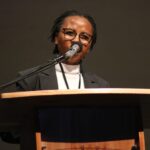
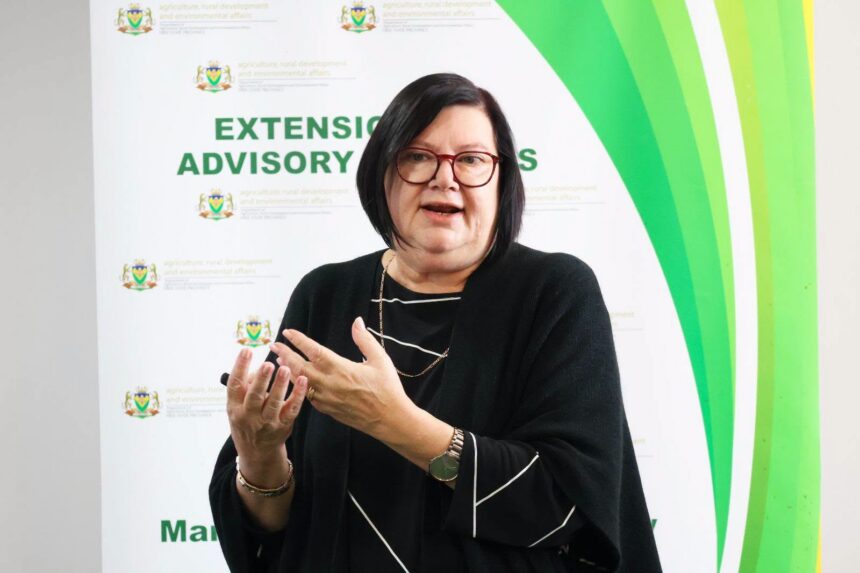
MEC Elzabe Rockman, who was also referred to as Mofumahadi Mamaitse, acknowledged all the female farmers who attended the Imbizo. The name Mofumahadi Mamaitse was received from the Kgolokoeng Traditional Council, adding a local cultural dimension to her engagement with the community. MEC Rockman highlighted the fact that agriculture remains a male-dominated sector and said that female farmers need a dedicated platform to discuss the challenges they face. She emphasized the importance of confronting these challenges and finding possible solutions that can support women agricultural producers. Her comments placed greater access to opportunities, support and markets at the centre of the discussion about strengthening women’s participation in agriculture.
Market access was identified as an area requiring stronger attention. Producing agricultural goods is only one part of running a successful farming business because farmers also need reliable opportunities to sell their products. MEC Rockman stressed the need for a more aggressive approach to opening markets for local farmers. Improved market opportunities can help producers increase sales, develop sustainable businesses and strengthen their contribution to local economic activity. For women farmers in particular, better market access could support the growth of agricultural enterprises across horticulture, crops, livestock and poultry.
The focus on young people also highlighted the importance of building a new generation of agricultural producers. Young people can learn valuable practical skills from parents and other experienced farmers while also bringing new ideas and approaches into the sector. Encouraging youth participation can help strengthen continuity in farming families and communities. It can also create opportunities for young people to pursue agricultural production and related businesses as part of local economic development. The message from the Imbizo was therefore not limited to supporting existing farmers, but also encouraged younger generations to see agriculture as an area in which they can participate and build productive livelihoods.
The District Women in Agriculture Imbizo forms part of a wider provincial process that will culminate in the Provincial Women in Agriculture Imbizo on 13 and 14 October 2026 in Bloemfontein. The district engagements provide an opportunity for farmers to raise concerns and share experiences before the provincial gathering. Issues such as market access, land, commonage management, animal health, stock theft and farm safety are likely to remain important areas of discussion. The provincial event provides a broader platform to bring together issues raised across different communities and consider possible responses. This process can help ensure that the experiences of women farmers at district level contribute to wider agricultural discussions in the province.
The Qwaqwa Imbizo demonstrated the importance of giving women farmers a direct voice in agricultural development. Female producers are active across horticulture, crop production, livestock and poultry, yet they continue to identify challenges that can restrict the growth of their businesses. Addressing these challenges requires practical engagement on land access, markets, animal health, safety and commonage management, as well as broader social issues such as gender-based violence. The involvement of government departments, local leadership and community representatives created a platform for these concerns to be discussed collectively. As the province prepares for the Provincial Women in Agriculture Imbizo in Bloemfontein, the discussions in Qwaqwa provide an important foundation for continuing efforts to strengthen women farmers and expand their role in South African agriculture.
Join 'Farmers Mag' WhatsApp Channel
Get the latest Farming news and tips delivered straight to your WhatsApp
CLICK HERE TO JOIN