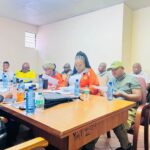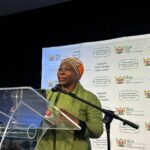
The Northern Cape leg of consultations on the National Food and Nutrition Security Plan 2025 to 2033 is continuing in Kimberley, bringing stakeholders together to examine the province’s food security challenges and discuss practical solutions. The consultation for the Francis Baard District comes at a time when food and nutrition insecurity remains a significant concern in the Northern Cape. For farmers, the issue is closely connected to agricultural production, access to markets and the ability of households to obtain affordable and nutritious food. The National Food and Nutrition Security Survey found that only 34.5% of households in the province were food secure, while 65.5% experienced some level of food insecurity. The consultation process provides an important opportunity to bring farmers and other stakeholders into discussions about how agriculture can contribute to stronger food systems across the province.
The survey identified the Northern Cape as one of the three provinces most affected by food and nutrition insecurity. Of the households surveyed, 21.2% were classified as severely food insecure, while the wider figure of 65.5% included households experiencing different levels of food insecurity. These figures show that access to food remains a serious issue for many households. They also underline the importance of understanding food security as a challenge that affects both consumers and agricultural producers. Farmers are central to the food system because they produce many of the foods that eventually reach households, markets and communities.
The Household Hunger Scale provides another perspective on the situation in the province. More than 70% of households experienced little or no hunger, according to the survey findings. However, 19.2% experienced moderate hunger and 7.3% experienced severe hunger. This means that a significant proportion of households continue to experience serious challenges in obtaining enough food. For agricultural communities, these findings reinforce the importance of productive local farming and reliable food supply chains. They also show why discussions about food security need to consider the conditions that allow farmers to produce food consistently and connect their products with consumers.
Food security is not only about producing enough food. The survey findings show that diet quality is also a major concern in the Northern Cape. About 23.6% of households recorded poor diets while 24.1% recorded borderline diets. Households largely consumed cereals, condiments, sugar, oils and fats, while nutrient-rich foods such as fruit, pulses, nuts, eggs, fish and seafood were consumed less frequently. This indicates that having food available does not necessarily mean that households have regular access to a diverse and nutritious diet. For farmers, this creates an important link between agricultural production, market opportunities and the availability of different types of food.
The findings highlight the potential importance of diversified agricultural production in addressing food and nutrition security. Farmers involved in horticulture, livestock, poultry and other forms of agricultural production contribute different products to the food system. Increasing the availability of locally produced nutrient-rich foods can form part of a broader response to poor diet quality. However, production needs to be matched with functioning markets and consumers who can afford the products. The NFNSP consultation therefore provides an opportunity to discuss food security in terms of both production and access.
Market access is an important consideration when looking at the relationship between farmers and food security. Farmers need opportunities to sell their produce at sustainable prices, while communities need access to food at prices they can afford. Where local producers can participate effectively in markets, agricultural activity can support both household incomes and local food supply. Stronger connections between farmers, markets and consumers can therefore contribute to local economic activity while supporting food availability. Discussions during the consultation can help identify barriers that prevent agricultural producers from reaching markets and supplying a wider range of food products.
The Francis Baard District consultation in Kimberley is important because local stakeholders can provide information about conditions that may not be fully reflected in provincial statistics. Farmers understand the production challenges affecting their fields, livestock and agricultural businesses. They also have direct experience of issues involving input costs, production conditions, markets and the movement of agricultural products. Bringing these experiences into the NFNSP process can help decision-makers consider practical measures that are relevant to farming communities. District-level consultation also creates an opportunity for stakeholders to identify solutions that take local circumstances into account.
Agricultural production must remain an important part of any long-term discussion about food security in the Northern Cape. Farmers need the ability to maintain productive operations and respond to changing economic and environmental conditions. Food security policies can therefore have implications for farmers, particularly where they affect agricultural development, local food systems and access to markets. At the same time, farmers can contribute to food security by producing a wider range of agricultural products where conditions and markets make this viable. The consultation process can help bring these different perspectives together as the National Food and Nutrition Security Plan takes shape.
The survey’s findings on diet quality also demonstrate why food security cannot be measured only by the amount of food available. A household may have access to staple foods but still have limited access to fruit, pulses, nuts, eggs, fish and seafood. The lower consumption of these nutrient-rich foods points to a broader challenge involving dietary diversity. Farmers and agricultural businesses have a role in supplying diverse food products, but production must be supported by suitable markets and consumer demand. Addressing nutrition therefore requires cooperation across the food system rather than focusing on one part of the agricultural value chain.
The National Food and Nutrition Security Plan 2025 to 2033 provides an opportunity to develop a coordinated response to these challenges. The consultation process allows stakeholders from different parts of the food system to contribute their experiences and ideas. For farmers, participation can help ensure that agricultural production and market-related issues form part of the wider food security discussion. For communities, the process provides an opportunity to raise concerns about food access and diet quality. Bringing these perspectives together can help shape a plan that recognizes the relationship between agricultural production, household food access and nutrition.
The Northern Cape’s food security figures also show why long-term solutions are needed alongside immediate responses. With 65.5% of households experiencing some level of food insecurity, the province faces a substantial challenge. The 21.2% severe food insecurity figure and the levels of moderate and severe hunger identified by the Household Hunger Scale further demonstrate the need for sustained action. At the same time, the figures on poor and borderline diets show that improving food security must include attention to what people eat, not only whether they have enough food. A stronger agricultural sector, functioning markets and improved access to diverse foods can all form part of the broader discussion.
For farmers, the NFNSP consultation is an opportunity to make sure that agricultural realities are considered when food and nutrition policies are developed. Farmers are directly involved in producing food, but their ability to contribute depends on the conditions under which they operate. Access to markets, sustainable production opportunities and demand for different agricultural products all influence what farmers can produce and sell. The consultation process can provide a platform for stakeholders to identify practical measures that support agricultural production while addressing food and nutrition needs. Farmer participation is therefore important in ensuring that the final plan reflects the realities of the food production sector.
The Kimberley consultation for the Francis Baard District comes at an important stage in the development of the National Food and Nutrition Security Plan for 2025 to 2033. The evidence shows that the Northern Cape faces significant food and nutrition insecurity, with challenges involving household food access, hunger and diet quality. These challenges are directly relevant to agriculture because farmers form a vital part of the food system that supplies communities. The consultation provides an opportunity to connect the province’s food security needs with the realities of agricultural production and market access. A coordinated approach that supports farmers while improving access to diverse, affordable and nutritious food will be important as stakeholders work towards stronger food and nutrition security in the Northern Cape.
Join 'Farmers Mag' WhatsApp Channel
Get the latest Farming news and tips delivered straight to your WhatsApp
CLICK HERE TO JOIN