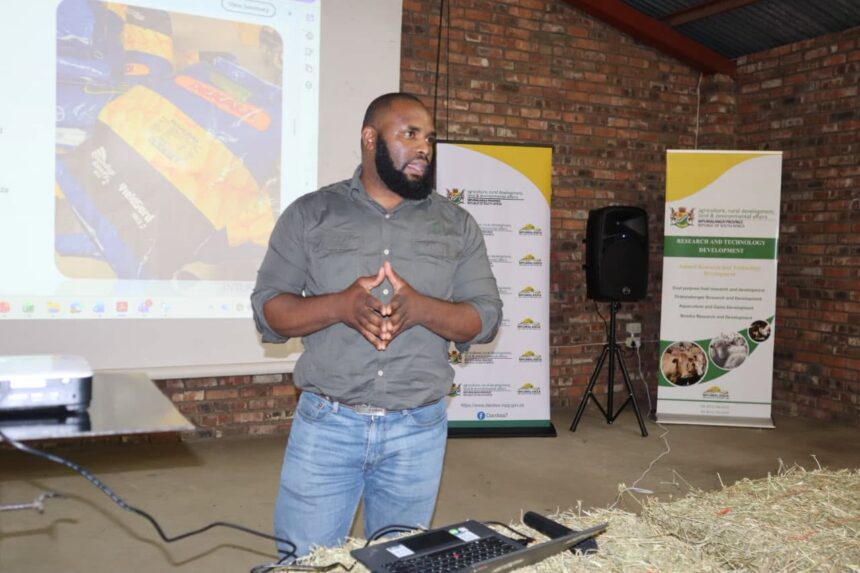
Farmers from areas around Msukaligwa Municipality gathered at Nooitgedacht Research Farm in Ermelo for a maize production workshop aimed at strengthening practical farming knowledge and improving crop performance. The session placed particular attention on seed selection and the important role that agricultural extension officers play in helping farmers make informed production decisions. Participants explored how farmers can select maize hybrids according to factors such as planting time, yield stability, maturity, standability and tolerance to diseases, herbicides and insects. The workshop also connected seed selection with other important parts of maize production, including soil knowledge, spraying, crop insurance and financial planning. Practical demonstrations on planter, fertiliser and boom sprayer calibration gave farmers an opportunity to connect technical information with activities carried out on the farm.
Choosing the right maize seed is one of the decisions that can have a major influence on the outcome of a production season. Farmers cannot select a hybrid based only on its potential yield because conditions vary between farms, fields and seasons. The workshop highlighted several factors that should be considered when selecting a hybrid, including the appropriate time to choose it, yield stability and maturity. Standability is also important because the ability of plants to remain upright can affect harvesting and crop losses. Farmers also need to consider disease resistance or tolerance, as well as herbicide and insect tolerance, when deciding which seed is suitable for their production conditions.
The workshop introduced farmers to several DEKALB maize seed varieties with different stated maturity periods. DKC73-74BR Yellow was presented with a maturity period of approximately 125 to 135 days, while DKC74-74BR Yellow was presented at approximately 130 to 140 days. DKC76-77BR White was presented with a maturity period of approximately 140 to 150 days. These maturity ranges give farmers useful information when considering how a particular hybrid may fit into their production plans. However, the appropriate choice depends on the farmer’s local conditions, planting window, soil characteristics, management practices and other production factors.
Yield stability was another important consideration discussed during the maize production workshop. A hybrid’s performance should be considered in relation to the conditions under which it will be grown rather than focusing only on its highest potential yield. Farmers face changes in rainfall, temperature, soil conditions, pest pressure and disease risk from one season to another. Understanding how different hybrids perform under varying conditions can help producers make more informed decisions about their seed choices. Extension officers can play an important role by helping farmers interpret available information and apply it to their individual farming conditions.
Maturity is particularly relevant when farmers plan their planting and harvesting activities. Different maturity periods can affect how a crop fits into the farmer’s overall production calendar. Farmers need to consider the length of their growing season and the conditions normally experienced in their area when selecting a hybrid. The maturity information presented at the workshop provides a basis for comparing the different DEKALB options discussed during the session. Farmers can then combine this information with knowledge about their fields and production objectives before making a final seed decision.
The role of extension officers was also central to the workshop because technical farming information becomes more useful when farmers can apply it correctly in their own fields. Extension officers can assist producers with production planning, crop management and the interpretation of technical recommendations. Their involvement can also help farmers identify problems early and seek appropriate advice before those problems have a larger effect on the crop. The workshop created an opportunity for farmers to engage with information that can support better decision-making throughout the production cycle. Strong communication between farmers and agricultural extension services can therefore contribute to improved farming practices and more informed production choices.
Profitability was addressed through the use of profitability calculators, giving farmers a practical way to consider the financial side of maize production. Producing a high-yielding crop does not automatically guarantee a profitable farming season because production costs also influence the final result. Farmers need to understand expenses associated with seed, fertiliser, chemicals, machinery, labour and other inputs. A profitability calculator can help producers examine the relationship between expected production, input costs and potential returns. Financial planning can help farmers make more informed choices before committing resources to a particular production strategy.
Soil knowledge also featured in the workshop because soil conditions influence how crops respond to inputs and management practices. Understanding the characteristics of a field can help farmers make better decisions about fertiliser application and other aspects of crop management. Soil information becomes especially useful when combined with accurate calibration of farm equipment because the correct application rate depends on both the recommendation and the ability to deliver that rate consistently. The practical demonstration on fertiliser calibration therefore complemented the discussion about soil knowledge. Farmers were able to see how technical information and equipment management work together in a maize production system.
The workshop also covered spraying practices, chemicals used to control weeds and insects and safer methods of applying agricultural chemicals. Effective weed and insect management requires farmers to understand the products they use and apply them according to appropriate instructions. Spraying equipment must also be properly calibrated to ensure that applications are made accurately and consistently. The boom sprayer demonstration provided practical training that can help farmers understand the importance of equipment settings and calibration. Safe spraying practices protect farmers, farm workers and the surrounding environment while supporting responsible crop protection.
Chemical storage was another important safety issue discussed during the session. Agricultural chemicals need to be handled and stored carefully to reduce the risk of accidental exposure, spills and misuse. Farmers and workers should follow the safety requirements associated with the products they use and ensure that chemicals are kept in appropriate storage conditions. Safe storage forms part of responsible chemical management and should receive the same attention as correct spraying and application. Including chemical safety in a maize production workshop gives farmers practical knowledge that extends beyond crop yield to the protection of people working on farms.
Crop insurance was also included in the presentations, highlighting the importance of managing financial risks in agricultural production. Farmers face risks that can affect their expected production and income, including adverse weather conditions and other events that may damage crops. Understanding available crop insurance options can help producers consider how they might manage some of these risks. Insurance should be assessed according to the farmer’s circumstances, production system and the terms of the specific policy. Discussing crop insurance alongside profitability and production planning helps farmers view maize farming as both an agricultural and financial operation.
The practical demonstrations on planter calibration, fertiliser calibration and boom sprayer calibration added an important hands-on element to the workshop. Accurate planter calibration can help farmers establish the intended planting rate and spacing for their chosen crop management approach. Fertiliser calibration helps ensure that equipment applies the planned amount of fertiliser consistently across the field. Boom sprayer calibration is similarly important because inaccurate application can lead to insufficient control, unnecessary chemical use or uneven treatment. These demonstrations showed farmers that equipment setup and calibration are closely connected to effective crop management.
The workshop at Nooitgedacht Research Farm in Ermelo provided farmers around Msukaligwa Municipality with practical information covering several stages of maize production. From selecting a suitable hybrid to understanding soil conditions, calculating profitability and managing crop protection, the sessions addressed decisions that can influence both production and financial outcomes. The introduction to DKC73-74BR Yellow, DKC74-74BR Yellow and DKC76-77BR White also gave participants specific maturity information to consider when planning their crops. Discussions on spraying and chemical storage reinforced the importance of safety alongside productivity. The combination of presentations and practical demonstrations made the workshop relevant to farmers looking for knowledge that can be applied directly in their operations.
Effective maize production depends on more than selecting a seed with strong yield potential. Farmers need to consider maturity, yield stability, standability, disease risks, herbicide and insect tolerance, soil conditions, input costs and available production resources. They also need to manage equipment carefully and apply crop protection products responsibly and safely. The Ermelo workshop brought these different elements together while emphasizing the role of extension officers in supporting farmers with technical knowledge and practical guidance. By strengthening farmers’ understanding of seed selection, crop management, financial planning and safety, initiatives of this kind can help producers make better-informed decisions and improve the management of their maize production operations.
Join 'Farmers Mag' WhatsApp Channel
Get the latest Farming news and tips delivered straight to your WhatsApp
CLICK HERE TO JOIN