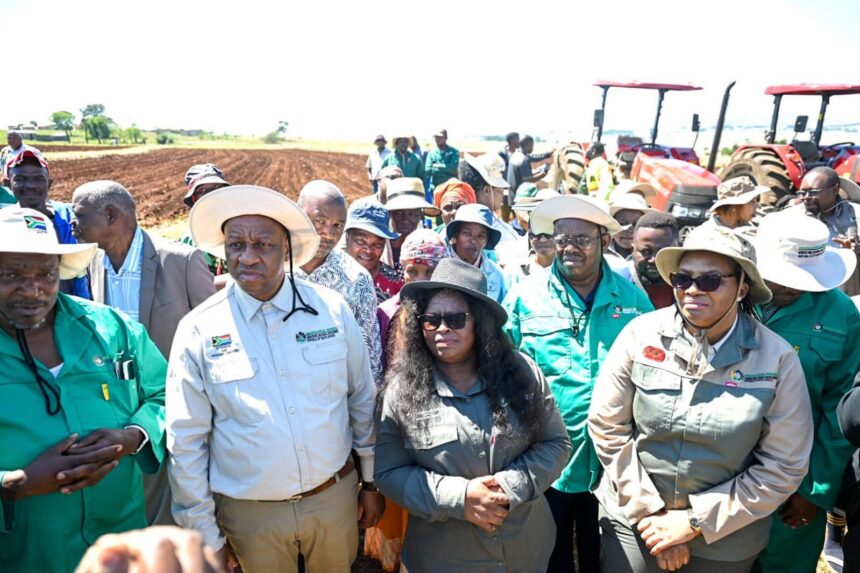
KwaZulu-Natal has officially launched its 2026 Multi-Planting Season at KwaGuqu in the Dlebe area of Ulundi, placing increased food production, land utilisation and small-scale farmer development at the centre of the province’s agricultural agenda. KwaZulu-Natal Premier Thamsanqa Ntuli and MEC for Agriculture and Rural Development Thembeni KaMadlopha-Mthethwa led the launch, which aims to unlock under-utilised agricultural land and help more small-scale farmers move towards commercial agriculture. The launch comes as the province prepares for the 2026/27 summer production season under challenging weather conditions. The provincial government is also investing in production inputs, mechanisation, irrigation, fencing, market support and animal health infrastructure. Together, these measures are intended to strengthen agricultural production and improve the ability of rural communities to produce food and build sustainable farming enterprises.
The Kwadidwayini Cooperative was one of the key sites visited during the launch. The cooperative is led by 31 women and has access to a large area of fertile land that the Premier described as a “Promised Land” for agriculture in Zululand. The description reflects the agricultural potential of the area and the opportunity to put under-utilised land into productive use. Increasing the productive use of available agricultural land can contribute to local food production while creating opportunities for rural communities. The leadership of women at Kwadidwayini also demonstrates the role that female farmers and cooperatives can play in expanding agricultural activity in KwaZulu-Natal.
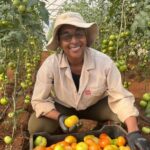
The delegation also visited the Vukuzakhe Cooperative, a two-hectare, women-led farming project involving 20 women. The cooperative produces onions, cabbage, potatoes and tomatoes, providing an example of small-scale horticultural production in the area. The project will receive fencing, irrigation, production inputs and market support to strengthen its farming operations. These forms of support address several practical requirements that farmers need to maintain consistent production and reach markets. Improved infrastructure and market opportunities can help small-scale producers move beyond subsistence production and develop more commercially focused agricultural businesses.
The focus on horticulture at Vukuzakhe is also important because vegetables form part of the food supply consumed by local communities. Producing onions, cabbage, potatoes and tomatoes locally can support food availability while creating potential income opportunities for participating farmers. However, productive farming requires more than access to land. Farmers also need reliable water, appropriate production inputs, infrastructure and opportunities to sell what they produce. The support planned for Vukuzakhe reflects this broader approach by combining irrigation, fencing, inputs and market support rather than focusing on production alone.
Livestock farmers in the Dlebe area also received support through the handover of a new dip tank at KwaNqindi. Small-scale livestock farmers welcomed the facility because it will reduce the distance they need to travel to access dipping services. The availability of a local dip tank brings animal health services closer to farming communities and can make livestock management more practical for small-scale producers. MEC KaMadlopha-Mthethwa said the facility will help prevent livestock diseases. Access to animal health infrastructure is particularly important for rural livestock farmers because disease prevention supports healthier animals and more stable farming operations.
The dip tank also forms part of the broader agricultural development approach being promoted through the Multi-Planting Season launch. Crop production and livestock farming operate within the same rural economy, with farmers depending on land, water, infrastructure and technical services. Strengthening livestock health services can reduce some of the practical barriers faced by small-scale livestock producers. Bringing services closer to communities can also save farmers time and reduce the burden associated with travelling long distances. The KwaNqindi facility therefore provides a practical example of how local agricultural infrastructure can support rural farmers.
Science-based farming was another major message from MEC KaMadlopha-Mthethwa during the launch. She stressed that farming must be guided by science rather than guesswork, particularly when farmers make decisions about soil fertility and fertiliser application. Soil samples have already been taken from the 50 hectares planned for planting in the area. Of this area, 30 hectares are located at KwaGuqu for 34 beneficiaries, while 20 hectares are located at eMkhiweni for 32 beneficiaries. Fertiliser will only be issued once the soil results are available, allowing the Department to match the appropriate input with the characteristics of the soil.
The approach to soil testing is significant because fertiliser recommendations should be based on the needs of the soil and the crop being produced. Applying inputs without understanding soil conditions can result in inappropriate application rates and unnecessary costs. Soil analysis provides information that can help guide decisions about nutrient requirements and fertiliser use. The process being followed in Dlebe places soil information before the distribution of fertiliser to the beneficiaries. This supports the MEC’s emphasis on using scientific information to improve production decisions.
Mechanisation is also being strengthened to support the planting programme. The Department reported that 35 hectares had already been prepared using seven tractors. The province is also increasing its mechanisation capacity through 57 EPWP tractor drivers, with 25 of these drivers currently undergoing training. Access to tractors can be important for farmers who need to prepare larger areas of land within the available planting window. Timely land preparation can influence when planting takes place and can therefore be an important part of seasonal crop management. Expanding the pool of trained tractor drivers can help improve the Department’s capacity to support agricultural production in participating communities.
The planned planting areas at KwaGuqu and eMkhiweni also demonstrate the scale of the programme at the local level. The 50 hectares are expected to involve a combined 66 beneficiaries, with 34 beneficiaries allocated to the 30 hectares at KwaGuqu and 32 beneficiaries linked to the 20 hectares at eMkhiweni. These farmers are entering the production season with support that includes land preparation and soil testing. The intention is to ensure that production decisions are based on information about the land and the needs of the crops. Such planning is particularly important when farmers face a season in which weather conditions may create additional production risks.
The province is preparing for an expected El Niño during the 2026/27 summer season, which the MEC warned could bring below-normal rainfall and above-normal temperatures. These conditions pose risks to rain-fed agricultural production because crops depend heavily on adequate moisture during key stages of their development. Staple crops such as maize, dry beans and soybeans could experience reduced yields if rainfall is insufficient. Drier conditions can also weaken veld and grazing resources, creating additional pressure for livestock farmers. Water shortages, higher feed costs and increased risks from veld fires, pests and animal diseases add further challenges to the coming agricultural season.
Several districts have been identified as being at high risk from the expected conditions. These include Amajuba, Zululand, Umkhanyakude, UThukela, UMzinyathi, UMgungundlovu and parts of Harry Gwala. Farmers in these areas will need to pay close attention to seasonal conditions and make production decisions with the expected weather risks in mind. The potential effects of an El Niño season extend beyond crop production because livestock farmers may also face reduced grazing and increased feed requirements. Water availability and animal health can become more challenging when temperatures are higher and rainfall is below normal.
The agricultural characteristics of the Dlebe area provide an important foundation for the planting programme. Agricultural scientists classify the area as Dry Lowveld Tall Grassveld, identified as VB11. The soil in the area is described as Hutton soil, which is considered good and fertile for farming. It drains well, holds nutrients and allows roots to grow deeply, characteristics that can support crop production. The combination of suitable soil and available agricultural land gives the Dlebe area potential for grain production when the land is properly managed and production conditions are favourable.
Under optimal conditions, the dryland maize potential in the area is estimated at up to 4.7 tonnes per hectare. This figure represents the potential under optimal conditions and should not be interpreted as a guaranteed yield for every farmer or season. Actual maize yields can vary depending on rainfall, soil fertility, planting dates, seed selection, weed and pest management, fertiliser application and other production factors. The expected El Niño conditions also introduce additional uncertainty for rain-fed crops during the 2026/27 season. This makes the emphasis on soil testing, appropriate inputs and science-based farming particularly relevant to farmers participating in the programme.
The 2026 Multi-Planting Season launch brings together several elements that are important for building stronger small-scale farming operations. Land that has been under-utilised is being brought into production, while farmers are receiving support with mechanisation, soil testing, production inputs and market access. Women-led cooperatives such as Kwadidwayini and Vukuzakhe are central to this effort, showing the contribution of women to agricultural production and rural economic development. Livestock farmers are also benefiting from investment in animal health infrastructure through the new KwaNqindi dip tank. These interventions demonstrate an approach that links crop production, livestock development, infrastructure and commercial opportunities.
For small-scale farmers, the success of the programme will ultimately depend on what happens beyond the launch. Farmers will need to apply sound production practices, use inputs appropriately and respond to the conditions experienced during the season. Government support can provide important infrastructure and services, but productive and sustainable farming also requires effective management at farm level. Market access will remain particularly important for cooperatives seeking to turn agricultural production into sustainable businesses. Strong production combined with reliable markets can help farmers generate income while contributing to local food availability.
The 2026 Multi-Planting Season launch at KwaGuqu represents a significant effort to place agricultural land and rural communities at the centre of food production in KwaZulu-Natal. The programme combines land utilisation, mechanisation, soil science, production support, market development and livestock health services. At the same time, the expected El Niño conditions mean that farmers face a challenging production environment during the 2026/27 summer season. The fertile Hutton soils of Dlebe provide a strong agricultural foundation, but achieving the area’s estimated maize potential will depend on effective management and favourable production conditions. By supporting small-scale farmers with practical services and encouraging science-based farming, the province is creating a stronger foundation for increased food production and the gradual expansion of rural farmers into commercial agriculture.
Join 'Farmers Mag' WhatsApp Channel
Get the latest Farming news and tips delivered straight to your WhatsApp
CLICK HERE TO JOIN