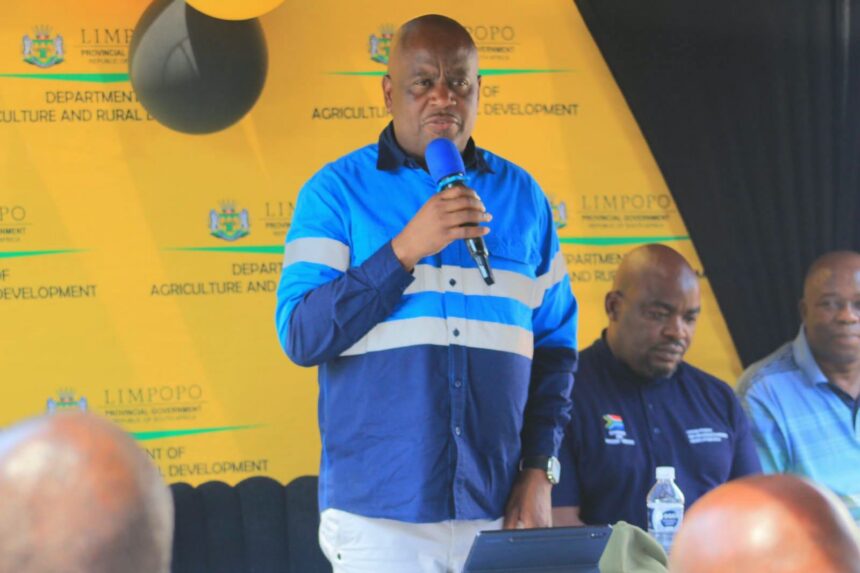
The Limpopo Department of Agriculture and Rural Development MEC, Mr Basikopo Makamu, delivered the keynote address at the Mathuba Farming Academy training awards ceremony in Vhembe District, where 35 students were recognised for completing their training. The ceremony celebrated the development of agricultural skills and the role of education in preparing emerging farmers for opportunities in the agricultural sector. MEC Makamu used the occasion to emphasise that agricultural knowledge and practical skills must be matched with access to productive resources, particularly land. He called on traditional leaders to make agricultural land available to people who are ready and willing to farm. His message placed land access, food production, food security and sustainable rural livelihoods at the centre of the discussion about agricultural development in Limpopo.
MEC Makamu stressed the importance of putting available agricultural land into productive use so that communities can contribute to food production and strengthen food security. For aspiring farmers, access to suitable land can determine whether newly acquired knowledge and farming skills can be converted into practical agricultural activity. Training can provide farmers with technical knowledge, but sustainable farming also requires access to resources and the ability to use those resources effectively. The call for traditional leaders to support people who are prepared to farm therefore highlights the connection between land access and agricultural participation. It also reflects the broader need to create conditions in which emerging farmers can establish productive enterprises and build sustainable livelihoods.
The address provided a clear reminder that agriculture depends on several factors working together. Farmers need knowledge and practical skills to understand production methods, manage livestock or crops and make informed decisions about their operations. They also need access to resources that allow them to apply what they have learned in real farming environments. Without the opportunity to put skills into practice, agricultural training can struggle to achieve its full potential for rural economic development. The Mathuba Farming Academy ceremony therefore brought attention to the importance of connecting agricultural education with practical opportunities for emerging farmers.
MEC Makamu also expressed his appreciation for the contribution made by Mathuba Genetics to the development of agricultural students. He specifically commended Mr Mudau for recognising the best-performing student, who is a female, with a farming starter pack. The starter pack consists of a Bosvelder sheep starter pack, a Savannah goat ram and a Venda chicken, with a combined value of approximately R30 000. This support provides the student with livestock resources that can serve as a practical foundation for beginning or developing an agricultural enterprise. The initiative demonstrates how partnerships and targeted support can help young agricultural trainees move from classroom learning towards practical farming activity.
The recognition of a female student through a substantial agricultural starter pack also placed women’s economic empowerment at the centre of the ceremony. MEC Makamu described the initiative as a contribution towards national solidarity against gender-based violence, highlighting the connection between economic independence and women’s ability to build secure livelihoods. Agriculture can provide women with opportunities to develop productive assets, generate income and participate more actively in the rural economy. Supporting women with livestock and other productive resources can give them a practical foundation from which to develop agricultural enterprises. The initiative at Mathuba Farming Academy therefore links agricultural empowerment with dignity, economic participation and opportunities for women to take leadership roles in farming.
The message about women and agriculture also reinforces the importance of viewing farming as an economic activity with the potential to create sustainable livelihoods. Agricultural empowerment involves more than providing training because farmers also need opportunities to access productive assets and develop viable enterprises. A livestock starter pack can give a new farmer practical resources with which to begin building experience and productive capacity. Continued support, appropriate management and access to markets can become important considerations as such an enterprise develops. The recognition at Mathuba Farming Academy therefore highlights the value of combining skills development with tangible agricultural support.
Mathuba Farming Academy has developed from a small backyard initiative started by Mr Emmanuel Mudau into what has been described as a centre of excellence for agricultural training and empowerment. The Academy was officially launched by former MEC Nakedi Kekana after the initiative had grown beyond its original backyard beginnings. Its development reflects the potential for grassroots agricultural initiatives to expand into platforms that support emerging farmers and agricultural students. The Academy’s continued role is focused on equipping people with knowledge and skills that can contribute to their participation in farming. The training awards ceremony provided an opportunity to recognise 35 students while also highlighting the Academy’s contribution to agricultural development in Vhembe District.
The growth of Mathuba Farming Academy also shows the importance of practical agricultural education in developing the next generation of farmers. Training institutions can help aspiring farmers gain knowledge that supports better decision-making and more responsible management of agricultural enterprises. When training is connected to practical farming opportunities, students can have a clearer path from learning to production. The Academy’s work, together with initiatives such as the livestock starter pack, demonstrates an approach that connects skills development with practical agricultural resources. This connection can help emerging farmers understand that successful farming requires both knowledge and the capacity to apply that knowledge in productive settings.
The 35 students recognised at the ceremony represent the importance of investing in agricultural skills within rural communities. Their training provides a foundation for developing the knowledge required to participate in agriculture and related economic activities. However, the message delivered by MEC Makamu makes clear that training should form part of a wider support system for emerging farmers. Access to land, productive assets and other agricultural resources can determine how effectively graduates turn their skills into viable farming activities. Strengthening these connections can support greater participation in the agricultural economy and create opportunities for rural communities to contribute to food production.
The focus on food security is particularly important because productive agricultural land and skilled farmers both play a role in maintaining food production. Communities with people who are trained and willing to farm need opportunities to use their skills and resources in productive ways. Making suitable land available can help create those opportunities while supporting agricultural activity at community level. Emerging farmers can contribute to local food production when they have access to the necessary conditions for farming. The call by MEC Makamu therefore connects agricultural training, land access and food security as important elements of rural agricultural development.
The ceremony also highlighted the role of collaboration in strengthening agricultural development in Limpopo. Government departments, traditional leaders, agricultural organisations, training institutions and private initiatives can each contribute in different ways to the development of farmers. Mathuba Farming Academy provides training, while Mathuba Genetics has demonstrated support through the livestock starter pack awarded to the best female student. Government leadership can help draw attention to challenges such as land access and the need to increase participation in the agricultural economy. Bringing these contributions together can create stronger opportunities for people who want to pursue farming as a livelihood.
MEC Makamu’s keynote address at Mathuba Farming Academy placed a strong focus on turning agricultural knowledge into productive action. His call for traditional leaders to make agricultural land available to people who are ready and willing to farm highlighted the importance of access to land in supporting food production and rural livelihoods. The recognition of the best female student with a livestock starter pack valued at approximately R30 000 added a practical dimension to the Academy’s commitment to agricultural empowerment and women’s economic participation. The story of Mathuba Farming Academy, from a small backyard initiative by Mr Emmanuel Mudau to a centre of excellence, further demonstrates the importance of agricultural training and grassroots development. The ceremony ultimately reinforced the Limpopo Department of Agriculture and Rural Development’s commitment to helping transform classrooms into farms, convert skills into productive opportunities and support the increased participation of emerging farmers in the agricultural economy.
Join 'Farmers Mag' WhatsApp Channel
Get the latest Farming news and tips delivered straight to your WhatsApp
CLICK HERE TO JOIN