Wendy Moshakga is proving that determination, resourcefulness and a willingness to take risks can create new opportunities in agriculture, even when the road to becoming a farmer is difficult. As the woman behind Serage Farms, an emerging agricultural enterprise based in Moletjie Londsale and Bloodriver, she has built her farming journey from limited resources into a growing operation supplying fresh produce to Boxer. Her story began with unemployment and a desire to create an income for herself at a time when employment opportunities were limited. Instead of allowing the lack of a job or access to capital to stop her, Moshakga looked for practical ways to overcome each obstacle. Her journey reflects the growing contribution of young women who are entering agriculture, building businesses and showing that farming can provide both economic opportunities and a platform for community development.
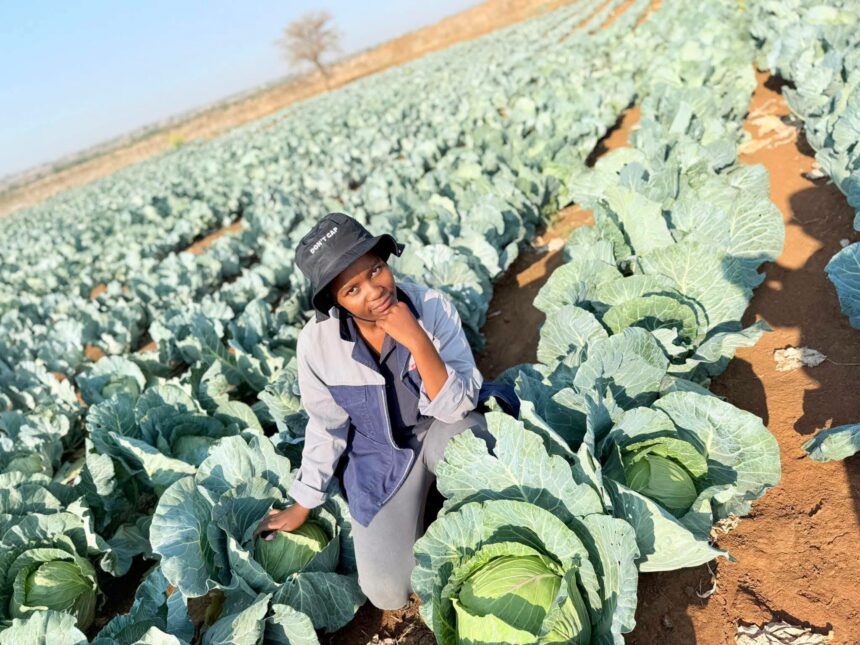
At Serage Farms, Moshakga focuses on vegetable production, with cabbage forming a major part of the farm’s activities. She also grows green beans and spinach, creating a diverse range of fresh produce for the market. At its current scale, the farm can have about 30,000 cabbages in production, alongside approximately 10,000 spinach plants and 10,000 green bean plants. Moshakga explained that she normally plants around 10,000 cabbages every month, demonstrating the production planning required to maintain a consistent supply. Her produce is supplied to Boxer, giving the farm access to an established retail market and creating an important connection between a small agricultural enterprise and consumers.
Moshakga’s decision to enter agriculture was closely linked to her experience of unemployment. As a young person looking for an opportunity, she realised that waiting for formal employment was not the only option available to her. She decided to create something for herself through farming, despite having little capital and no agricultural land at home. Starting a farm under those circumstances required her to find both land and financial resources before she could establish meaningful production. Her experience shows how entrepreneurship can emerge from difficult economic circumstances when people are willing to identify opportunities and pursue them despite uncertainty.
Finding suitable land was one of the first major barriers Moshakga had to overcome. She did not have land at home that could support the agricultural operation she envisioned, so she had to search for an alternative solution. Her breakthrough came when Kgoshi Kgabo Moloto III provided her with access to 20 hectares of land. Having access to land gave Moshakga an important foundation from which to develop Serage Farms and increase production. The opportunity also demonstrates how traditional leadership and access to agricultural land can play an important role in enabling emerging farmers to enter the sector and develop sustainable enterprises.
Capital presented another significant challenge, particularly during the early stages of her farming journey. Without sufficient funds to purchase all the inputs needed to establish production, Moshakga had to find an unconventional way to raise money. She turned to recycling and collected cans as a way of generating funds for her farm. What might have appeared to be a small income-generating activity became part of the foundation of her agricultural enterprise. Her willingness to collect recyclable materials to finance her first production shows the level of personal commitment and sacrifice that went into getting Serage Farms off the ground.
Moshakga’s journey also involved entering competitions and pitching opportunities that could expose her business to potential support and recognition. These platforms allowed her to present her agricultural enterprise and demonstrate its potential. She also received support from the Department of Agriculture, including assistance with a borehole, which helped strengthen the farm’s ability to produce crops. Access to reliable water is critical for vegetable farming because crops require consistent irrigation throughout their growing cycles. Support that addresses basic infrastructure needs can therefore make a substantial difference to the productivity and resilience of emerging farms.
Despite the progress she has made, Moshakga continues to face challenges that affect many small-scale farmers. Access to finance remains one of the biggest obstacles, particularly when farmers need money to expand production, purchase inputs or invest in infrastructure. Small agricultural businesses often need significant working capital because expenses arise before crops are harvested and sold. This creates pressure on farmers to manage cash flow carefully while dealing with fluctuating production and market conditions. For Moshakga, finding ways to secure sustainable financing remains an important part of taking Serage Farms to its next stage of growth.
Climate change has added another layer of difficulty to her farming operation. Moshakga described experiencing damaging weather conditions, including hail and excessive rainfall, which resulted in major production losses. When crops are damaged before they reach the market, farmers can lose not only their expected income but also the money already invested in seeds, fertiliser, labour, irrigation and other inputs. Such losses can be particularly difficult for small-scale farmers who have limited financial reserves to recover from unexpected setbacks. The impact of these conditions forced Moshakga to reduce her production quantities, showing how climate-related risks can directly influence the scale and profitability of an agricultural business.
The decision to reduce production illustrates the difficult choices farmers sometimes have to make when managing risk. Producing more crops can increase potential income, but larger production volumes also expose farmers to greater losses when extreme weather damages a harvest. Moshakga’s experience demonstrates why climate resilience is becoming increasingly important for agricultural businesses. Farmers need access to infrastructure, appropriate production practices, financial support and risk management strategies that can help them respond to changing weather patterns. For emerging farmers such as Moshakga, strengthening resilience can be essential to protecting the progress made through years of hard work.
One of Moshakga’s proudest moments came when she was invited to engage with the provincial leadership and agriculture representatives. The recognition gave her an opportunity to showcase her work and connect with people who could contribute to the development of her business. These experiences can be valuable for emerging farmers because agriculture depends heavily on networks, partnerships, market access and knowledge sharing. Building relationships with other agricultural stakeholders has helped Moshakga increase her visibility and explore opportunities that can move Serage Farms forward. Her story demonstrates that recognition can provide more than personal achievement because it can also create connections that support business growth.
Her achievements have also included recognition through agricultural awards, which have given her further encouragement as she continues to develop her farming enterprise. Moshakga has spoken about winning awards and being recognised among agricultural entrepreneurs, achievements that she views as significant milestones in her journey. Such recognition can help raise the profile of emerging farmers and demonstrate the contribution that small agricultural businesses make to local communities. It can also inspire other young people who may be considering agriculture but believe they lack the resources or experience to succeed. For Moshakga, these accomplishments represent evidence that the effort invested in Serage Farms is producing results.
Beyond commercial farming, Moshakga has developed an initiative that focuses on agricultural education in schools. Through her school agricultural programme, she visits schools and teaches learners about farming and food production. One of the messages behind the programme is that food does not simply appear in shops, but goes through a production process that requires farmers, resources, skills and hard work. Introducing young learners to agriculture can help them understand where their food comes from and encourage them to consider farming as a future career or business opportunity. It also gives Moshakga an opportunity to share her own experience and demonstrate that young people can create opportunities through agriculture.
Her commitment to agricultural education reflects a broader concern about the need to attract younger generations to farming. Agriculture requires a new generation of producers, entrepreneurs, researchers, technicians and business professionals who can contribute to food security and economic development. When young people understand agriculture only as traditional farming, they may overlook the many businesses and careers connected to the sector. Moshakga’s school programme can help change that perception by showing learners the practical and commercial possibilities available in agriculture. Her work therefore extends beyond Serage Farms and into efforts to encourage greater awareness of agriculture among young people.
Moshakga also sees the growing presence of women in agriculture as an important development. Women farmers are increasingly building businesses across different parts of the agricultural value chain, challenging the perception that farming is primarily a man’s field. The examples of successful women in agriculture can give emerging female farmers confidence that they can participate meaningfully in the sector. Moshakga’s own experience demonstrates that women can operate productive farms, supply commercial markets, participate in agricultural programmes and build businesses from difficult beginnings. Her progress at Serage Farms adds another example to the growing number of women demonstrating their ability to lead agricultural enterprises.
The story of Serage Farms is ultimately about more than vegetables, land and production figures. It is about a young woman who faced unemployment, limited capital and a lack of access to land and still found ways to begin farming. From raising her first funds through recycling to securing 20 hectares of land and developing production that supplies Boxer, Moshakga has steadily built an agricultural enterprise through persistence and determination. She has also faced serious setbacks from climate-related losses and continues to identify access to finance as a major challenge. Yet her commitment to farming, her work with schools and her efforts to connect with other agricultural stakeholders show that her ambitions extend beyond maintaining a farm. Wendy Moshakga’s journey with Serage Farms demonstrates the potential of determined young farmers to create businesses, contribute to food production, inspire their communities and help shape a more inclusive future for agriculture.
Join 'Farmers Mag' WhatsApp Channel
Get the latest Farming news and tips delivered straight to your WhatsApp
CLICK HERE TO JOIN