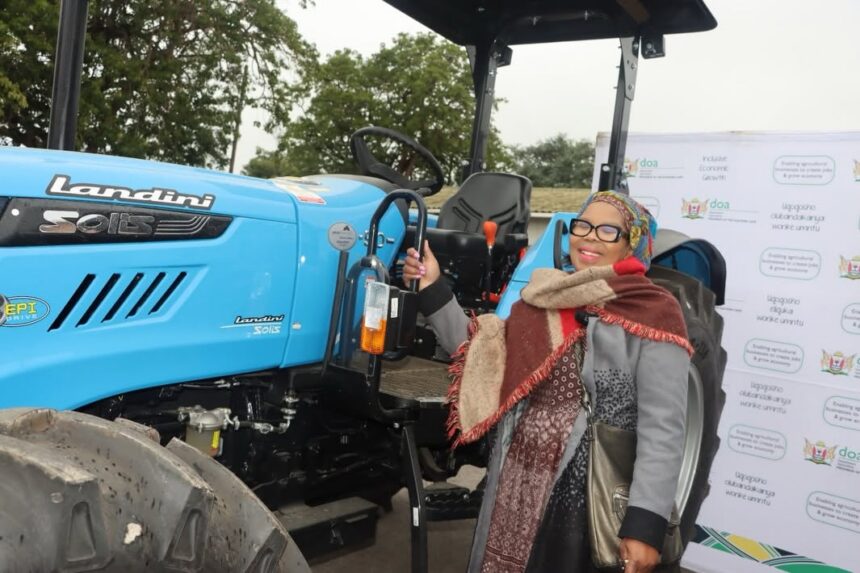
Lungiswa Ngambu is showing how access to agricultural land can become a powerful foundation for food production, employment and economic independence for women. Through Lungi Farm Produce in Makhanda, she has built a growing vegetable farming enterprise that supplies fresh produce to local markets while creating employment opportunities for people in the community. After moving from Gqeberha, Ngambu established the farm in 2018 with a clear vision of producing quality vegetables while creating economic opportunities around her. The enterprise has since expanded into a 52-hectare farming operation, with approximately 14 hectares currently under cultivation. Her journey demonstrates how determination, access to resources, technical support and market opportunities can help women transform agricultural land into sustainable businesses.
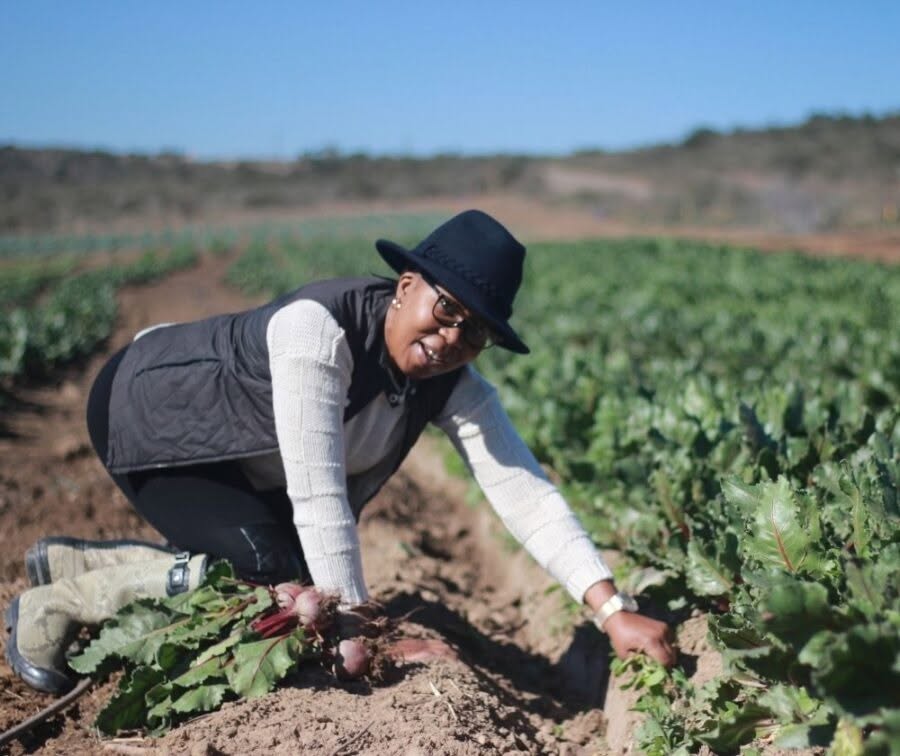
Ngambu’s farming operation produces a wide range of vegetables, allowing Lungi Farm Produce to serve different customer needs and reduce its dependence on a single crop. The farm currently grows cabbage, spinach, carrots, potatoes, onions, green peppers, kale and lettuce. Producing several types of vegetables requires careful planning because each crop has different requirements relating to planting, irrigation, fertilisation, pest control and harvesting. Managing this diversity also requires the farm to coordinate production cycles so that fresh produce can reach customers consistently. The scale and variety of production show how Lungi Farm Produce has developed beyond subsistence farming into a commercially focused agricultural enterprise.
Ngambu’s approach to farming is closely connected to her belief that women can use available land to create their own livelihoods. She has encouraged women to consider what they can produce from even a small piece of land around their homes rather than seeing agriculture only as an activity requiring large commercial farms. Her message challenges the idea that women must depend on men to provide their livelihoods. For Ngambu, farming offers women an opportunity to generate income, contribute to household needs and build businesses that they can control. Her own experience provides a practical example of how agricultural production can become a pathway towards greater economic independence.
The growth of Lungi Farm Produce has also created employment opportunities in Makhanda. The enterprise currently employs seven permanent workers who contribute to the daily running of the farming operation. During periods of peak production, the farm can create opportunities for as many as 15 temporary workers, increasing its contribution to local employment. These jobs can provide income to households while allowing workers to gain practical experience in agricultural production. The farm’s employment impact demonstrates how the growth of a single agricultural enterprise can create benefits beyond the owner and her immediate family.
Market access has played an important role in the development of the business. Lungi Farm Produce supplies its vegetables mainly to Pick n Pay, while also serving home industries, local retailers, restaurants and other buyers. Having multiple market channels gives the enterprise opportunities to sell its produce to different customers and respond to demand. Market-oriented production also requires the farm to pay close attention to quality, packaging, consistency and delivery requirements. These commercial relationships can help the business build a stronger customer base while creating incentives for continued improvements in production.
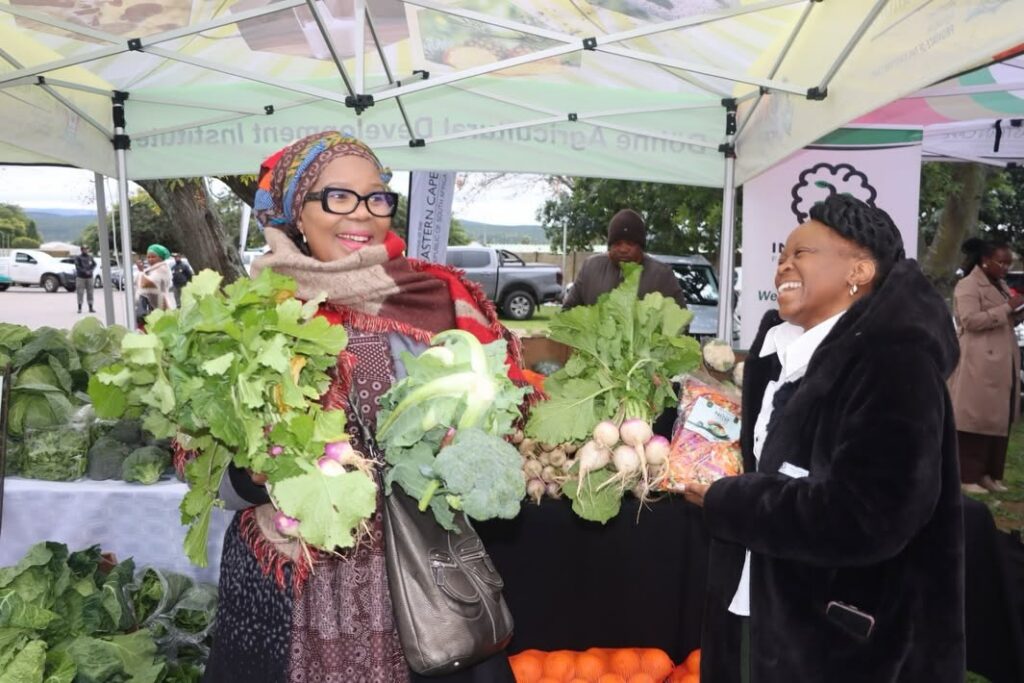
Ngambu has also taken her produce directly to consumers through a stall in town. The stall allows her to sell freshly harvested vegetables that are neatly packaged for customers. Direct sales provide an additional route to market and allow the farmer to interact with consumers and understand their preferences. Selling directly can also help create greater visibility for the farm and its products within the local community. By combining commercial supply agreements with direct consumer sales, Lungi Farm Produce has developed a diversified approach to marketing its vegetables.
Mechanisation has been another important part of the farm’s development. Lungi Farm Produce was one of two women-owned enterprises to receive a tractor donated through the Eastern Cape Department of Agriculture. The tractor was handed over by Premier Oscar Mabuyane and MEC for Agriculture Nonceba Kontsiwe during Women’s Day celebrations. Access to a tractor can make a significant difference to a farming enterprise because land preparation is often labour-intensive and time-sensitive. The additional machinery has strengthened Ngambu’s capacity to prepare land and undertake other farming activities, helping the business improve productivity while addressing some of the challenges associated with mechanisation.
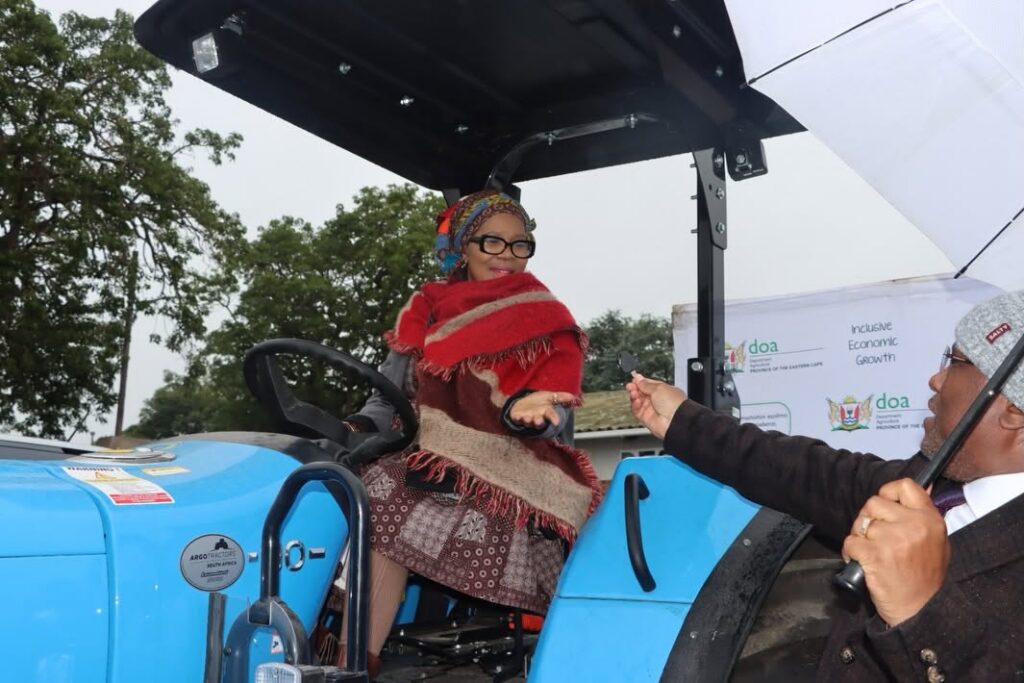
For small and emerging farmers, access to agricultural machinery can be a major challenge. Hiring equipment can be expensive, while delays in accessing machinery can affect planting schedules and overall production planning. Having a tractor available can give Lungi Farm Produce greater control over land preparation and reduce some of the limitations associated with relying entirely on external services. It can also allow the enterprise to increase the area it can prepare for cultivation when production requirements grow. The support therefore has practical value beyond the machinery itself because it can contribute to improved planning and greater productive capacity.
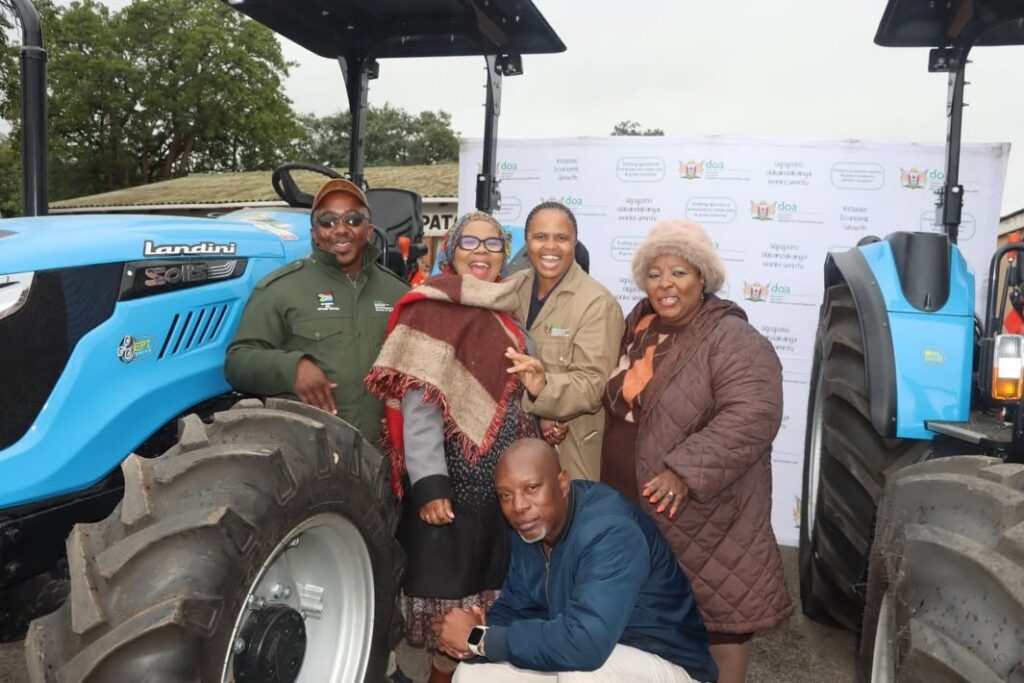
The Eastern Cape Department of Agriculture has provided further support through technical assistance from agricultural extension officers. Extension services can help farmers make informed decisions about production practices and address challenges that arise during different stages of the farming cycle. Lungi Farm Produce has also received production inputs such as seeds, fertilisers and pesticides to support its agricultural activities. These inputs are essential for vegetable production and can help farmers maintain productive crop cycles when used appropriately. Combining input support with technical guidance gives the enterprise a broader support base as it continues to develop.
Training has also formed an important part of the support provided to Ngambu and her team. The training covers areas such as land preparation, planting techniques, irrigation management, pest and disease control, fertiliser application and harvesting. Farmers also receive guidance on post-harvest handling, record keeping and marketing, which are essential skills for operating an agricultural business successfully. Good farming practices can improve crop quality and productivity, while strong record keeping can help farmers understand production costs and make better business decisions. Marketing knowledge is equally important because farmers need to understand their customers and market requirements if they want to build sustainable commercial enterprises.
Participation in study groups, demonstrations and field days provides additional opportunities for Ngambu and her team to strengthen their knowledge. These activities allow farmers to engage with practical examples and share experiences with other agricultural producers. Chef-related training also contributes to the farm’s market-oriented approach by helping participants understand food preparation, product quality and potential market opportunities. Such programmes can help farmers connect production decisions with consumer needs rather than focusing only on growing crops. This broader approach can support improvements in productivity, quality and profitability.
The development of Lungi Farm Produce also highlights the importance of combining land access with the other resources needed to make farming viable. A farmer may have access to land but still struggle to produce commercially without water, machinery, inputs, technical knowledge and reliable markets. Ngambu’s experience shows how different forms of support can work together to strengthen an agricultural enterprise. Land provides the production base, while machinery improves capacity, inputs support crop production, extension services provide technical knowledge and market access creates opportunities to generate income. When these elements are combined effectively, agricultural land can become a productive business asset rather than remaining underutilised.
Ngambu’s vision extends beyond her own success because she wants Lungi Farm Produce to become a lasting legacy for her children. She is encouraging both of her children to participate hands-on in the daily running of the business so they can develop the knowledge and experience needed to manage the enterprise in the future. Involving the next generation can help preserve practical farming knowledge and ensure that they understand the responsibilities involved in running an agricultural business. It also gives the children an opportunity to learn about production, marketing, management and decision-making through direct experience. For Ngambu, the farm represents not only her current livelihood but also an asset that can continue creating opportunities for her family after she retires.
Building a family legacy through agriculture requires long-term planning and continued investment in the business. The children need to understand both the practical and commercial sides of farming if they are eventually expected to take responsibility for the enterprise. This includes learning how to manage workers, plan production, maintain relationships with buyers, control costs and respond to agricultural risks. By involving them in the operation now, Ngambu is creating an opportunity for knowledge to be transferred from one generation to the next. Her approach demonstrates how farming can become a long-term family enterprise when the next generation receives the skills and experience needed to sustain it.
Lungi Farm Produce has become an example of how women can use agriculture to create economic opportunities while contributing to food production in their communities. Ngambu’s enterprise supplies vegetables to commercial and local markets while providing employment to permanent and temporary workers. The support she has received through mechanisation, agricultural inputs, extension services and training has strengthened her ability to manage and expand production. Her determination to involve her children also gives the enterprise a long-term purpose that extends beyond immediate financial returns. Lungiswa Ngambu’s journey demonstrates that when women have meaningful access to land, resources, knowledge and markets, they can build sustainable agricultural businesses that produce food, create jobs, strengthen local economies and establish valuable legacies for future generations.
Join 'Farmers Mag' WhatsApp Channel
Get the latest Farming news and tips delivered straight to your WhatsApp
CLICK HERE TO JOIN