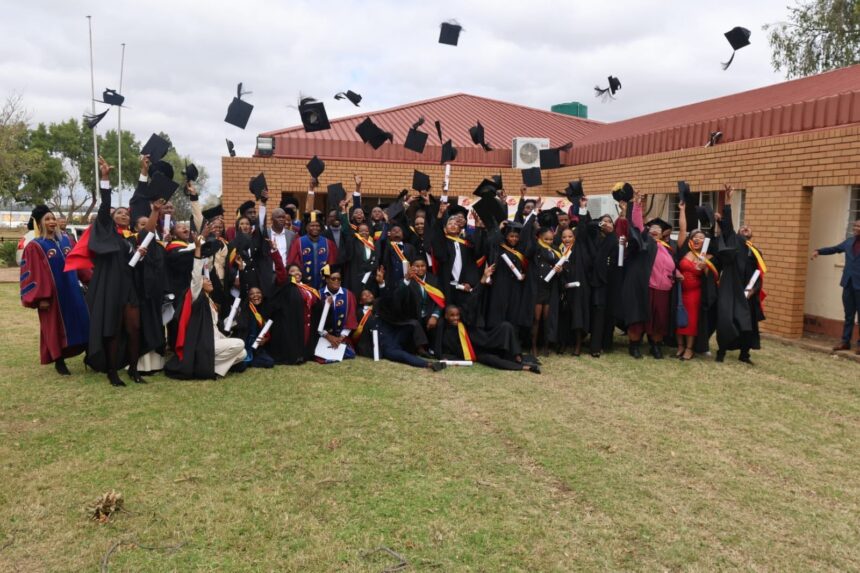
The North West Department of Agriculture and Rural Development’s Taung Agricultural College (TAC) marked a major milestone on Friday, 05 June 2026, by conferring diplomas on 46 graduates from the 2025 academic cohort during its Winter Graduation Ceremony. The institution remains the only college in South Africa offering a NQF Level 06 Diploma in Agriculture (Irrigation), making it a critical training hub for the country’s agricultural future. The ceremony formed part of Youth Month commemorations and aligned with the 50th anniversary of the Soweto Uprising under the theme “RESET@50: The Future Calls!”. The event highlighted the importance of youth development in agriculture and the growing need for skilled professionals in irrigation farming. It also reinforced the role of education in building a more resilient and productive agricultural sector.
The graduation programme reflected a combination of academic learning and practical agricultural training designed to prepare students for real world farming challenges. Graduates were trained in irrigation systems, water management, crop production and sustainable farming practices. These skills are increasingly important in South Africa, where water scarcity and climate variability continue to affect agricultural output. The institution focuses on producing graduates who can operate within both commercial and emerging farming environments. This approach ensures that students are not only employable but also capable of starting their own agricultural enterprises.
Addressing the graduates, MEC Madoda Sambatha encouraged them to become innovators, entrepreneurs and job creators within the agricultural sector. He emphasised that agriculture offers opportunities far beyond traditional farming, including agro-processing, agribusiness development and agricultural services. He urged graduates to explore opportunities both locally and internationally to broaden their exposure and strengthen their skills. According to the MEC, experience in different environments helps build stronger professionals who can contribute more effectively to sector development. His message highlighted the importance of ambition, adaptability and continuous learning in modern agriculture.
MEC Sambatha further encouraged graduates to develop bankable business plans that can attract investment and unlock funding opportunities. Access to finance remains one of the biggest challenges facing young agricultural professionals in South Africa. By creating structured and viable business proposals, graduates increase their chances of securing support from government programmes, banks and development institutions. The MEC also stressed the importance of taking advantage of existing agricultural support schemes designed to empower youth in farming. These include mentorship initiatives, grant funding and partnership opportunities that can help transform ideas into sustainable businesses.
The agricultural sector was described as one of the most promising industries for innovation and entrepreneurship. MEC Sambatha highlighted that agriculture is not limited to production alone but includes value addition, supply chain management and technological advancement. He called on graduates to use their knowledge to establish enterprises that create employment and strengthen food security. By doing so, they can contribute directly to economic growth and rural development. His message positioned agriculture as a long term career path capable of transforming communities and reducing unemployment.
Taung Agricultural College reaffirmed its commitment to producing skilled and industry ready graduates who can respond to the evolving demands of agriculture. The institution continues to focus on sustainable agriculture, food security and economic development through quality education and practical training. Its specialised irrigation programme plays a vital role in addressing water management challenges in farming. By equipping students with technical and entrepreneurial skills, the college helps bridge the gap between education and industry needs. This ensures that graduates are prepared to operate effectively in a competitive agricultural environment.
One of the highlights of the ceremony was the recognition of outstanding student achievement. The overall achiever, 22 year old Mr Aobakwe Molatowagae from Cokonyane village in Taung, delivered an inspiring message to his peers. He encouraged fellow graduates to remain focused on their shared vision of becoming established farmers despite life’s different paths. His message emphasised perseverance, unity and hard work as essential values for success in agriculture. He expressed confidence that their collective determination would help turn their ambitions into reality.
The success of the graduating cohort demonstrates the effectiveness of structured agricultural education in preparing young people for the sector. The combination of theoretical knowledge and hands on training ensures that graduates are capable of meeting industry demands. Irrigation agriculture in particular requires precision, technical understanding and strong problem solving skills. Institutions like Taung Agricultural College play a crucial role in developing these competencies. Their contribution supports both commercial agriculture and emerging farming systems across South Africa.
The graduation ceremony also reflected the broader national effort to empower youth during Youth Month and honour historical milestones such as the Soweto Uprising anniversary. The theme “RESET@50: The Future Calls!” reinforced the importance of transformation, opportunity and youth leadership in shaping South Africa’s future. Agriculture remains a key sector in this transformation due to its ability to create jobs and support rural economies. By investing in education and training, government aims to build a new generation of agricultural leaders who can drive sustainable development.
The milestone achieved by Taung Agricultural College stands as a strong example of how education can directly influence economic progress. The institution continues to produce graduates who are ready to contribute to food security, innovation and rural development. With specialised training in irrigation agriculture, TAC is addressing one of the most critical challenges facing farming in South Africa. The achievements of the 46 graduates signal hope for a stronger and more skilled agricultural workforce. Their success reinforces the importance of continued investment in agricultural education as a foundation for the country’s future growth.
Join 'Farmers Mag' WhatsApp Channel
Get the latest Farming news and tips delivered straight to your WhatsApp
CLICK HERE TO JOIN