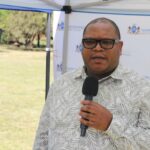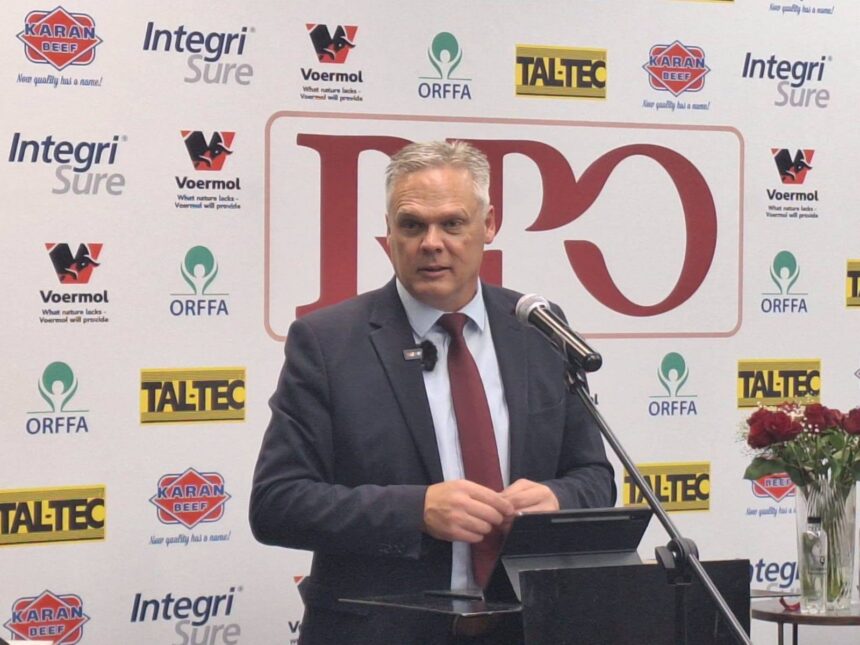
Minister Willie Aucamp has reaffirmed the government’s commitment to supporting South African farmers and strengthening the agricultural sector as the country continues to navigate the evolving challenge of Foot and Mouth Disease (FMD). Speaking at the opening of the Red Meat Producers’ Organisation gathering, Minister Aucamp recognised the resilience and unity shown by the red meat industry during a period that has placed significant pressure on livestock producers. His remarks highlighted the importance of cooperation between government and farmers in protecting South Africa’s livestock sector. FMD presents complex challenges for animal health, livestock movement, trade and agricultural livelihoods, making coordinated action essential. The Minister’s message was clear that government has a responsibility to provide support while farmers’ practical experience remains critical to developing solutions that work on the ground.
The red meat industry plays an important role in South Africa’s agricultural economy, supporting livestock farmers, workers, processors, traders and other businesses throughout the value chain. Cattle, sheep and other livestock contribute to food production while creating economic activity in rural areas and communities. When animal health challenges emerge, the effects can extend beyond individual farms because restrictions and disease-control measures can affect movement, markets and supply chains. This makes cooperation across the agricultural sector particularly important during periods of heightened disease risk. The gathering of the Red Meat Producers’ Organisation provides an important platform for farmers and government representatives to discuss these challenges and consider practical responses.
Foot and Mouth Disease remains a serious concern for livestock producers because outbreaks can affect animal movement and create challenges for domestic and international trade. The disease affects cloven-hoofed animals and requires effective measures to limit its spread between farms and regions. Farmers therefore have an important role to play in implementing biosecurity measures, monitoring their animals and following official disease-control requirements. Government agencies also have responsibilities relating to disease surveillance, veterinary services, regulation and coordination of responses. A strong partnership between these groups can improve the ability of the country to manage outbreaks while protecting livestock and agricultural livelihoods.
Minister Aucamp’s recognition of farmers’ resilience reflects the pressure that livestock producers can face during an animal health crisis. Farmers must continue managing their animals and businesses while adapting to restrictions, changing market conditions and disease-control measures. Their knowledge of local farming environments gives them practical insight into the challenges associated with implementing policies on the ground. This experience can help government officials understand where interventions are effective and where additional support may be required. The Minister’s call for farmers to share their experience therefore reinforces the value of involving producers in the development and implementation of agricultural responses.
The Minister emphasised that government cannot address the challenges facing the livestock sector in isolation. Farmers have direct experience with animal health management, livestock production and the practical realities of operating farms across different regions. This knowledge can provide important information when government develops strategies for disease prevention and control. Collaboration can also help identify gaps in implementation and improve communication between authorities and producers. When farmers and government share information and work towards common objectives, the sector can respond more effectively to complex agricultural challenges.
Biosecurity remains an important part of managing the risk associated with FMD. Farmers can contribute to disease prevention by controlling unnecessary livestock movement, maintaining appropriate hygiene practices and monitoring animals for signs of illness. Reporting suspected cases quickly can also help authorities respond before a disease spreads further. These measures require cooperation because livestock movements can connect farms, markets and other points within the agricultural value chain. Government support, veterinary guidance and farmer compliance therefore need to work together to strengthen disease-control efforts.
The impact of FMD also extends to agricultural trade and market confidence. South Africa’s livestock industry depends on functioning markets that allow producers to sell animals and products under appropriate conditions. Disease outbreaks can affect market access and create uncertainty for farmers and businesses throughout the value chain. Effective disease management can therefore have economic importance in addition to its animal health benefits. Strengthening surveillance, improving coordination and supporting farmers can help reduce the broader disruption caused by outbreaks and protect the long-term sustainability of the red meat industry.
The RPO gathering also provides an opportunity for industry stakeholders to discuss the balance between disease-control requirements and the economic needs of farmers. Measures introduced to control FMD can be necessary to protect animal health, but they can also create operational challenges for producers when livestock movement is restricted. Farmers need clear communication about requirements so that they can plan their operations and comply with disease-control measures. Government can support this process by maintaining engagement with the industry and responding to practical concerns where possible. Open dialogue can help build trust and improve cooperation during a period when collective action is essential.
Minister Aucamp’s remarks also underline the broader principle that agricultural development requires shared responsibility. Government has a role in providing policy direction, veterinary services, regulatory support and other forms of assistance required to protect the agricultural sector. Farmers bring practical knowledge, production experience and an understanding of conditions on individual farms and within local communities. Neither side can fully address the challenges facing agriculture without meaningful engagement with the other. The partnership between government and farmers can therefore provide a stronger foundation for managing FMD and addressing other challenges affecting South Africa’s livestock industry.
The message from the gathering is ultimately one of cooperation, resilience and practical problem-solving. South Africa’s response to Foot and Mouth Disease will require farmers, government officials, veterinary professionals and industry organisations to work together and share information. Farmers must continue applying responsible animal health and biosecurity practices while government works to provide the support and coordination required during the response. The red meat industry’s resilience demonstrates the importance of maintaining unity during difficult periods. As Minister Willie Aucamp reaffirmed, government must support farmers, while farmers’ experience must help shape solutions that are practical, effective and suited to conditions on the ground.
Join 'Farmers Mag' WhatsApp Channel
Get the latest Farming news and tips delivered straight to your WhatsApp
CLICK HERE TO JOIN