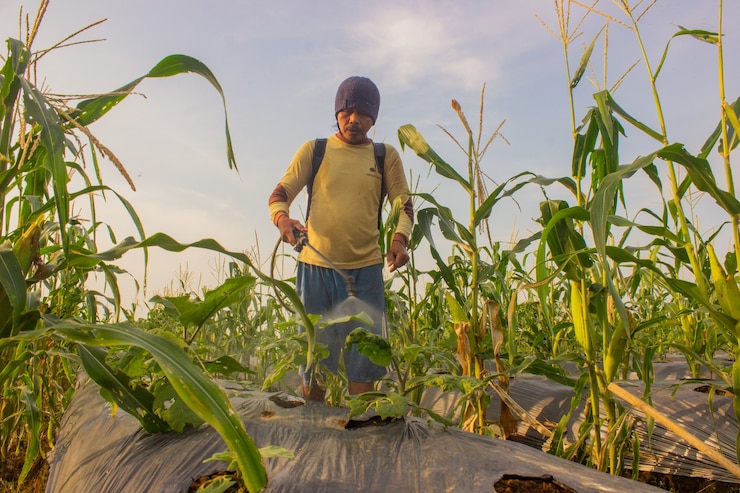
Field crop farming in South Africa plays a major role in food production, rural employment, and household income generation. Many farmers operate on limited budgets, which makes cost control a key factor in long-term success. Low-cost farming methods help reduce input expenses while still maintaining productive yields. These approaches focus on efficient use of land, water, seeds, and labour without sacrificing crop quality. With rising production costs and climate pressure, farmers increasingly need practical and affordable solutions to stay competitive. Proper planning and smart farming techniques can make even small-scale operations viable and profitable.
One of the most effective low-cost methods is conservation agriculture, which focuses on minimal soil disturbance. Instead of repeated ploughing, farmers use reduced tillage or direct planting methods to protect soil structure. This approach lowers fuel and machinery costs while improving soil moisture retention. It also helps reduce erosion, which is a major challenge in many parts of South Africa. Crop residues are left on the field to improve soil fertility over time. This method reduces long-term input costs and supports sustainable production.
Crop rotation is another affordable farming method that improves soil health and reduces pest problems. By alternating crops such as maize, beans, and sunflower, farmers can break pest cycles and improve nutrient balance in the soil. This reduces the need for expensive pesticides and fertilizers. Rotation also helps maintain soil productivity over multiple seasons, which increases long-term yields. Farmers who use rotation systems often see more stable harvests even in unpredictable weather conditions. It is a simple strategy that requires planning rather than high financial investment.
Using locally adapted and drought-resistant seed varieties is also a cost-effective strategy. These seeds are designed to perform well under South African climate conditions, especially in areas with limited rainfall. They reduce the need for excessive irrigation and chemical inputs. Farmers benefit from higher survival rates and more consistent yields even during dry seasons. Seed selection is one of the most important decisions in low-cost farming because it directly affects productivity. Choosing the right variety can reduce losses and improve overall farm efficiency.
Efficient water management is essential for reducing farming costs, especially in water-scarce regions. Techniques such as drip irrigation and rainwater harvesting help farmers use less water while maintaining crop growth. Drip systems deliver water directly to the plant roots, which reduces wastage and evaporation. Rainwater harvesting allows farmers to store water during rainy periods for use during dry spells. These systems may require initial setup but significantly reduce long-term water costs. Smart irrigation scheduling also prevents overwatering and improves crop health.
Organic fertilization methods offer another low-cost alternative to chemical inputs. Farmers can use compost, manure, and green manure crops to improve soil fertility. These materials are often locally available and reduce the need for expensive synthetic fertilizers. Organic matter improves soil structure and increases its ability to retain moisture. Over time, this leads to healthier crops and reduced dependency on external inputs. Many small-scale farmers use livestock manure as a key source of soil nutrients, which further lowers production costs.
Integrated pest management is a practical approach that reduces reliance on chemical pesticides. It combines biological control methods, crop monitoring, and natural predators to manage pests effectively. Farmers can introduce beneficial insects or use natural repellents to protect crops. Regular field inspections help detect problems early before they spread. This reduces the need for repeated chemical spraying, which can be costly and harmful to soil health. Integrated pest management improves sustainability while keeping production expenses low.
Mechanisation can be expensive, but shared equipment systems help reduce costs for small farmers. Instead of buying tractors and implements individually, farmers can form cooperatives to share resources. This approach spreads costs across multiple users and improves access to modern farming tools. It also increases efficiency during planting and harvesting seasons. Shared systems help small-scale farmers compete with larger commercial operations without heavy capital investment. Cooperation plays a key role in making mechanisation affordable.
Labour efficiency is another important factor in reducing farming costs. Proper training ensures that workers complete tasks faster and with fewer errors. Simple planning, such as scheduling planting and harvesting at the right time, reduces delays and losses. Family labour is often used in small-scale farming to cut down on hiring costs. Clear task organisation improves productivity without increasing expenses. Efficient labour management helps farms operate smoothly even with limited resources.
Low-cost field crop farming methods in South Africa focus on using available resources more effectively rather than increasing spending. Techniques such as conservation agriculture, crop rotation, drought-resistant seeds, and efficient irrigation help farmers maintain productivity while reducing costs. Organic fertilization and integrated pest management further reduce dependence on expensive chemical inputs. Cooperation through shared equipment and improved labour planning also supports affordability. These methods allow farmers to stay resilient in a challenging agricultural environment. With the right practices, even small-scale farmers can build sustainable and profitable crop production systems.
Join 'Farmers Mag' WhatsApp Channel
Get the latest Farming news and tips delivered straight to your WhatsApp
CLICK HERE TO JOIN