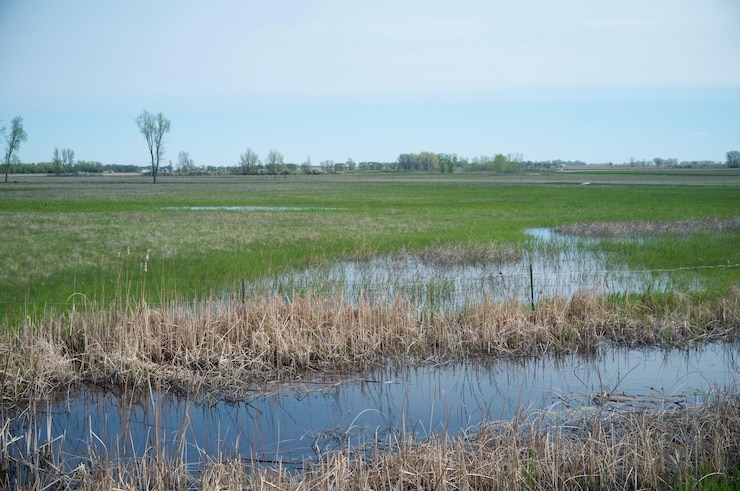
Wetlands play a critical role in maintaining healthy farming systems in South Africa. These ecosystems store water, filter pollutants, reduce flooding, and support biodiversity that benefits agriculture. On farms across South Africa, wetlands often sit within or near production areas, which makes them vulnerable to degradation from farming activities. When wetlands are damaged, farmers lose natural water regulation services that directly support crop and livestock production. Protecting and restoring these areas is not only an environmental responsibility but also a practical step for long term farm productivity and resilience.
Wetlands function as natural water storage systems that regulate seasonal rainfall and dry periods. They slow down water flow, allowing it to soak into the soil and recharge underground water sources. This process helps maintain soil moisture in surrounding crop fields, especially during dry spells. Healthy wetlands also trap sediments and reduce erosion, which protects downstream irrigation systems and dams. For farmers, this means more stable water availability and reduced infrastructure damage over time.
On many farms, wetlands are threatened by overgrazing, ploughing, drainage, and chemical runoff. Heavy livestock pressure can compact soil and destroy wetland vegetation, reducing its ability to absorb and filter water. Cropland expansion into wetland zones often disrupts natural water flow and increases flood risk. Fertilisers and pesticides can also contaminate wetland ecosystems, affecting both water quality and soil health. These impacts gradually reduce the productivity of surrounding agricultural land and increase long term management costs.
Restoring wetlands requires practical and consistent on farm action. The first step is identifying wetland areas through soil type, vegetation, and water presence during wet seasons. Farmers should avoid ploughing or planting directly in these zones and instead establish buffer strips of natural vegetation around them. Fencing off wetlands from livestock helps prevent trampling and allows vegetation to recover naturally. In heavily damaged areas, replanting indigenous wetland species can help restore ecological balance and improve water retention capacity over time.
Successful restoration often depends on working with environmental and agricultural support programmes. The Department of Forestry, Fisheries and the Environment plays a key role in wetland conservation through national ecosystem protection initiatives. These programmes often provide technical guidance for wetland mapping, rehabilitation planning, and invasive species control. Farmers can also access support for erosion control structures such as gabions and reed planting to stabilise wetland edges. Combining scientific guidance with practical farm management improves restoration outcomes and reduces long term environmental risk.
Wetlands also support crop production indirectly by improving surrounding soil conditions. They help maintain groundwater levels that feed into irrigation systems used for high value crops. In addition, wetlands act as natural filters that reduce the spread of harmful chemicals into farmland water sources. Healthy wetlands support pollinators and beneficial insects that contribute to crop yields. This ecological balance strengthens farm productivity without relying solely on external inputs.
Long term protection of wetlands depends on integrating them into everyday farm planning. Farmers who map and manage wetlands as part of their land use strategy reduce risk and improve resource efficiency. Avoiding cultivation in sensitive areas protects both the environment and farm infrastructure from damage caused by flooding or erosion. Restoration efforts may take time, but the benefits increase steadily as ecosystems recover and stabilise. Sustainable wetland management supports stronger agricultural systems, better water security, and more resilient farming operations across South Africa.
Join 'Farmers Mag' WhatsApp Channel
Get the latest Farming news and tips delivered straight to your WhatsApp
CLICK HERE TO JOIN