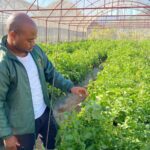
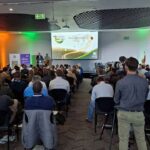
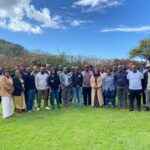
Ntombekhaya Matafeni, a control scientific technician, recently led an educational session on vermicomposting at the Dohne Agricultural Research Institute in Stutterheim. The demonstration took place during the institute’s Open Day, attended by students, agricultural enthusiasts, and the Eastern Cape’s MEC for Rural Development and Agrarian Reform, Nonceba Kontsiwe. The session highlighted practical methods for producing vermicompost, vermiwash, and vermiworms, which serve as climate-smart fertilizers for sustainable agriculture.
During the demonstration, Matafeni explained the step-by-step process of vermicomposting, emphasizing the role of earthworms in converting organic waste into nutrient-rich compost. She showcased how organic residues such as crop leftovers, vegetable peelings, and animal manure could be transformed into high-quality vermicompost. The session also covered the extraction of vermiwash, a liquid fertilizer obtained from the leachate of worm bins, which provides essential nutrients for plant growth.
Matafeni highlighted the multiple benefits of vermicomposting for farmers. Vermicompost improves soil fertility, enhances moisture retention, and supports healthier plant growth without relying on chemical fertilizers. Vermiwash acts as a natural foliar feed and pest deterrent, while cultivating vermiworms ensures a continuous supply of these sustainable inputs. The technique was presented as a climate-smart solution that reduces environmental impact and promotes resilient farming systems.
MEC Nonceba Kontsiwe expressed her support for initiatives that promote sustainable agriculture and hands-on learning. She encouraged students to explore innovative techniques like vermicomposting to boost productivity while preserving natural resources. The Open Day provided attendees with the opportunity to interact with experts, gain practical knowledge, and see firsthand how modern agricultural methods can be applied on farms of all scales.
The session at the Dohne Agricultural Research Institute reinforced the importance of integrating environmentally friendly practices in agriculture. Farmers and students left with practical insights into vermicomposting, understanding its potential to improve soil health, reduce dependence on chemical fertilizers, and contribute to climate-smart farming strategies.
The event showcased how scientific expertise can be shared with the community to drive sustainable agricultural growth. For farmers and students seeking to adopt eco-friendly farming practices, the vermicomposting demonstration by Ntombekhaya Matafeni provided a clear, actionable model for implementation.
Join 'Farmers Mag' WhatsApp Channel
Get the latest Farming news and tips delivered straight to your WhatsApp
CLICK HERE TO JOIN