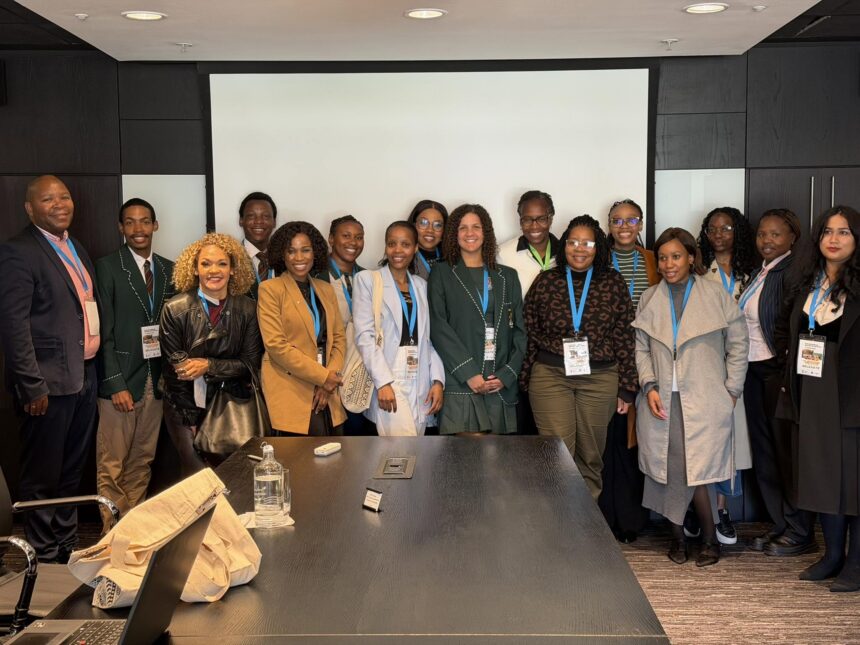
The question of what agriculture will need to thrive in the future took centre stage at the South Africa–Italy Agriculture Business Forum, where experts, policymakers and researchers gathered to explore long term solutions for global food systems. The discussions highlighted that agriculture is facing increasing pressure from climate change, population growth and shifting market demands. Within this context, the Agricultural Research Council played a leading role in guiding two focused sessions that examined both environmental and human driven aspects of agricultural development. The forum created a platform for structured dialogue on how countries like South Africa and Italy can strengthen collaboration in building resilient farming systems. The outcome of these discussions pointed to a clear direction for the future of agriculture, shaped by innovation, sustainability and human capacity.
One of the key sessions focused on climate smart agriculture and was moderated by Dr Linda Mtwisha. The discussion brought together delegates who examined practical approaches to improving resilience in farming systems that are increasingly affected by unpredictable weather patterns. Climate smart agriculture was presented as a framework that combines productivity, adaptation and mitigation to ensure long term sustainability. Participants explored strategies such as improved soil management, water efficient irrigation systems and the use of climate resilient crop varieties. The session emphasized that farmers need tools and knowledge that allow them to adapt quickly to changing environmental conditions while maintaining productivity.
A major focus of the climate smart agriculture discussion was the importance of integrating scientific research with on the ground farming practices. Delegates highlighted that technology alone is not enough unless it is accessible and practical for farmers at all levels. The conversation also stressed the need for stronger collaboration between research institutions, governments and private sector stakeholders. By aligning these actors, agricultural systems can better respond to environmental challenges while maintaining food security. The session made it clear that resilience is not only about surviving shocks but also about building systems that can recover and grow stronger over time.
At the same forum, Dr Petronella Chaminuka led a parallel discussion focusing on youth, innovation and entrepreneurship in agriculture. This session examined how the agricultural sector can attract and support younger generations who are essential for its long term sustainability. Participants discussed barriers that young people face, including limited access to land, finance and technical skills. The conversation also explored opportunities for entrepreneurship in areas such as agri-tech, value chain development and sustainable farming enterprises. The session highlighted that young people are not only future farmers but also innovators who can reshape the agricultural landscape.
The youth focused discussion emphasized the importance of creating an enabling environment that supports innovation and business development in agriculture. Delegates noted that agriculture must be repositioned as a modern and dynamic sector capable of offering diverse career paths. Education and training were identified as key drivers in equipping young people with the skills needed to succeed in both traditional farming and emerging agricultural technologies. The session also pointed to the need for stronger mentorship networks and investment in youth led agricultural enterprises. These measures are seen as critical for ensuring that agriculture remains attractive and competitive for future generations.
Across both sessions, a common message emerged that the future of agriculture depends on innovation, resilience and people. The discussions reinforced the idea that no single solution can address the complex challenges facing global food systems. Instead, progress will require a combination of scientific advancement, inclusive policies and active participation from all stakeholders in the agricultural value chain. The South Africa–Italy Agriculture Business Forum demonstrated how international collaboration can help shape shared solutions to common challenges. By bringing together diverse expertise, the forum created a space for practical ideas that can be implemented across different agricultural contexts.
The insights from the Agricultural Research Council led discussions showed that agriculture’s future will be defined by how well it adapts to change while empowering people within the sector. Climate smart practices will be essential for protecting natural resources and ensuring long term productivity. At the same time, investment in youth, innovation and entrepreneurship will determine how effectively the sector evolves and remains sustainable. The combined focus on environmental resilience and human development provides a balanced roadmap for future growth. These discussions reaffirmed that agriculture will thrive when innovation is supported, systems are resilient and people are placed at the centre of development strategies.
Join 'Farmers Mag' WhatsApp Channel
Get the latest Farming news and tips delivered straight to your WhatsApp
CLICK HERE TO JOIN