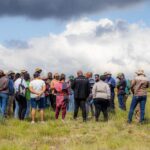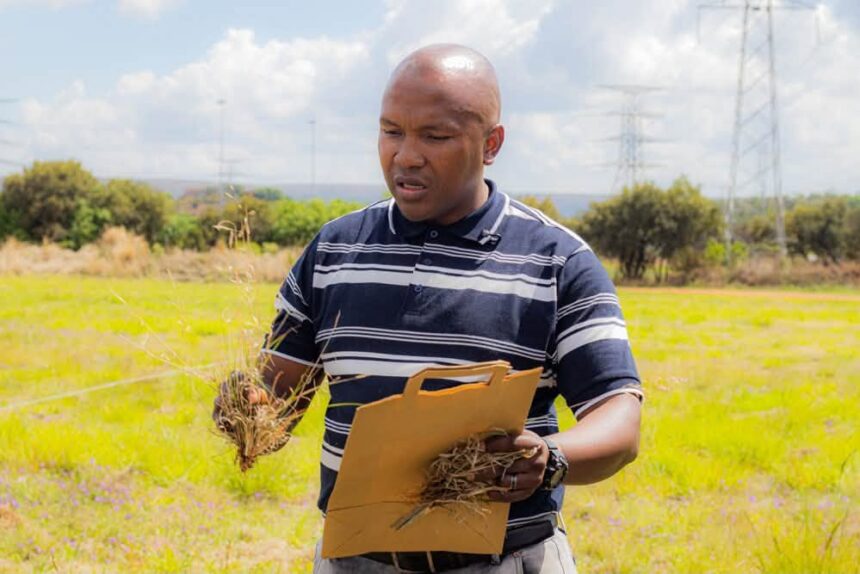
The Gauteng Department of Agriculture and Rural Development (GDARD), in collaboration with its partners, is conducting a hands-on Fodder Planning and Management Workshop at the University of Pretoria Experimental Farm. The workshop targets Gauteng IDC Nguni Project beneficiaries and emerging livestock farmers who face growing pressure from climate variability, rising feed costs and recurring drought conditions. Through practical training, producers are gaining knowledge that can help them assess available veld and forage resources, manage grazing sustainably and plan livestock feed requirements more effectively. The focus is not only on producing enough feed, but also on making informed decisions before shortages affect animal health and farm productivity. By strengthening fodder planning and management skills, the initiative aims to help livestock farmers build more resilient and sustainable farming operations.
Fodder planning plays an important role in livestock farming because animals need a reliable supply of suitable feed throughout the year. In Gauteng, livestock producers can experience significant changes in pasture availability as rainfall patterns shift and dry periods become more frequent or severe. When natural grazing resources decline, farmers may need to rely more heavily on stored fodder, crop residues or purchased feed, which can place additional pressure on farm finances. Effective fodder management allows farmers to understand what feed resources they have, how long those resources are likely to last and when additional feed may be required. This approach can reduce the risk of making rushed and costly decisions during periods of feed shortages.
One of the key practical focus areas of the workshop is veld and forage resource assessment. Farmers need to understand the condition, quantity and quality of the resources available on their farms before they can develop an effective feeding plan. Veld assessment can provide useful information about grazing conditions, forage availability and changes in vegetation that may affect livestock carrying capacity. Producers can use this information to make better decisions about grazing pressure, livestock movement and the timing of supplementary feeding. Regular assessment also helps farmers identify deteriorating veld conditions early, giving them an opportunity to adjust their management practices before serious degradation occurs.
Sustainable grazing and veld management are also central to building productive livestock enterprises. Poor grazing management can place excessive pressure on vegetation and reduce the ability of the veld to recover after grazing. Farmers can improve veld resilience by managing stocking rates, allowing appropriate recovery periods and making decisions based on available forage rather than relying only on fixed grazing routines. Good veld management also requires farmers to consider seasonal conditions and the availability of water alongside feed resources. When producers manage grazing carefully, they can protect their natural forage base while supporting livestock production over the longer term.
The workshop also focuses on feed budgeting, an important tool for farmers who want to manage feed costs and avoid unexpected shortages. A feed budget involves estimating the amount of feed livestock will require over a specific period and comparing that requirement with the feed resources available on the farm. Farmers can use this process to determine whether their veld, stored fodder and other available resources are sufficient for the expected demand. Feed budgeting becomes particularly important when drought conditions reduce natural grazing or when purchased feed prices increase. Planning ahead allows producers to identify potential gaps earlier and consider practical options before those gaps become urgent problems.
Fodder-flow planning takes this process further by helping farmers think about how feed resources will move through the farm across different seasons. Livestock requirements do not remain constant throughout the year, while veld production also changes according to rainfall and seasonal growth patterns. A farmer therefore needs to consider when forage will be available, when it should be conserved and how stored fodder can be allocated during periods of lower production. This type of planning can help producers avoid using valuable feed resources too quickly and can improve the management of limited fodder supplies. It also encourages farmers to treat feed as a planned farm resource rather than an expense that is addressed only when animals begin running short.
Rising feed costs make this planning particularly relevant for emerging livestock farmers. Purchased feed can become a major operating cost when natural grazing is inadequate, especially during prolonged dry periods. Farmers who understand their own forage resources can make more informed decisions about when purchasing additional feed is necessary and how much they are likely to need. They can also evaluate opportunities to conserve available forage and improve the use of resources already present on the farm. Better planning does not eliminate feed costs, but it can help farmers manage those costs with greater control and reduce unnecessary expenditure.
Climate variability creates another challenge for livestock producers because rainfall and forage production can be difficult to predict with certainty. A farm that has sufficient grazing during one season may face a significant shortage during a later dry period. Farmers therefore need management strategies that account for uncertainty rather than relying on favourable conditions continuing throughout the year. Fodder planning can support this approach by encouraging producers to monitor conditions, estimate future feed requirements and maintain appropriate reserves where possible. Building this capacity can make livestock operations better prepared to respond when drought or other difficult conditions affect forage availability.
The practical nature of the Fodder Planning and Management Workshop is important because livestock farmers need skills that they can apply directly to their own operations. Training that connects technical information with real farm conditions can help producers understand how veld assessment, grazing management and feed budgeting work together. At the University of Pretoria Experimental Farm, participants have an opportunity to engage with practical methods and consider how these approaches can be adapted to their own farming circumstances. This type of hands-on learning can help bridge the gap between agricultural knowledge and day-to-day farm management. It also gives emerging farmers an opportunity to strengthen their decision-making skills in an area that directly affects livestock production.
The involvement of GDARD and its partners also highlights the importance of collaboration in supporting emerging livestock farmers in Gauteng. Programmes such as the Gauteng IDC Nguni Project can benefit from practical capacity building because livestock development depends on more than access to animals or infrastructure. Farmers also need knowledge of animal nutrition, grazing management, resource planning and sustainable production practices. Strengthening these areas can help producers make better use of the resources available to them and improve the resilience of their enterprises. Practical agricultural training can therefore contribute to broader efforts to develop capable and sustainable livestock producers.
For Nguni cattle producers, effective fodder and veld management is especially relevant because the success of a livestock enterprise depends heavily on the relationship between animal numbers, available grazing and seasonal conditions. Farmers must understand the resources available on their farms and manage them in a way that supports both livestock needs and the long-term condition of the land. A clear fodder plan can help producers anticipate periods when natural grazing may not meet demand and prepare appropriate responses. It can also support more responsible decisions about stocking and destocking when conditions become difficult. These decisions can have a direct effect on animal welfare, production performance and the financial sustainability of the farm.
The workshop’s message is therefore practical and straightforward: plan ahead, feed smarter and build resilience. Farmers who assess their veld regularly, manage grazing responsibly and maintain realistic fodder budgets are better positioned to respond to changing conditions. No planning method can remove the uncertainty associated with drought, rainfall variability or changing input prices, but good preparation can reduce the impact of those challenges. The goal is to give producers practical tools that support informed decisions before a feed shortage becomes a crisis. This approach can help farmers protect their livestock while making more efficient use of limited natural and financial resources.
The Fodder Planning and Management Workshop at the University of Pretoria Experimental Farm provides an important opportunity for Gauteng IDC Nguni Project beneficiaries and emerging livestock farmers to strengthen their practical knowledge. Its focus on veld assessment, sustainable grazing, feed budgeting and fodder-flow planning addresses some of the key challenges facing livestock producers in a changing agricultural environment. Effective fodder management requires farmers to understand what they have today, what their livestock will need tomorrow and what risks could affect supply along the way. By applying these principles, producers can improve preparedness, manage feed resources more carefully and strengthen the resilience of their farming operations. For livestock farmers facing climate variability, rising feed costs and recurring drought conditions, planning ahead and managing fodder wisely can be an essential part of building a more sustainable future.
Join 'Farmers Mag' WhatsApp Channel
Get the latest Farming news and tips delivered straight to your WhatsApp
CLICK HERE TO JOIN