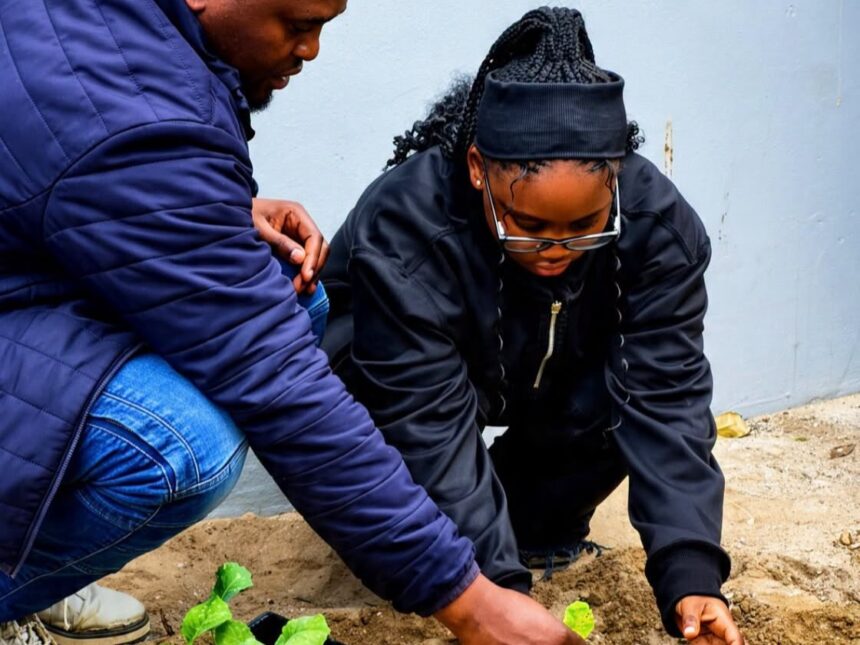
The ARC Infruitec-Nietvoorbij Campus recently brought agriculture, science and innovation into the classroom through a Spring School Programme held at the Robben Island Museum. Learners from all nine provinces had the opportunity to explore the role of agriculture in everyday life while gaining practical knowledge about sustainable farming and agro-processing. The programme used hands-on learning and direct interaction with researchers to make agricultural science accessible and engaging for young people. Learners were introduced to the journey from agricultural production to the creation of value-added food products, helping them understand that agriculture extends well beyond growing crops and raising food. The initiative also highlighted the wide range of opportunities available to young people who are interested in agriculture, science, technology and innovation.
The participation of learners from all nine provinces gave the Spring School Programme a broad national reach. Bringing learners together from different parts of South Africa created an opportunity to expose young people to agricultural concepts that are relevant across diverse communities and farming environments. Agriculture plays an important role in food production and economic activity, but many young people may not immediately associate the sector with scientific research, technology or innovation. Programmes such as this can help broaden that understanding by showing learners how scientific knowledge contributes to modern agricultural practices. Early exposure to these areas can encourage learners to consider agriculture as a field that offers opportunities for education, research, entrepreneurship and professional development.
Sustainable agriculture was one of the key areas explored during the programme. Sustainable farming focuses on producing food while considering the responsible use of resources and the long-term health of agricultural systems. Introducing these concepts to learners can help them understand why farming decisions matter for food production and the environment. Practical activities can make complex ideas easier to understand because learners can connect scientific principles with real agricultural processes. By engaging directly with researchers, learners were able to explore questions about farming and sustainability in an environment that encouraged curiosity and participation.
The programme also introduced learners to agro-processing, an important part of the agricultural value chain. Agro-processing involves taking agricultural products and transforming them into other food or agricultural products that can have additional value. A simple example explored during the programme was the transformation of fresh produce into jam. This process demonstrates how agricultural products can move from primary production into food manufacturing and create opportunities for additional economic activity. Understanding this connection can help learners see how agriculture links with science, business, food technology and entrepreneurship.
The example of making jam also showed learners how value can be added to agricultural produce. Fresh fruit has a limited shelf life, while processing it into products such as jam can change how it is stored, marketed and consumed. The activity provided a practical way of demonstrating how knowledge and technology can influence the value of agricultural products. Learners could see that farmers and agricultural businesses can participate in different stages of the food value chain rather than focusing only on primary production. This broader perspective can help young people understand the many careers and business opportunities connected to agriculture.
Hands-on learning formed an important part of the programme because it allowed learners to move beyond simply receiving information. Practical activities can encourage learners to observe processes, ask questions and develop a clearer understanding of how agricultural science works. Interaction with researchers also gave participants an opportunity to engage with professionals who work directly in scientific and agricultural fields. These exchanges can help learners connect what they learn at school with real-world applications. They can also demonstrate that agricultural research involves investigation, experimentation, problem-solving and innovation.
The involvement of researchers was particularly valuable because scientists can provide learners with insight into the work behind agricultural development. Agricultural research can address questions related to crop production, food processing, sustainability and other areas that influence food systems. When researchers interact directly with learners, they can explain scientific concepts in ways that connect with everyday experiences. This can make science more approachable and help learners recognise its practical importance. It can also encourage learners to consider careers in research and other science-related fields.
The programme at the Robben Island Museum also demonstrated how educational spaces can be used to create meaningful learning experiences. Taking agriculture into a setting associated with history and education provided learners with an opportunity to encounter agricultural science outside a traditional classroom environment. The programme connected learning with practical demonstrations and conversations rather than relying solely on textbook-based instruction. This approach can help create stronger engagement among learners by allowing them to explore subjects through direct experience. It also reinforces the idea that learning about agriculture can take place in many different environments.
Agricultural education can play an important role in helping young people understand where food comes from and how food systems operate. Learners who understand the relationship between farming, processing and markets can develop a more complete picture of the food they encounter every day. They can also learn about the scientific and environmental considerations involved in producing food sustainably. Introducing these concepts at school level can help build awareness of agriculture as a complex and knowledge-driven sector. It can also create a foundation for learners who later choose agricultural subjects, scientific disciplines or related career paths.
The focus on innovation further expanded the scope of the Spring School Programme. Modern agriculture increasingly depends on knowledge and innovation to address production challenges and improve the use of available resources. Teaching learners about innovation can encourage them to approach agricultural challenges with curiosity and a willingness to explore new solutions. Science provides the tools for investigating problems, testing ideas and developing improved practices. By connecting agriculture with science and innovation, the programme presented farming as a field where young people can contribute through research, technology and creative problem-solving.
The initiative also highlighted the importance of exposing young people to opportunities within the broader agricultural sector. Agriculture includes farmers, researchers, food scientists, agricultural technologists, entrepreneurs, extension professionals and many other roles. Agro-processing creates further opportunities linked to food manufacturing, product development, quality control and marketing. Sustainable agriculture also requires people with knowledge of environmental management, resource use and agricultural science. Showing learners this range of possibilities can help challenge narrow perceptions of agriculture and demonstrate that the sector offers diverse pathways for future study and work.
The participation of learners from all nine provinces adds further significance to the programme because agricultural conditions and opportunities vary across South Africa. Different regions have different farming systems, crops, climates and community needs, but the underlying importance of food production and sustainable agriculture remains relevant. A national programme can provide learners with a shared understanding of these issues while allowing them to bring their own experiences into the learning process. Such interaction can encourage learners to think about agricultural challenges beyond their immediate communities. It can also help build a wider appreciation of the role agriculture plays in South Africa’s economy and food system.
The Spring School Programme ultimately demonstrated the value of combining education, practical agriculture and scientific engagement. Learners explored sustainable farming, agro-processing and value addition while interacting directly with researchers. The example of turning fresh produce into jam showed how agricultural products can be transformed into new products and economic opportunities. Hands-on activities helped make these concepts practical and accessible, while discussions with researchers provided insight into the scientific work that supports agriculture and innovation. Together, these elements created an educational experience designed to encourage young people to look at agriculture from a broader perspective.
The ARC Infruitec-Nietvoorbij Campus’s participation in the Spring School Programme shows how agricultural education can inspire curiosity and introduce learners to opportunities across the food and agricultural value chain. By taking agriculture into the classroom and using practical learning, the programme helped learners understand connections between farming, sustainability, agro-processing, science and innovation. The involvement of learners from all nine provinces ensured that the experience reached young people from across South Africa. Most importantly, the programme encouraged learners to see agriculture not simply as food production but as a sector shaped by research, technology, entrepreneurship and scientific discovery. Continued exposure to these opportunities can help inspire a new generation of South Africans to contribute to the future of sustainable agriculture, food security and innovation.
Join 'Farmers Mag' WhatsApp Channel
Get the latest Farming news and tips delivered straight to your WhatsApp
CLICK HERE TO JOIN