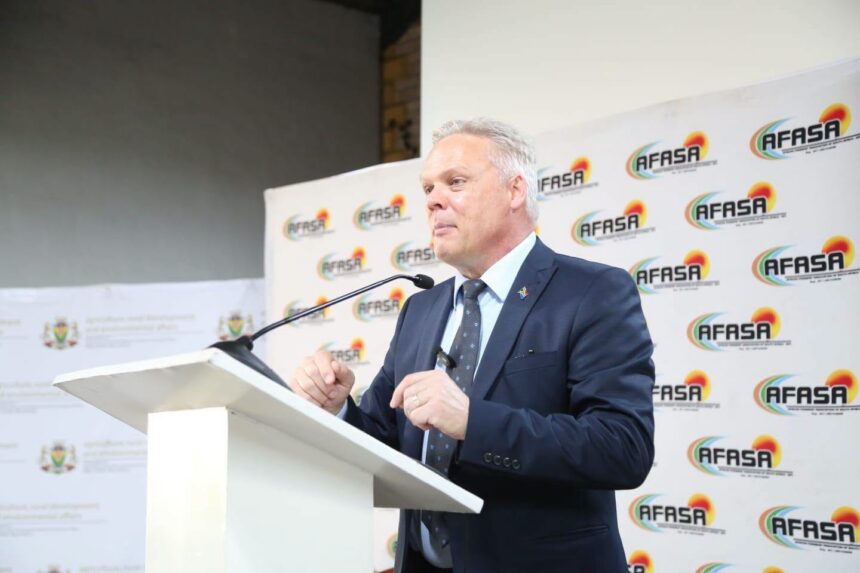
Agriculture remains a vital pillar of South Africa’s economy, with the potential to create jobs, strengthen rural communities, improve food security and drive sustainable economic growth. Minister of Agriculture Willie Aucamp has reaffirmed government’s commitment to growing the sector, calling for increased agricultural production and stronger support for emerging farmers. He made the call while attending the African Farmers’ Association of South Africa (AFASA) National Annual General Meeting in Sasolburg, Free State. Addressing farmers at the gathering, the Minister highlighted the important contribution agriculture makes to South Africa’s economic development and the need to create opportunities for farmers across the sector. He emphasised that building a stronger agricultural industry requires an enabling environment where farmers, regardless of the size of their operations, can access opportunities to grow and succeed.
Minister Aucamp’s address placed agricultural production at the centre of discussions about South Africa’s economic future. Increasing agricultural output is important for meeting food demand, strengthening local supply chains and supporting the country’s position as an agricultural producer. A productive agricultural sector also creates opportunities across various parts of the economy, including farming, processing, transportation, storage and food distribution. These activities support businesses and contribute to employment in both rural and urban areas. The Minister therefore stressed the need to strengthen agricultural production as part of broader efforts to promote economic growth and national development.
The AFASA National Annual General Meeting provided an important platform for engagement between government and farmers on issues affecting the agricultural sector. The African Farmers’ Association of South Africa plays a role in representing the interests of farmers and advocating for their participation in the country’s agricultural economy. Such gatherings create opportunities for farmers to discuss industry challenges, share experiences and engage government representatives on policies and interventions affecting their businesses. They also provide a space to consider strategies for improving agricultural development and strengthening the position of farmers in local and national markets. Minister Aucamp’s participation highlighted the importance of maintaining constructive relationships between government and organised agricultural stakeholders.
A key priority raised by the Minister was the need to support emerging farmers as they work towards expanding their agricultural operations. Emerging farmers make an important contribution to agricultural development, particularly through their potential to increase production, create employment and stimulate economic activity in rural communities. However, growing a farming enterprise requires access to appropriate resources, technical knowledge and reliable markets. Farmers also need the capacity to manage production costs, comply with market requirements and make sound business decisions. Supporting emerging farmers through different stages of development can help them establish sustainable enterprises and improve their ability to compete in the agricultural sector.
The transition from small-scale or emerging farming operations to successful commercial enterprises requires more than increasing the size of production. Farmers need to develop strong business management skills and understand the financial and operational requirements of commercial agriculture. Access to suitable infrastructure, farming equipment, quality inputs and reliable water supplies can also influence their ability to expand. Market access is equally important because increased production must be supported by opportunities to sell agricultural products at viable prices. Strengthening these areas can help emerging farmers build sustainable businesses and participate more meaningfully in agricultural value chains.
Government support is therefore important in creating conditions that allow emerging farmers to reach their full potential. An enabling agricultural environment should provide opportunities for farmers to access relevant support and overcome barriers that limit their growth. This includes recognising that farmers operate under different conditions and have different requirements depending on their production activities and business development stages. Support programmes should respond to these differences while encouraging productivity, financial sustainability and responsible agricultural practices. Effective cooperation between government, farmer organisations and other agricultural stakeholders can help identify challenges and develop practical interventions. Such cooperation is essential for building a more inclusive agricultural economy.
Minister Aucamp also reaffirmed government’s commitment to ensuring that all farmers have equal opportunities to develop and succeed, regardless of the scale of their operations. This message reflects the importance of an inclusive agricultural sector in which smallholder, emerging and established commercial farmers can all contribute to national development. Farmers should have opportunities to improve their production capacity, access markets and participate in economic activities across the agricultural value chain. Creating a fair and supportive environment can help reduce barriers that prevent smaller farming enterprises from growing. It can also encourage greater participation in agriculture and strengthen the sector’s ability to contribute to employment and economic development.
The Minister’s emphasis on equal opportunities is particularly relevant to rural development and economic transformation. Agriculture provides opportunities for people living in rural communities to build businesses and generate income through crop production, livestock farming and related activities. When farmers can expand their operations, they may also create employment for other members of their communities. Agricultural growth can stimulate demand for local services, transport, processing facilities and other businesses that support farming activities. This makes agriculture an important contributor to broader rural economic development. Strengthening opportunities for farmers can therefore produce benefits that extend beyond individual farming businesses.
Job creation was another important aspect of the Minister’s message. Agriculture supports employment through direct farming activities and through industries connected to the production and distribution of food and other agricultural products. Expanding production can create additional demand for workers involved in planting, harvesting, livestock management, processing and logistics. The growth of agricultural enterprises can also support small businesses that supply farming inputs, equipment and services. However, sustainable job creation depends on building productive and financially viable agricultural businesses. Encouraging investment, improving productivity and supporting farmers to access markets are important steps towards expanding employment opportunities in the sector.
Agriculture also plays a central role in strengthening South Africa’s food security. A productive farming sector helps ensure a reliable supply of food for households and businesses while supporting the broader food system. Farmers contribute to this objective by producing a variety of agricultural products and maintaining supply chains that connect producers with consumers. Supporting both emerging and established farmers can help strengthen the country’s production capacity and improve the resilience of the agricultural sector. Food security also depends on addressing the challenges that affect farmers’ ability to produce consistently and profitably. Government and agricultural stakeholders therefore have an important role in supporting an environment where farming businesses can operate sustainably.
The engagement in Sasolburg also reinforced the importance of continued dialogue between government and organised farmer structures such as AFASA. Farmers need platforms where they can communicate their concerns, identify development opportunities and contribute to discussions about agricultural policy and support programmes. Government, in turn, benefits from understanding the practical conditions under which farmers operate. Regular engagement can help improve the relevance of interventions and strengthen cooperation between stakeholders. Building trust and maintaining open communication are important for ensuring that agricultural development priorities respond to the needs of farming communities.
Minister Aucamp’s message at the AFASA National Annual General Meeting highlighted a shared responsibility to build a stronger, more productive and inclusive agricultural sector. Increased agricultural production, support for emerging farmers and equal opportunities for all farming enterprises remain important considerations for South Africa’s agricultural development. Achieving these objectives requires practical support, effective partnerships and an environment that encourages farmers to invest, expand and create sustainable businesses. By strengthening emerging farmers and supporting established agricultural enterprises, South Africa can improve its production capacity, create employment opportunities and stimulate rural economic growth. Ultimately, a successful agricultural sector will depend on ensuring that farmers of every scale have the opportunity and support needed to contribute meaningfully to the country’s economy and long-term development.
Join 'Farmers Mag' WhatsApp Channel
Get the latest Farming news and tips delivered straight to your WhatsApp
CLICK HERE TO JOIN