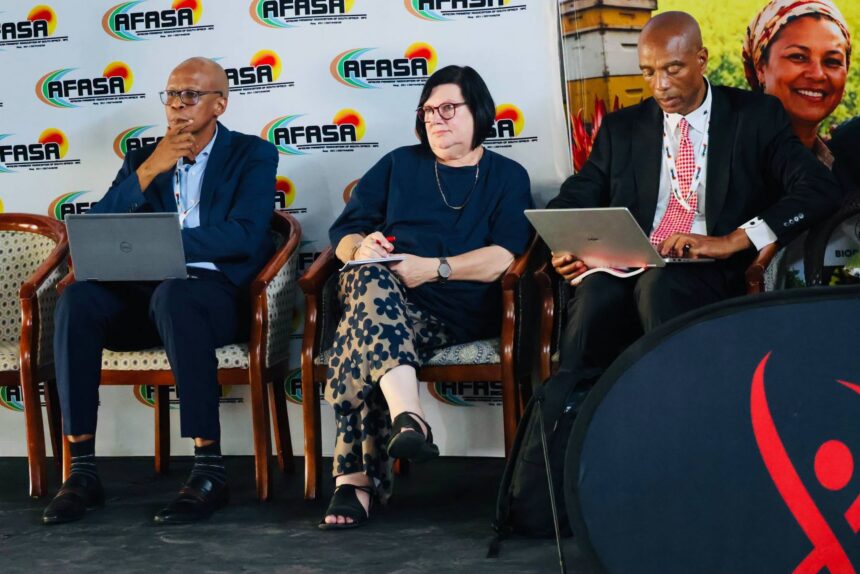
Meaningful engagement between farmers, government and agricultural stakeholders remains essential for addressing the challenges affecting the agricultural sector and improving service delivery. This commitment took centre stage during the second part of the programme, which featured interactive panel discussions with dignitaries and provided farmers with an opportunity to raise concerns directly with decision-makers. The session created space for open conversations about the realities facing farmers and the practical interventions needed to support agricultural development. Farmers shared their experiences from the ground, highlighting challenges that affect their farming operations, productivity and access to support. The programme also marked an important milestone with the launch of a Tracking, Monitoring and Evaluation system designed to strengthen accountability, monitor commitments and assess the impact of interventions aimed at supporting farmers.
The panel discussions provided an opportunity for farmers to engage directly with the dignitaries and other representatives participating in the programme. Rather than limiting the discussions to formal presentations, the organisers opened the floor to allow farmers to share their concerns and experiences. This approach recognised the importance of involving farming communities in conversations about policies, programmes and decisions that affect their livelihoods. Farmers understand the practical difficulties they encounter in their daily operations, making their contributions valuable in identifying gaps in agricultural support. Direct engagement also allows government representatives and other stakeholders to gain a clearer understanding of the issues that require urgent attention.
During the discussions, farmers raised various concerns based on their experiences and the challenges they face within the agricultural sector. These engagements provided an opportunity to explain the difficulties affecting their farming activities and highlight areas where additional support and intervention are needed. Farmers also shared practical insights into the conditions on the ground, helping the panel understand how existing challenges affect agricultural production and business sustainability. The open format encouraged participants to express their views and seek clarity on issues affecting their communities. Such discussions are important because effective agricultural development requires solutions that respond to the actual needs of farmers rather than relying solely on decisions made without sufficient consultation.
The dignitaries responded to the concerns raised by farmers and shared practical solutions aimed at addressing the issues discussed. Their contributions helped create a constructive exchange between decision-makers and agricultural stakeholders. The discussions focused on identifying workable approaches that could improve support for farmers and strengthen cooperation across the sector. Responding directly to farmers also provided an opportunity to clarify challenges and consider possible ways forward. Meaningful engagement of this nature can help build trust and improve the relationship between government institutions and farming communities.
One of the key messages emerging from the interactive session was the need for improved communication between government, the African Farmers Association of South Africa (AFASA) and farmers. Participants emphasised that consistent communication is necessary to ensure that farmers receive relevant information about agricultural programmes, available support and decisions affecting the sector. Effective communication also allows farmers to raise concerns before challenges become more difficult to address. When information flows between stakeholders, it becomes easier to identify service delivery gaps, coordinate interventions and develop appropriate responses. Stronger communication channels can therefore contribute to better relationships and more effective agricultural development.
The importance of stronger partnerships between government, AFASA and farmers also featured prominently in the discussions. Agricultural development requires cooperation between different stakeholders because the challenges facing farmers often extend beyond production alone. Farmers may require support with access to markets, agricultural infrastructure, finance, technical advice and other resources that influence the sustainability of their businesses. Government institutions and farmer organisations have important roles to play in ensuring that these needs receive attention. Strong partnerships can also improve coordination and help stakeholders work towards shared agricultural development objectives. By strengthening collaboration, the sector can create a more supportive environment for farmers and improve the effectiveness of interventions.
The engagement further highlighted the importance of ensuring that farmers remain active participants in decisions affecting agricultural development. Farmer participation should not end when concerns have been raised during meetings or consultations. Stakeholders must also establish processes to ensure that the issues identified receive appropriate attention and that agreed actions translate into measurable improvements. Regular communication and follow-up engagements can help farmers understand the progress made on commitments. They also provide an opportunity for stakeholders to identify delays, address implementation challenges and adjust interventions where necessary. This approach can strengthen accountability and ensure that farmers remain informed throughout the process.
A major highlight of the programme was the launch of the Tracking, Monitoring and Evaluation system. The system is intended to strengthen the way commitments made during engagements are recorded, followed up and assessed. It will assist in tracking commitments, monitoring progress on resolutions and evaluating the impact of interventions designed to support farmers. This is an important development because discussions and promises need effective follow-up mechanisms to produce meaningful results. By introducing a structured approach to monitoring and evaluation, stakeholders can improve visibility over the progress of agreed actions. The system is expected to support more consistent accountability and provide a clearer picture of whether interventions are achieving their intended objectives.
Tracking commitments is particularly important in engagements involving government institutions, farmer organisations and agricultural communities. During discussions, stakeholders may agree on actions that require cooperation between different parties and follow-up over time. Without a clear tracking process, it can become difficult to establish whether commitments have been fulfilled or whether additional action is required. The new system will help provide a mechanism for following these commitments and monitoring the progress made towards resolving farmers’ concerns. This can also assist stakeholders in identifying outstanding issues and determining where further engagement is necessary. Consistent tracking can help strengthen confidence in consultation processes by making follow-up more visible.
The monitoring component of the system will also play an important role in assessing the implementation of resolutions. Monitoring involves following activities and checking whether agreed interventions are progressing as planned. This can help stakeholders identify implementation challenges early and take corrective action where necessary. For farmers, effective monitoring can provide greater clarity about the status of issues raised during engagements and the steps being taken to address them. It can also encourage more regular communication between those responsible for implementing interventions and the communities expected to benefit from them. When monitoring becomes part of routine agricultural programme management, it can improve coordination and strengthen service delivery.
The evaluation component will focus on assessing the impact of interventions on farmers. While tracking and monitoring provide information about commitments and implementation progress, evaluation helps determine whether activities are producing meaningful outcomes. This is important because the success of agricultural programmes should not be measured only by the number of meetings held or commitments made. Stakeholders also need to understand whether interventions are improving farmers’ access to support, addressing identified challenges and contributing to more sustainable agricultural operations. Evaluation can provide valuable information about what is working and where improvements are needed. These insights can support better planning and more effective use of resources in future agricultural development programmes.
The launch of the Tracking, Monitoring and Evaluation system therefore represents an important step towards strengthening accountability and improving the relationship between farmers and agricultural stakeholders. Its effectiveness will depend on consistent implementation, accurate information and the active participation of all parties involved. Government representatives, AFASA and farmers will need to maintain open communication and ensure that commitments are regularly reviewed. The information generated through the system can help stakeholders make more informed decisions and identify areas requiring additional attention. Most importantly, the process should remain focused on delivering practical benefits to farmers and addressing the challenges raised during engagements.
The programme’s second session demonstrated the value of creating platforms where farmers can speak directly to decision-makers and contribute to discussions about the future of agriculture. The panel discussions encouraged honest engagement, highlighted the need for stronger government and farmer partnerships and provided an opportunity to explore practical solutions to challenges affecting agricultural communities. The launch of the Tracking, Monitoring and Evaluation system added an important accountability mechanism to the process by providing a structured way to follow commitments and assess the impact of interventions. Together, these initiatives reinforce the importance of communication, collaboration and measurable action in agricultural development. Ultimately, meaningful progress will depend on turning the concerns raised by farmers into practical solutions that improve their farming operations, strengthen agricultural partnerships and support a more inclusive and sustainable agricultural sector.
Join 'Farmers Mag' WhatsApp Channel
Get the latest Farming news and tips delivered straight to your WhatsApp
CLICK HERE TO JOIN