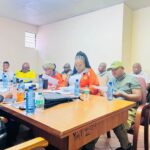
Stakeholders across the Northern Cape are putting forward practical proposals to improve food and nutrition security as consultations on the National Food and Nutrition Security Plan (NFNSP) 2025 to 2033 continue across the province. The discussions are focused on identifying solutions that respond to the realities faced by households, farmers, schools and communities. Food and nutrition security remains closely linked to reliable access to nutritious food, productive agriculture, water availability and the ability of communities to withstand economic and environmental pressures. Stakeholders are therefore calling for approaches that can work at local level while supporting the broader objectives of the national plan. The district-level consultation process provides an opportunity for communities and food producers to influence policies that will affect food production and nutrition security over the coming years.
One of the proposals emerging from the Northern Cape consultations is the expansion of hydroponic farming. Hydroponic systems can support food production without relying on traditional soil-based farming, which makes them potentially useful in areas where land or soil conditions create challenges. Stakeholders see hydroponic farming as one practical option for increasing local food production while making more efficient use of available resources. The approach could also create opportunities for households, schools and community groups to participate in food production at a smaller scale. However, successful expansion would require access to appropriate technology, skills, maintenance support and reliable water and energy supplies.
Water access is another major issue raised during the consultations. Agriculture and household food production depend heavily on reliable water supplies, making water security an important part of any long-term food and nutrition security strategy. Improving access to water could help farmers maintain production and enable more households and community projects to establish productive food gardens. Stakeholders are therefore advocating for practical measures that address water availability alongside broader agricultural development efforts. A stronger focus on water could also help communities prepare for periods of drought and other conditions that can disrupt food production.
Stakeholders are also proposing that food gardens become more closely integrated into the school curriculum. School food gardens can give learners practical experience in growing vegetables while helping them understand nutrition, agriculture and environmental responsibility. Integrating food gardening into education could connect classroom learning with activities that have direct benefits for households and communities. Schools could also use gardens as practical learning spaces where learners develop basic knowledge about planting, harvesting, water use and food preparation. Such programmes would need suitable support, including training, resources and maintenance arrangements, to remain productive over time.
Reducing food waste is another area where stakeholders are seeking practical solutions. Food can be lost or wasted at different stages, including production, storage, transport, retail and household consumption. Reducing unnecessary losses can help increase the amount of food available without requiring an equivalent increase in production. Stakeholders are therefore looking at ways to improve how food is handled and used within local communities and food systems. Practical measures could include better storage practices, improved coordination between producers and buyers and greater awareness of how households can reduce avoidable food waste.
Climate change is also influencing discussions about the future of food and nutrition security in the Northern Cape. Changes in weather conditions, water availability and other environmental factors can affect agricultural production and place additional pressure on farmers and communities. Stakeholders are calling for stronger responses that help food producers prepare for and manage these challenges. Building resilience into agricultural and food systems can involve considering suitable production methods, efficient water use and approaches that reduce vulnerability to changing conditions. Addressing climate-related risks within the NFNSP can help ensure that food security planning considers both current needs and future pressures.
Better coordination among farmers is another proposal emerging from the district-level discussions. Farmers can face difficulties when they operate without effective structures for sharing information, accessing markets or coordinating production activities. Stronger farmer coordination structures could help producers identify common challenges and develop collective responses. Improved coordination could also support collaboration between small-scale producers, commercial farmers, local organisations and other participants in the food system. Stronger local networks may make it easier for producers to participate in markets and contribute to more reliable local food supplies.
Stakeholders are also calling for stronger local trade among food producers. Creating better links between local producers and local buyers could help keep more economic activity within communities while supporting access to locally produced food. Farmers who can sell their products more effectively may have greater opportunities to sustain and expand production. Local trade can also strengthen connections between producers, schools, households, community organisations and other institutions that need food. Developing these connections requires practical coordination, reliable production and market arrangements that allow producers and buyers to participate effectively.
The promotion of the One Family, One Food Garden initiative is another proposal aimed at strengthening household food production. The concept encourages families to establish food gardens that can contribute to their own food supply. Household gardens can provide an additional source of vegetables and other food while giving families a direct role in producing what they consume. Their success can depend on factors such as access to water, suitable space, seeds, tools and basic gardening knowledge. Linking household food gardens with broader community and government support could help make the initiative more sustainable and relevant to local conditions.
The proposals from the Northern Cape reflect the importance of addressing food and nutrition security through several connected areas rather than relying on a single intervention. Food production depends on water, environmental conditions, skills, markets and access to appropriate resources. Nutrition security also requires attention to the availability and use of nutritious food at household and community level. The consultation process allows stakeholders to identify how these issues interact in their own districts and to propose responses based on their experience. This local knowledge can strengthen national planning by ensuring that policies take account of different conditions across South Africa.
The district-level inputs will contribute to shaping the National Food and Nutrition Security Plan 2025 to 2033 and its response to challenges in the Northern Cape. Proposals involving hydroponic farming, improved water access, school food gardens, food waste reduction and climate resilience demonstrate the range of issues that stakeholders consider important. Farmer coordination, stronger local food trade and household food gardens add further measures that can support local food production and community participation. The value of the consultation process will ultimately depend on how effectively these proposals are considered and translated into practical actions. A food and nutrition security strategy that reflects conditions on the ground can provide a stronger foundation for improving access to food and building more resilient local food systems across the Northern Cape.
Join 'Farmers Mag' WhatsApp Channel
Get the latest Farming news and tips delivered straight to your WhatsApp
CLICK HERE TO JOIN