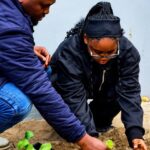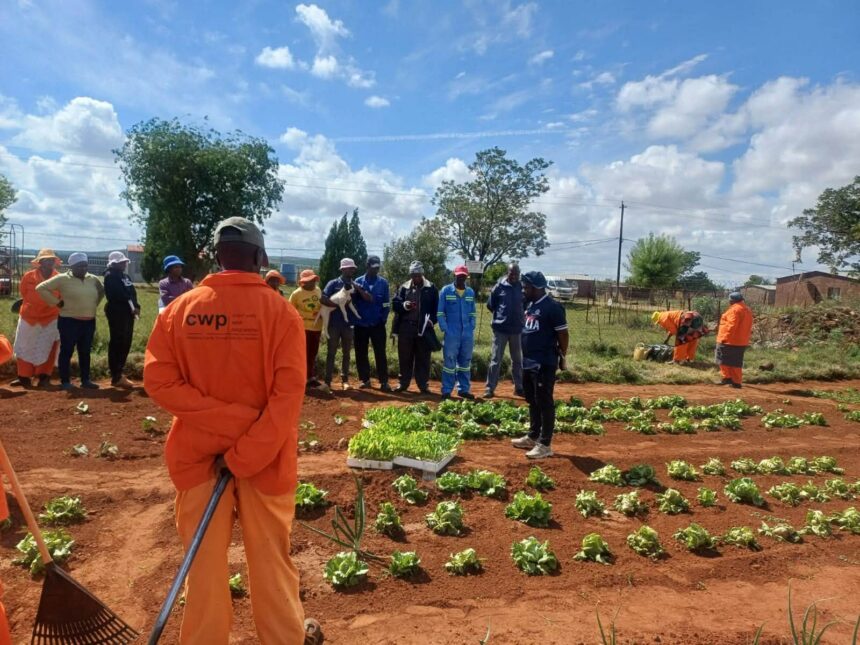
The Dr Kenneth Kaunda District office has launched its first 40 Days Service Delivery Programme at JB Marks Local Municipality, bringing practical agricultural and food security support closer to communities and farmers. The programme included activities at Mogopa Communal Property Association (CPA), where community members participated in presentations and demonstrations focused on water preservation, plant production and food security. The initiative highlights the importance of practical knowledge in helping communities make better use of available resources and strengthen local food production. It also demonstrates how service delivery programmes can address issues that directly affect household livelihoods and agricultural productivity. By combining community education with practical demonstrations, the programme provided participants with information that can support more sustainable approaches to agriculture and food production.
The activities at Mogopa CPA placed particular attention on water preservation, an important issue for communities involved in food production. Water plays a central role in growing crops, maintaining gardens and supporting agricultural activities, making responsible water use essential for sustainable production. Practical knowledge about water preservation can help communities understand how to use available water more efficiently and reduce unnecessary losses. This becomes particularly important when farmers and households face difficult weather conditions or limited water resources. By linking water preservation with plant production and food security, the programme addressed several connected challenges that influence the ability of communities to produce food consistently.
Plant production was another key focus of the activities held at Mogopa CPA. Understanding how to produce plants effectively can help communities improve their ability to grow food and make productive use of available land. Demonstrations can be particularly useful because they allow participants to see how agricultural practices can be applied in real situations rather than relying only on theoretical information. Knowledge gained through these activities can support household gardens, community food production and other agricultural initiatives. Strengthening plant production skills also contributes to broader food security by encouraging communities to participate more actively in producing food.
Food security formed an important part of the programme because reliable access to food depends on several factors, including productive agriculture, resource management and practical knowledge. Community members who gain relevant production skills can become better equipped to participate in local food production. The activities at Mogopa CPA therefore connected agricultural education with a wider objective of supporting food security at community level. This approach recognises that food security is not only about the availability of food but also about the ability of people and communities to produce, access and use food sustainably. Continued practical support can help communities build knowledge that remains useful beyond a single service delivery event.
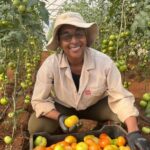
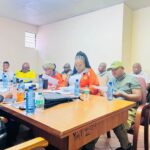
The programme also included a Horticulture Farmers Day in Ikageng, providing farmers with an opportunity to gain knowledge related to agricultural production and climate challenges. Horticulture plays an important role in vegetable production, which can contribute to household nutrition, local markets and agricultural livelihoods. Farmers participating in the event received information on managing the effects of El Niño and strengthening climate-smart agricultural practices. The focus on climate-smart agriculture reflects the need for farmers to consider changing weather conditions when making production decisions. Helping farmers understand how to manage climate-related risks can support more resilient agricultural practices and reduce potential disruptions to production.
The discussion on El Niño was particularly relevant because farmers need practical strategies for managing conditions that can affect crop growth and water availability. El Niño can influence weather patterns and create challenging conditions for agricultural production, depending on the location and circumstances. Farmers can benefit from understanding the risks associated with such conditions and considering agricultural practices that improve resilience. Climate-smart agriculture provides a framework for improving productivity while taking environmental conditions and resource efficiency into account. The knowledge shared during the Horticulture Farmers Day therefore aimed to help farmers strengthen their ability to respond to climate-related challenges.
Another important component of the Ikageng event was the presentation on the SHEP approach to vegetable production. The approach was presented as a way of empowering farmers with skills that can improve production, market access and food security. Market access is an important consideration for farmers because producing vegetables successfully also requires opportunities to sell products to buyers. Understanding market needs can help farmers make more informed decisions about what to produce and how to organise their production activities. Combining production knowledge with market-oriented skills can help farmers strengthen their participation in agricultural markets while also supporting local food availability.
The focus on the SHEP approach also highlights the connection between farming and market demand. Farmers need more than technical production skills if they want to develop sustainable agricultural enterprises. They also need to understand potential customers, product requirements and the relationship between production decisions and available markets. Providing farmers with practical knowledge in these areas can help them approach vegetable production with greater attention to both production and commercial opportunities. When farmers are better positioned to access markets, increased production can potentially translate into improved income opportunities and stronger local food systems.
The combination of community activities at Mogopa CPA and the Horticulture Farmers Day in Ikageng shows the broad focus of the Dr Kenneth Kaunda District office’s first 40 Days Service Delivery Programme at JB Marks Local Municipality. The programme addressed household and community food security while also supporting farmers with agricultural and market-related knowledge. Water preservation, plant production, climate-smart agriculture and vegetable market access are closely connected issues within a resilient food system. Addressing these areas through practical presentations and demonstrations can help participants understand how different agricultural challenges influence one another. The programme therefore provided a platform for sharing knowledge that can be applied at household, community and farming levels.
The activities also underline the importance of bringing agricultural services and information directly to communities. Farmers and community members can benefit when programmes provide practical knowledge that relates to the challenges they experience in their own production environments. Demonstrations and presentations can create opportunities for participants to ask questions, learn new techniques and consider how different approaches could work in their circumstances. This type of engagement can strengthen communication between agricultural support structures and the people who depend on food production for their livelihoods and food needs. It can also help ensure that service delivery focuses on practical challenges rather than remaining limited to policy discussions.
The first 40 Days Service Delivery Programme activities at JB Marks Local Municipality brought together several important elements of sustainable agriculture and food security. At Mogopa CPA, community members received information and practical demonstrations on water preservation, plant production and food security. In Ikageng, farmers gained knowledge about managing the effects of El Niño, applying climate-smart agricultural practices and using the SHEP approach to improve vegetable production and market access. These activities demonstrate the value of combining agricultural skills development with resource conservation, climate awareness and market knowledge. Continued efforts in these areas can help communities and farmers strengthen their capacity to produce food and respond to changing agricultural conditions.
The programme ultimately placed practical knowledge at the centre of efforts to strengthen agricultural development and food security in the Dr Kenneth Kaunda District. Supporting communities with water preservation and plant production skills can contribute to more effective local food production, while equipping farmers with climate-smart and market-focused knowledge can support stronger agricultural enterprises. The Horticulture Farmers Day and activities at Mogopa CPA provided participants with information that can help them make more informed decisions about production and resource use. The impact of such programmes will depend on how participants apply the knowledge gained and how ongoing agricultural support builds on these activities. By continuing to connect service delivery with practical agricultural needs, initiatives of this nature can contribute to stronger food security and more resilient farming communities in JB Marks Local Municipality.
Join 'Farmers Mag' WhatsApp Channel
Get the latest Farming news and tips delivered straight to your WhatsApp
CLICK HERE TO JOIN