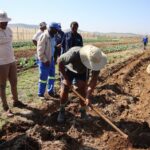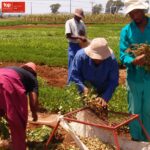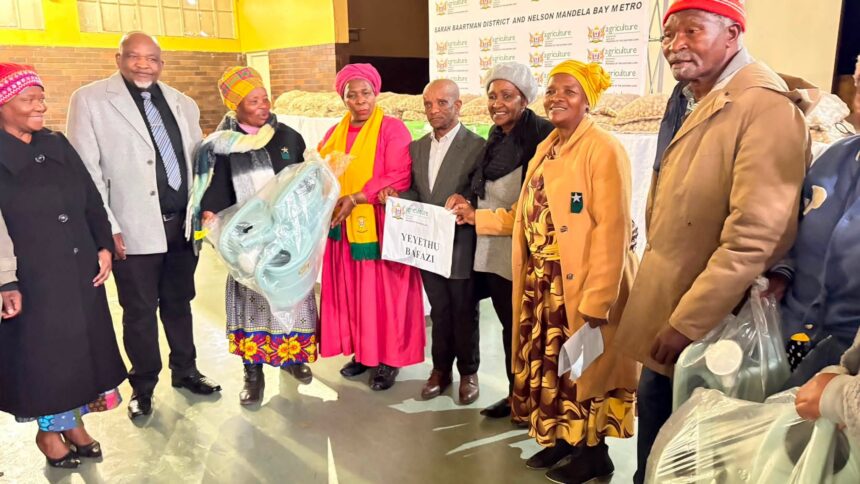
Eastern Cape Agriculture MEC Nonceba Kontsiwe has officially handed over production packs, agricultural inputs and gardening tools to families in Joza Community in Makhanda, under the Sarah Baartman District, as part of the Ilima Lokulima initiative. The intervention is aimed at strengthening household food production while helping vulnerable communities improve their access to fresh vegetables. The handover represents an effort to support families with practical resources that can help them establish and maintain productive gardens. Community members have welcomed the initiative, saying it is already making a difference in their daily lives. Through continued support for household food production, programmes such as Ilima Lokulima can contribute to poverty reduction and stronger food security in local communities.
The production packs and agricultural inputs provide families with resources needed to start or improve their gardening activities. Access to seeds, gardening materials and appropriate tools can make it easier for households to produce vegetables for their own consumption. Growing food at household level can also reduce the amount of money families need to spend on certain fresh produce. For communities facing economic pressure, even small-scale vegetable gardens can provide an additional source of food and help households manage their resources more effectively. The Joza handover therefore places practical agricultural support directly in the hands of families who can use it to increase their own food production.
The Ilima Lokulima initiative is focused on using agriculture as a tool to strengthen food security and address poverty at community level. Household and community gardens can provide families with regular access to vegetables while encouraging people to participate directly in food production. This approach can be particularly valuable in communities where household income makes it difficult to consistently purchase fresh produce. By providing agricultural inputs and gardening tools, government can help reduce some of the initial barriers that prevent families from starting productive gardens. The initiative also promotes the idea that communities can play an active role in improving their own food security when they have access to the necessary resources and support.
Community members in Joza have already reported positive changes since benefiting from the initiative. They say the programme has enabled them to grow their own fresh vegetables while helping them address some of the pressures associated with poverty. Producing vegetables at home can give families greater control over an important part of their food supply. Surplus produce may also create opportunities for households to share food with neighbours or potentially generate additional income where local market conditions allow. These benefits demonstrate how agricultural support can have an impact beyond the initial distribution of inputs and tools.
The handover also highlights the importance of supporting small-scale and household farming as part of broader agricultural development. Agriculture does not only take place on large commercial farms, as families and community groups can also contribute to food production through gardens and other small-scale activities. Household gardens can help develop practical farming skills and encourage communities to become more involved in food production. They can also provide an opportunity for people to learn about planting, crop maintenance, harvesting and responsible use of agricultural resources. With appropriate support, these activities can become a meaningful part of community-level efforts to improve food security.
Fresh vegetable production can offer several benefits to families participating in the programme. Regular access to home-grown vegetables can increase the availability of fresh food while reducing dependence on purchasing all produce from shops. Gardens can also encourage families to make productive use of available spaces around their homes or within community areas. The success of these gardens will depend on factors such as access to water, suitable growing conditions, consistent maintenance and the availability of further technical support when needed. Continued guidance can therefore help families get the greatest possible benefit from the agricultural inputs provided through the initiative.
The initiative also has potential to strengthen community participation and cooperation. Gardening activities can bring families together around a shared objective of producing food and improving household livelihoods. Community members can exchange knowledge about crops, planting methods and ways to manage common agricultural challenges. Such cooperation can help build local knowledge and encourage greater participation in food production. When communities become more actively involved in growing their own food, agricultural programmes can have a longer-lasting impact than a once-off distribution of resources.
The handover by MEC Nonceba Kontsiwe also reflects the role of provincial agricultural programmes in responding to challenges experienced at household level. Poverty and food insecurity can place significant pressure on families, particularly when food prices and household expenses continue to affect disposable income. Providing production packs, agricultural inputs and gardening tools gives communities practical resources that can help address some of these pressures. The focus on food production also connects agricultural development with everyday household needs. By supporting families to grow their own vegetables, the programme creates an opportunity for agricultural activity to contribute directly to household food security.
The Joza Community intervention demonstrates why access to agricultural resources remains important for communities seeking to become more self-sufficient. Families may have the willingness and available space to grow vegetables but lack the seeds, tools or other inputs needed to begin production. Providing these resources can help turn that willingness into productive activity. Community members have indicated that the initiative is already helping them increase food production and access fresh vegetables. Their experiences show the potential value of programmes that combine practical agricultural support with a clear focus on food security and poverty reduction.
The official handover of production packs, agricultural inputs and gardening tools to Joza families marks an important step in strengthening household food production in Makhanda. Through the Ilima Lokulima initiative, the Eastern Cape Department of Agriculture is supporting communities with resources that can help them grow vegetables and improve access to fresh food. The positive response from community members suggests that the programme is already having a practical impact on families participating in the initiative. Continued support, guidance and community participation will be important to ensure that the gardens remain productive and sustainable. The Joza initiative ultimately demonstrates how targeted agricultural assistance can help families produce their own food, reduce the effects of poverty and contribute to stronger food security at community level.
Join 'Farmers Mag' WhatsApp Channel
Get the latest Farming news and tips delivered straight to your WhatsApp
CLICK HERE TO JOIN