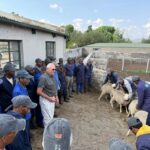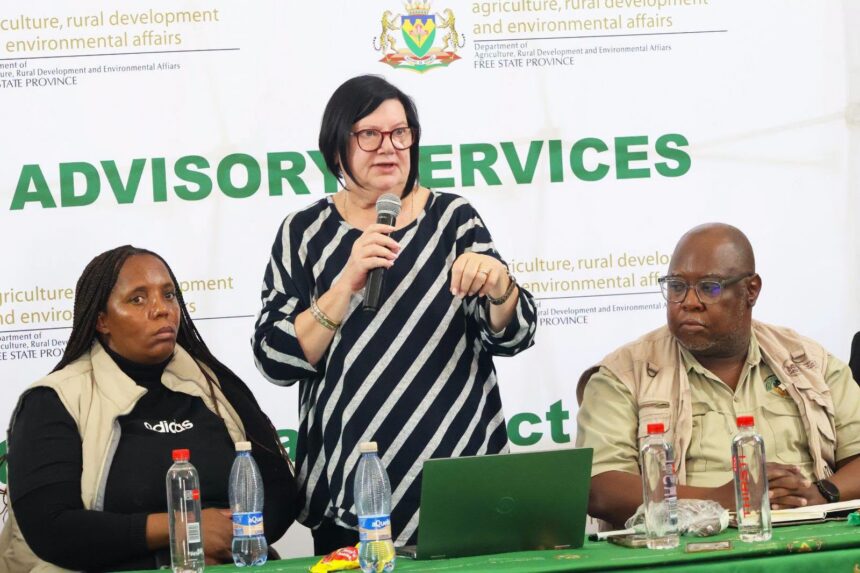
Free State MEC for Agriculture, Rural Development and Environmental Affairs, Ms Elzabe Rockman, hosted a farmers’ engagement session at Reitz Town Hall in the Nketoana Local Municipality, bringing together farmers and key stakeholders to address challenges affecting the agricultural sector. The engagement included farmers from Arlington, Lindley and Petrus Steyn, creating an important platform for discussion around issues influencing farming operations and rural livelihoods. The session focused on finding practical and sustainable solutions while strengthening cooperation between government, municipalities, farmers and other stakeholders. Agriculture remains an important contributor to food security, employment and economic activity in rural communities, making direct engagement with farmers essential. The meeting also demonstrated the Department’s intention to remain accessible to farming communities and responsive to the issues they face.
On behalf of the Nketoana Local Municipality, Mayor Cllr Godfrey Nhlapo welcomed farmers, government representatives and other participants to the engagement. He described the meeting as an opportunity to promote growth and job creation within the area. Nhlapo also highlighted the municipality’s responsibilities in addressing several issues affecting farmers, including long-term lease agreements, funding motivations requiring council approval, food security interventions and local economic development initiatives. These areas are important because farmers need secure access to land and appropriate support if they are to develop productive and sustainable operations. Strong cooperation between the municipality and the provincial Department of Agriculture can help ensure that agricultural challenges receive attention from the appropriate institutions.
Mr Mxolisi Tawana, District Director for Thabo Mofutsanyana, explained that the engagement was intended to create an open platform where farmers could discuss their challenges and work with government and stakeholders to identify sustainable solutions. He emphasised the importance of listening directly to farmers because their experiences provide valuable insight into the realities of agricultural production. The engagement also reaffirmed DARDEA’s commitment to supporting and empowering farmers across the Free State. Direct discussions can help government institutions better understand challenges relating to resources, production, infrastructure, markets and agricultural development. They also provide farmers with an opportunity to understand the responsibilities of different stakeholders and identify where specific concerns should be directed.
Several local government representatives attended the session, demonstrating the importance of collaboration in addressing agricultural challenges. Those in attendance included Nketoana Local Municipality Mayor Cllr Godfrey Nhlapo, Speaker Cllr Pani Fume, EXCO Representative Ms Matshidiso Koloi and Ward Councillor Cllr Koos Mofokeng. Their participation provided a link between farmers and municipal leadership, particularly on matters that fall within local government responsibilities. Agricultural development often requires cooperation across different levels of government because issues such as land, water, infrastructure, economic development and community services can involve multiple institutions. Having municipal leadership present therefore created an opportunity for farmers to raise concerns directly with representatives who can assist with local matters.
The programme included presentations on several issues that directly affect farming communities in the Free State. Mr Petruse Khambule, an Animal Health Technician from DARDEA, addressed Foot-and-Mouth Disease, an important concern for livestock farmers. Mr Motseki Sehloboko from the Department of Land Reform and Rural Development presented information on strategic land acquisition and land development. Warrant Officer Tsoenyane from the South African Police Service addressed the issue of stock theft, which can have serious financial consequences for livestock farmers. These presentations provided farmers with information from officials working in the relevant fields and helped place some of the concerns raised by producers within a broader regulatory and operational context.
Foot-and-Mouth Disease received particular attention during the engagement because of its impact on cattle farming and livestock movement. MEC Rockman highlighted the scale of vaccination efforts in the Free State, noting that 1.5 million cattle had been vaccinated while approximately 50% of cattle still remained to be vaccinated. She urged farmers not to hide cases of FMD and encouraged them to report suspected disease and unauthorised animal movements. Early reporting and cooperation with animal health authorities are important components of disease control because undisclosed cases can contribute to further transmission. The MEC also acknowledged the contribution of the private sector, which has assisted with vaccinations, transportation for Animal Health Technicians and support for veterinary services.
MEC Rockman’s comments also highlighted the importance of farmers taking an active role in protecting the province’s livestock industry. Disease control requires cooperation between farmers, animal health officials, veterinarians, government institutions and other stakeholders. Farmers can contribute by reporting suspected cases, following movement controls and cooperating with vaccination programmes. The discussion also recognised the importance of understanding livestock numbers in commonage areas, particularly because Thabo Mofutsanyana District has a significant cattle population. Accurate information about livestock populations can assist authorities with planning vaccination campaigns and other animal health interventions.
Farmers used the engagement to raise a wide range of concerns affecting their daily operations and future growth. Access to grazing land was among the issues discussed, reflecting the importance of commonage areas to farmers who depend on available land for livestock production. Farmers also raised the need for start-up kits for nurseries, funding opportunities and mentorship to help them develop their enterprises. Water provision emerged as another key concern, as reliable water supplies are essential for both crop and livestock production. The farmers also called for internship opportunities for agricultural graduates, stronger cooperation between the Department and fire protection associations and assistance following cold disasters that had affected livestock.
The request for greater support for agricultural graduates highlighted the connection between farming, skills development and employment opportunities. Internship programmes can give young agricultural graduates practical experience while allowing farming enterprises and agricultural institutions to benefit from emerging skills and knowledge. Farmers also expressed a need for mentorship, which can help producers strengthen technical, business and management capabilities. For emerging farmers, access to knowledge can be as important as access to physical resources because sustainable farming requires effective planning and decision-making. Addressing these needs can contribute to stronger agricultural enterprises while creating opportunities for young people seeking careers within the agricultural sector.
Land access and commonage management also featured prominently in the discussions. MEC Rockman acknowledged that commonage development can sometimes fall between the responsibilities of provincial government and municipalities. She explained that the Department had already met with the municipality to discuss concerns, including lease agreements, and welcomed the fact that the municipality had begun addressing the issue through its by-laws. Secure and well-managed access to agricultural land can give farmers greater certainty and create better conditions for long-term planning. Stronger cooperation between municipalities and agricultural authorities can also help reduce gaps in responsibility and ensure that farmers receive clearer guidance.
The issue of brand-mark registration was another matter raised during the engagement. MEC Rockman said that the Department had collected concerns from farmers who were struggling with the process and had referred them to the National Department for assistance. Livestock identification and brand-mark processes are important for establishing ownership and supporting efforts to combat livestock-related crime. Farmers who experience difficulties with registration can face additional challenges when trying to manage and protect their livestock. Escalating these concerns to the relevant national authority can help identify administrative barriers and work towards solutions that make the process more accessible to farmers.
Stock theft was also addressed through the presentation by the South African Police Service, reinforcing the need for cooperation between farmers and law enforcement. Livestock represents a significant investment for many farmers, meaning the theft of cattle and other animals can have a direct impact on household income and agricultural businesses. Effective responses require farmers to remain vigilant and report suspected criminal activity to the appropriate authorities. Cooperation between farming communities, SAPS and government agricultural structures can help improve awareness and strengthen responses to stock theft. The inclusion of the issue in the engagement ensured that farmers had an opportunity to hear directly from law enforcement about a challenge affecting livestock producers.
The concerns surrounding water, extreme cold and fire protection also demonstrated the range of risks facing agricultural communities. Farmers depend on natural resources and infrastructure that can be affected by weather conditions and other environmental pressures. Cold disasters can cause losses among livestock while fires can threaten grazing areas, crops, infrastructure and animals. Collaboration between farmers, agricultural authorities, municipalities and fire protection associations can improve preparedness and response. Addressing these risks requires both immediate assistance after damaging events and longer-term planning that helps farmers improve resilience.
The Reitz engagement ultimately demonstrated the value of maintaining direct and consistent communication between government and agricultural communities. MEC Rockman made it clear that the Department began these engagements to reconnect with farmers and build a closer working relationship with municipalities. The discussions at Reitz Town Hall allowed farmers to raise practical concerns while giving government and stakeholders an opportunity to respond and identify areas requiring further intervention. Issues such as FMD, land access, commonage management, funding, water, mentorship, stock theft and disaster support require cooperation across multiple institutions. Continued engagement will be important to ensure that solutions are practical, timely and capable of producing meaningful benefits for farmers, young people and rural communities across Nketoana and the wider Free State.
Join 'Farmers Mag' WhatsApp Channel
Get the latest Farming news and tips delivered straight to your WhatsApp
CLICK HERE TO JOIN