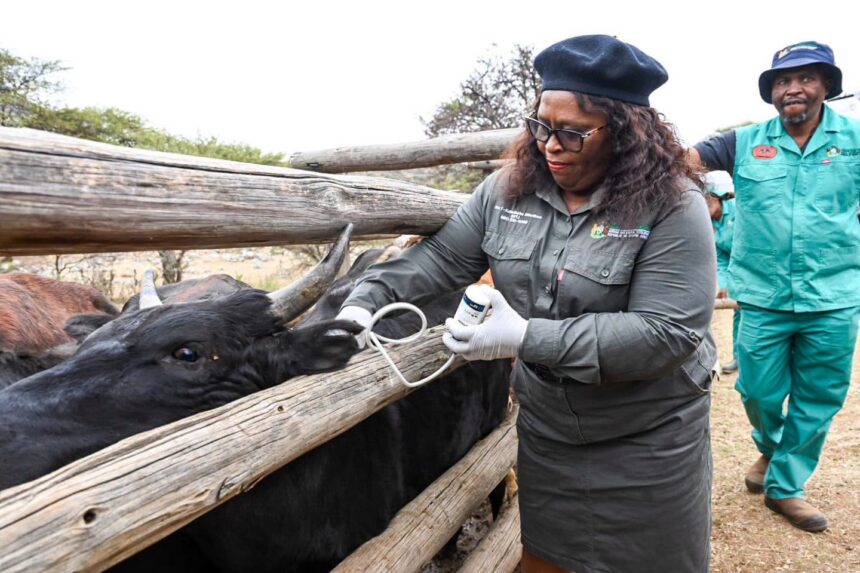
More than 80,000 cattle have been vaccinated against Foot and Mouth Disease (FMD) in KwaZulu-Natal’s uMzinyathi District, marking significant progress in the province’s ongoing livestock health campaign. As of 2 September 2026, veterinary teams from the Department of Agriculture and Rural Development had vaccinated a total of 81,224 cattle across two areas in the district. The vaccination figures include 27,130 cattle in uMvoti and 54,094 cattle in Msinga, reflecting a strong response from livestock owners. The campaign is aimed at strengthening protection against FMD while supporting farmers whose animals and livelihoods have been affected by the disease. The continued rollout also demonstrates the importance of coordinated veterinary services and farmer participation in controlling livestock diseases.
The vaccination drive has now moved into Nquthu and eNdumeni, where Veterinary Services teams will continue inoculating cattle until 12 September 2026. The deployment of veterinary teams across the district allows the programme to reach livestock owners directly through established animal health structures. Farmers play a critical role in this process because successful disease control depends on getting cattle to designated vaccination points and following veterinary guidance. The movement of teams between areas also allows authorities to extend vaccination coverage across communities rather than concentrating efforts in only one location. For livestock farmers, timely vaccination is an important part of protecting herds and reducing the risk that FMD will continue to disrupt agricultural production.
The response from livestock owners has been welcomed by the MEC for Agriculture and Rural Development, Mrs Thembeni kaMadlopha-Mthethwa. She commended farmers for bringing their animals to the diptanks, describing their participation as a sign that livestock owners are eager to restore the wellbeing of their animals after months of waiting for their turn in the region. The willingness of farmers to participate is important because veterinary vaccination programmes depend heavily on cooperation at community level. Bringing cattle to the designated facilities also gives animal health officials an opportunity to reach larger numbers of animals efficiently. Continued participation from farmers will remain essential as the vaccination programme expands into additional areas of the district.
The 81,224 cattle vaccinated in uMzinyathi form part of a much larger provincial vaccination campaign that has been underway since earlier in 2026. Veterinary teams across KwaZulu-Natal have vaccinated approximately 1.8 million cattle to date, highlighting the scale of the province’s response to Foot and Mouth Disease. Such a large vaccination programme requires significant coordination between government officials, veterinary professionals, livestock owners and local agricultural communities. It also demonstrates the scale of the livestock health challenge facing a province with a substantial cattle farming sector. Maintaining momentum will be important to ensure that as many eligible animals as possible receive appropriate protection.
For cattle farmers, FMD presents serious risks because outbreaks can affect animal health, farm operations and access to markets. The disease is highly contagious and can spread between susceptible livestock, making prevention and effective disease control important for individual farms and the wider agricultural sector. Vaccination can form an important part of the response, but farmers also need to follow veterinary advice on animal movement, biosecurity and disease reporting. Limiting unnecessary contact between animals from different herds can help reduce opportunities for disease transmission. Farmers should also report animals showing signs of illness to the relevant veterinary authorities rather than attempting to manage suspected cases without professional guidance.
The vaccination campaign also highlights the importance of diptanks and other established livestock management structures in rural farming communities. These facilities can provide an accessible point where veterinary teams can reach large numbers of cattle while working with local livestock owners. The strong turnout reported in uMvoti and Msinga suggests that farmers recognise the importance of vaccination in protecting their herds. Regular engagement between farmers and Veterinary Services can also improve communication about vaccination schedules and other animal health measures. Building trust between livestock owners and veterinary authorities is particularly important when farmers have experienced delays and uncertainty around access to vaccination.
The movement of vaccination teams to Nquthu and eNdumeni creates another opportunity to increase protection among cattle in the district. Farmers in these areas will need to cooperate with Veterinary Services and make their animals available when vaccination teams operate in their communities. Accurate information about vaccination dates and designated facilities can help farmers prepare their herds and avoid unnecessary delays. Farmers should also keep appropriate records of vaccinations and follow instructions provided by veterinary officials after animals have been inoculated. Good record keeping can help producers manage herd health and provide useful information when animals are moved or when veterinary assessments are required.
The provincial figure of approximately 1.8 million vaccinated cattle shows that KwaZulu-Natal’s FMD response has moved forward on a substantial scale. However, continued vaccination and responsible livestock management remain necessary because disease control cannot depend on a single intervention. Farmers, veterinary authorities and other agricultural stakeholders need to maintain cooperation as vaccination teams continue their work across affected areas. The progress in uMzinyathi demonstrates what can be achieved when veterinary resources reach farming communities and livestock owners actively participate in the programme. Protecting cattle also protects the income and food security of households that depend on livestock production.
The vaccination of 81,224 cattle in uMzinyathi District represents an important milestone in KwaZulu-Natal’s ongoing efforts to strengthen livestock health and manage the threat posed by Foot and Mouth Disease. The progress recorded in uMvoti and Msinga, followed by the deployment of teams to Nquthu and eNdumeni, shows that the campaign continues to expand across the district. The participation of livestock owners remains one of the most important factors in ensuring that vaccination efforts achieve meaningful coverage. With approximately 1.8 million cattle already vaccinated across KwaZulu-Natal, the province has made substantial progress while recognising the need for continued vigilance. Sustained cooperation between farmers and Veterinary Services will be essential to protect cattle, support farming livelihoods and strengthen the resilience of the province’s livestock sector.
Join 'Farmers Mag' WhatsApp Channel
Get the latest Farming news and tips delivered straight to your WhatsApp
CLICK HERE TO JOIN