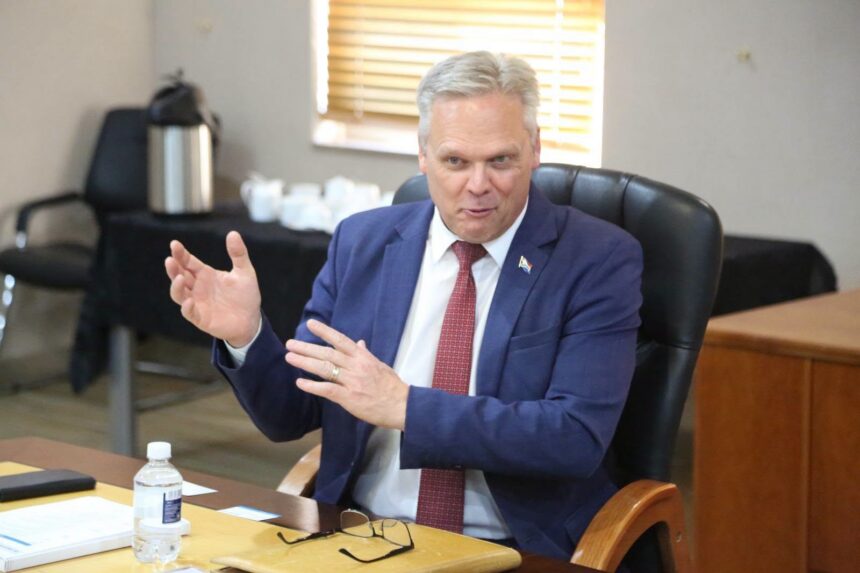
Agriculture Minister Willie Aucamp has highlighted the importance of strong government and industry partnerships in strengthening South Africa’s agricultural sector and responding more effectively to animal health threats. Delivering the keynote address at the TLU Congress 2026 in Pretoria, Aucamp pointed to recent progress in the country’s response to Foot and Mouth Disease (FMD) as evidence of what can be achieved when government and industry work together with urgency and a clear sense of purpose. The minister’s remarks placed collaboration, faster decision-making and practical intervention at the centre of efforts to protect livestock and sustain agricultural production. A key achievement highlighted during the address was the importation of 10 million FMD vaccine doses within just two months. This represents a significant improvement compared with the previous process, which took 18 months to secure 13.5 million doses.
The faster procurement of FMD vaccines is particularly significant because Foot and Mouth Disease can have serious consequences for livestock farmers, agricultural markets and the wider economy. The highly contagious animal disease can spread rapidly among susceptible livestock, creating substantial risks for farmers and disrupting trade in animals and animal products. Effective disease control therefore depends on early action, sufficient vaccine availability and strong coordination between government authorities, farmers, veterinary services and industry organisations. The progress highlighted by Aucamp suggests that lessons from previous challenges have helped create a more responsive approach to vaccine procurement. Securing millions of doses within a much shorter period gives the agricultural sector greater capacity to respond to outbreaks and reduce the potential impact on livestock populations.
The comparison between the previous procurement process and the latest achievement also demonstrates the value of improving administrative and operational efficiency within the agricultural sector. Taking 18 months to secure 13.5 million vaccine doses presented a major challenge in a situation where animal diseases can spread faster than conventional procurement processes. By contrast, securing 10 million doses in two months shows how much can be achieved when institutions prioritise urgent agricultural risks and coordinate their efforts effectively. Faster procurement does not eliminate the threat posed by FMD, but it can provide authorities and farmers with stronger tools to manage outbreaks. It also demonstrates why agricultural policy needs to be supported by practical systems that can respond quickly when farmers face immediate risks.
Aucamp’s address at the TLU Congress 2026 also placed the relationship between government and industry under the spotlight. Agriculture relies on cooperation between public institutions and private stakeholders because challenges affecting farmers often extend across regulation, animal health, markets, infrastructure, finance and production. Farmers and industry bodies bring practical knowledge of conditions on the ground, while government has responsibilities relating to policy, veterinary services, regulation and national agricultural protection measures. When these different areas of expertise work together, responses can become more targeted and effective. The progress in FMD vaccine imports therefore serves as an example of how closer cooperation can help address urgent challenges facing the agricultural sector.
The TLU Congress 2026 in Pretoria provided an important platform for discussing the future of agriculture and the conditions required for farmers to operate successfully. Agricultural congresses bring together industry representatives, producers, policymakers and other stakeholders to examine challenges affecting the sector and consider possible solutions. Animal health remains an important part of these discussions because livestock production depends heavily on effective disease prevention and control. Protecting farmers from major disease outbreaks also protects jobs, food production, investment and agricultural trade. The emphasis on FMD vaccine availability therefore reflects a wider concern about building a resilient agricultural sector capable of managing both immediate threats and longer-term pressures.
For livestock farmers, improved access to vaccines can provide greater confidence in disease management and preparedness. However, vaccination forms only one part of a comprehensive strategy for controlling Foot and Mouth Disease. Effective disease management also requires surveillance, veterinary capacity, responsible livestock movement, biosecurity measures and cooperation from farmers and other people involved in the agricultural value chain. Rapid access to vaccines can strengthen these measures by giving authorities an additional tool when responding to outbreaks. Continued communication between government and farmers will remain essential to ensure that vaccination programmes are implemented effectively and that emerging risks are identified quickly.
The figures presented at the congress also underline the scale of the effort required to protect South Africa’s livestock industry. Importing 10 million vaccine doses in two months represents a substantial logistical and administrative undertaking, particularly when compared with the 13.5 million doses obtained over an 18-month period previously. The difference shows a major shift in the speed at which the country has been able to secure vaccines for animal health protection. Such progress can strengthen preparedness while reducing the likelihood that delays in vaccine availability will undermine disease control efforts. It also creates an opportunity for government and industry to build on the systems and partnerships that made the faster response possible.
The message from Aucamp’s keynote address extends beyond Foot and Mouth Disease and speaks to the broader need for decisive action in agriculture. Farmers operate in an environment where delays can have direct consequences for production, livestock health, market access and household incomes. Government policies and interventions therefore need to translate into timely action that addresses problems where they occur. The progress in vaccine procurement demonstrates how urgency and collaboration can produce measurable results when stakeholders focus on a shared objective. Maintaining that approach across other agricultural challenges could help strengthen confidence in the sector and support the long-term sustainability of farming.
The achievement highlighted at the TLU Congress 2026 provides a clear example of how stronger partnerships can improve South Africa’s response to agricultural risks. Securing 10 million FMD vaccine doses in two months, compared with 13.5 million doses over 18 months previously, represents a substantial improvement in speed and preparedness. The development also reinforces the importance of cooperation between government, industry, farmers and veterinary stakeholders in protecting livestock and supporting agricultural production. While FMD remains a serious challenge that requires continued vigilance, faster access to vaccines gives the country a stronger foundation for responding to outbreaks. Aucamp’s message was therefore clear: faster action, stronger partnerships and a shared commitment to effective disease control can help build a more resilient agricultural sector.
Join 'Farmers Mag' WhatsApp Channel
Get the latest Farming news and tips delivered straight to your WhatsApp
CLICK HERE TO JOIN