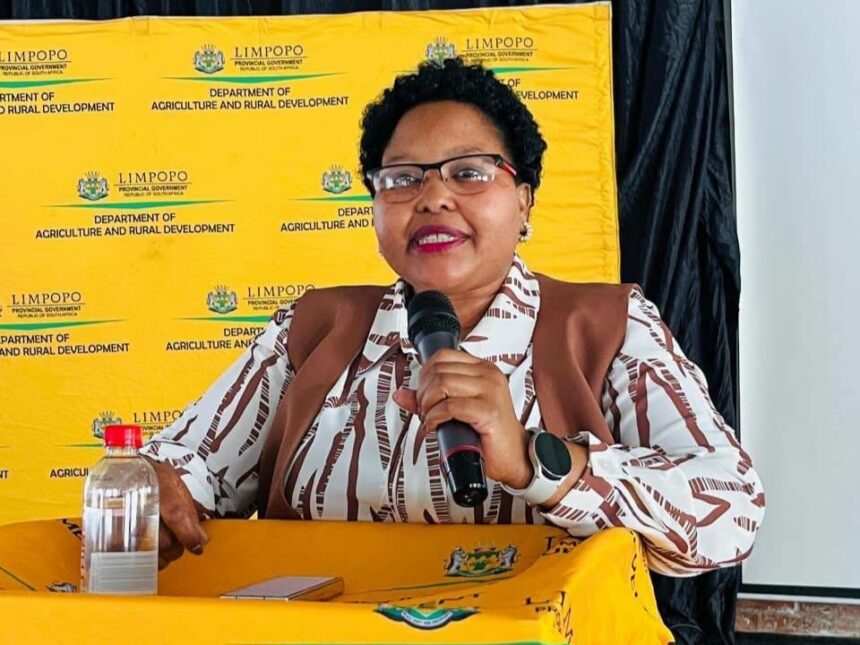
The Limpopo Department of Agriculture and Rural Development (LDARD) has concluded a two-day induction programme aimed at preparing 250 unemployed agricultural graduates for meaningful opportunities within the province’s agricultural economy. The programme, held at Khoroni Hotel in the Vhembe District, brought together young professionals with agricultural qualifications who are looking to turn their academic training into practical careers. The induction forms part of the department’s broader efforts to create pathways into employment while strengthening the skills base of Limpopo’s agricultural sector. It also reflects the growing need to connect qualified young people with opportunities across farming, agribusiness, agricultural services and rural development. By investing in agricultural graduates, LDARD is seeking to address unemployment while developing a stronger pipeline of professionals who can contribute to food production and economic growth.
The two-day programme was designed to help the graduates prepare for placement and understand the opportunities available within the agricultural economy. For many young agricultural professionals, completing a qualification is only the first step, with access to practical experience, professional networks and employment opportunities often presenting the next major challenge. An induction programme can help bridge that gap by giving graduates a clearer understanding of the expectations associated with working in the agricultural sector. It can also encourage participants to consider opportunities beyond traditional employment and explore ways of creating value through agriculture and related businesses. The department’s focus on meaningful participation suggests an approach that seeks to position graduates as active contributors to the province’s agricultural development.
Addressing the graduates on the final day, LDARD Head of Department, Mme Mashamba, expressed her appreciation to the team that worked to ensure the successful completion of the programme. Her acknowledgement recognised the role played by officials and organisers in bringing together 250 graduates for the induction initiative. Programmes of this scale require coordination, planning and cooperation between different teams to ensure that participants receive relevant information and guidance. The successful conclusion of the induction therefore represents an important step in the department’s efforts to support unemployed agricultural professionals. It also provides a foundation for the next stage, which is expected to focus on placing graduates and connecting them with opportunities where their skills can be used productively.
Mme Mashamba also acknowledged the contribution and support of former MEC for Agriculture and Rural Development, Ms Nakedi Kekana, during her tenure. At the same time, she welcomed the newly appointed MEC, Mr Basikopo Makamu, marking a period of leadership transition within the department. Leadership continuity can be important when departments implement programmes that require sustained attention and coordination over time. The focus on agricultural graduates provides an opportunity for the department to continue building on initiatives aimed at strengthening human capacity within the sector. The involvement of departmental leadership also highlights the importance of youth development and employment as part of wider agricultural and rural development priorities.
The HOD emphasised that the programme goes beyond simply addressing unemployment among young graduates. She linked the initiative directly to food security in Limpopo and the broader objective of ensuring that food reaches households across the province. Agriculture requires skilled professionals who can contribute to production, extension services, research, agribusiness, livestock management, crop development and other areas that support the food system. By helping agricultural graduates enter the sector, the department can potentially strengthen the human resources needed to support farmers and agricultural enterprises. The message to the graduates was therefore that their qualifications have a role to play in addressing both economic and food security challenges.
A particularly significant part of Mme Mashamba’s message was her call for the graduates to change how they view their future careers. Rather than seeing themselves only as job seekers, she encouraged them to consider their potential as future employers and agricultural entrepreneurs. Her statement, “From today, the word unemployment changes as you are henceforth future employers,” challenged the graduates to approach their qualifications with an entrepreneurial mindset. This perspective is especially relevant in agriculture, where opportunities can exist across farming, food processing, agricultural technology, logistics, input supply and other parts of the value chain. Encouraging graduates to create businesses as well as pursue employment could help expand the number of economic opportunities available within Limpopo’s agricultural sector.
The agricultural economy offers several avenues through which qualified young professionals can build sustainable careers. Graduates can contribute their expertise to commercial farming operations, emerging farmer programmes, agricultural consulting, farm management, research, environmental management and agricultural administration. Others may identify opportunities in agro-processing, food distribution, agricultural technology or businesses that provide services and products to farmers. Developing these areas can create additional economic activity while supporting producers who need access to technical knowledge and reliable agricultural services. The induction programme can therefore serve as a starting point for graduates to consider how their qualifications can be applied across the broader agricultural value chain.
The emphasis on food security adds another important dimension to the programme. Limpopo’s agricultural sector plays a role in producing food, supporting rural livelihoods and creating economic opportunities in communities across the province. Strengthening the skills available to farmers and agricultural institutions can contribute to better production practices and more effective support for producers. Young professionals can bring new ideas, technical knowledge and an understanding of emerging agricultural technologies into the sector. Their involvement could help agricultural enterprises respond to challenges such as changing weather conditions, input costs, market access and the need for more efficient production systems.
For the 250 graduates who completed the induction, the programme represents an opportunity to move from academic preparation towards practical participation in the agricultural economy. Their success will depend on how effectively they can apply their qualifications, build professional networks and respond to opportunities available within the sector. The department’s commitment to placement can provide an important bridge between graduates and potential employment or development opportunities. At the same time, the graduates are being encouraged to take responsibility for identifying opportunities and creating solutions rather than relying solely on traditional employment. This combination of institutional support and individual initiative could help produce stronger outcomes for both young professionals and the agricultural sector.
The completion of the induction programme also reflects LDARD’s broader commitment to strengthening Limpopo’s agricultural sector through investment in young professionals. Agriculture requires a skilled workforce capable of supporting farmers, developing enterprises and responding to changing economic and environmental conditions. Creating opportunities for unemployed graduates can help retain agricultural skills within the province while giving young people a chance to contribute to rural development. If graduates are successfully placed or supported to establish their own agricultural ventures, the benefits could extend beyond individual employment to include job creation and stronger local economies. The programme therefore connects youth development with wider priorities around food security, agricultural growth and sustainable economic development.
The conclusion of the two-day induction at Khoroni Hotel marks an important step in LDARD’s efforts to prepare 250 unemployed agricultural graduates for a more active role in Limpopo’s agricultural economy. The programme has placed employment, entrepreneurship, food security and professional development at the centre of its message to young agricultural professionals. Mme Mashamba’s call for graduates to see themselves as future employers provides a strong reminder that agricultural qualifications can support both career development and enterprise creation. The next challenge will be turning the knowledge and motivation gained during the induction into meaningful placements, productive businesses and lasting contributions to the province. By creating opportunities for young agricultural professionals while strengthening the sector’s skills base, LDARD is positioning youth participation as an important part of Limpopo’s drive towards stronger food security and sustainable economic development.
Join 'Farmers Mag' WhatsApp Channel
Get the latest Farming news and tips delivered straight to your WhatsApp
CLICK HERE TO JOIN