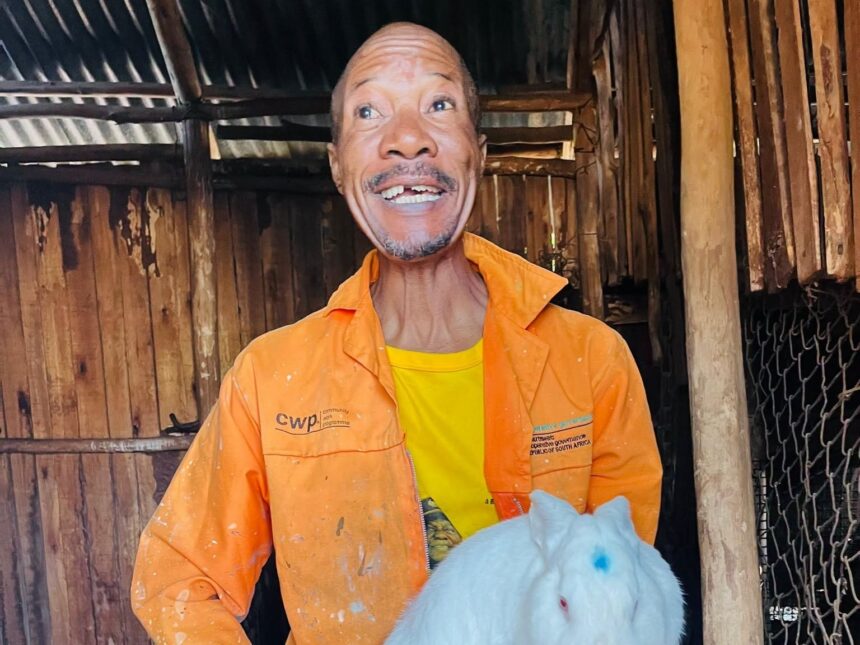
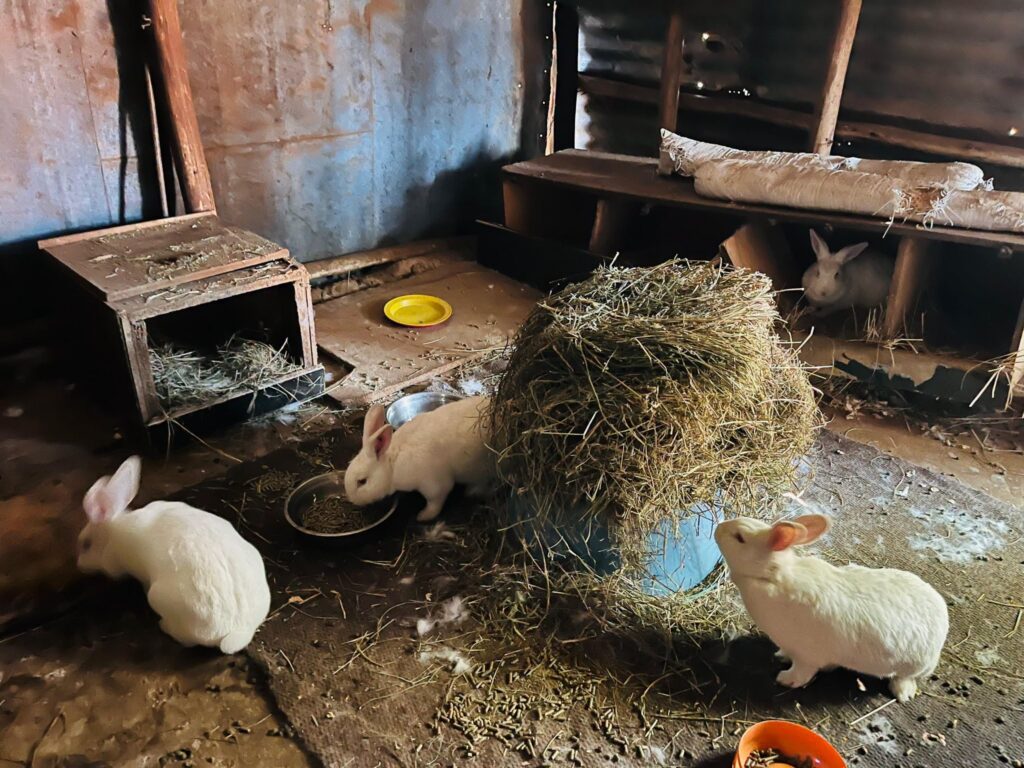
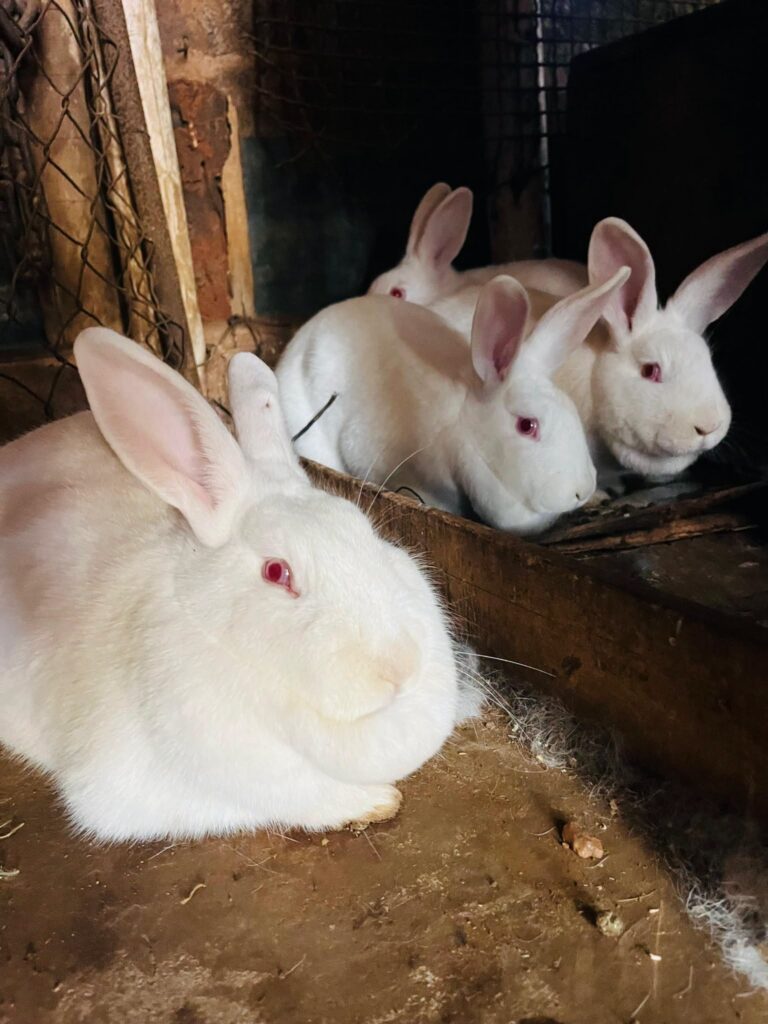
Mr William Hleza from Tjakastad in the Chief Albert Luthuli Municipality is celebrating a major boost to his agricultural ambitions after his Hleza Farming project received rabbits through the Masibuyele Esibayeni Programme. The support is aimed at strengthening his rabbit production project and providing the resources needed to establish a stronger foundation for future growth. Hleza received 10 does and one buck, along with medication and feed, after applying for assistance through the programme. The intervention gives the farmer an opportunity to increase rabbit production while developing the skills and infrastructure needed to build a sustainable agricultural enterprise. For Hleza, the support represents more than the immediate value of the livestock and inputs because it brings his long-term farming ambitions closer to reality. His vision extends beyond building Hleza Farming into a larger rabbit production business capable of supplying markets locally and eventually across neighbouring countries.
Rabbit farming can provide opportunities for farmers looking to diversify agricultural production and develop enterprises that can grow from relatively small beginnings. Receiving 10 female rabbits and one male rabbit gives Hleza a breeding base from which he can gradually increase the size of his rabbit operation. The addition of medication and feed is also important because successful livestock production depends on maintaining animal health and ensuring that animals receive adequate nutrition. Proper feeding and preventative healthcare can support healthy breeding and improve the survival and productivity of the rabbit population. As the number of rabbits increases, Hleza will have the opportunity to develop production systems that support consistent management and future commercial growth. The initial support can therefore serve as a practical starting point for developing a more structured rabbit farming enterprise.
The Masibuyele Esibayeni Programme plays an important role in supporting agricultural producers by providing livestock and other resources that can help farmers establish or expand farming projects. For farmers such as Hleza, access to productive livestock can remove one of the major barriers to entering or expanding an agricultural enterprise. Purchasing breeding animals, feed and medication can require significant capital, particularly for emerging farmers who are still developing their businesses. Government-supported interventions can help bridge this gap by giving farmers access to productive resources that can generate value over time. The support provided to Hleza demonstrates how livestock programmes can contribute to rural economic development while helping individual producers pursue sustainable farming opportunities. Continued guidance and responsible management will be important in ensuring that the resources provided through the programme produce lasting benefits.
Hleza has described the assistance as a strong foundation for building and growing his rabbit enterprise. His comments reflect an ambition to use the initial livestock not simply to maintain a small project but to establish a larger and more commercially focused operation. A successful breeding programme can allow the number of rabbits on the farm to increase steadily when supported by proper nutrition, housing, disease prevention and record-keeping. As production grows, the farmer can begin developing systems for managing breeding cycles, animal health, feeding requirements and sales. These management practices can help Hleza understand the costs and returns associated with rabbit production and make informed decisions as the enterprise expands. The long-term success of the project will depend on how effectively the farmer converts the initial support into a productive and sustainable business.
Hleza’s ambitions extend beyond the current scale of Hleza Farming, with his long-term goal being to expand rabbit production and eventually export to neighbouring countries. Reaching export markets would require significant growth in production capacity as well as compliance with relevant animal health, food safety, quality and trade requirements. The farmer would also need reliable production systems capable of supplying customers consistently and meeting the specifications of different markets. Developing a strong local business first can provide valuable experience in production, marketing, logistics and financial management before international expansion is attempted. Building relationships with local buyers could also help Hleza understand demand and establish a commercial reputation for his products. His export ambition therefore represents a long-term development path that can begin with strengthening the foundation of his current rabbit farming project.
The potential growth of Hleza’s rabbit enterprise could also contribute to the local agricultural economy in Tjakastad and the wider Chief Albert Luthuli Municipality. Expanding livestock production can create demand for feed, veterinary products, transport services, equipment and other agricultural inputs. As the business grows, it may also create employment opportunities and provide income for people involved in farm operations, processing, packaging and distribution. A larger rabbit enterprise could contribute to local food production while creating opportunities to supply customers beyond the immediate community. Agricultural businesses that successfully move from small-scale production into commercial operations can have wider economic effects because they participate in networks of suppliers, customers and service providers. Hleza’s plans therefore have the potential to benefit not only his own farming operation but also other participants in the local agricultural value chain.
Animal health and nutrition will remain essential as the rabbit project develops. The medication and feed provided alongside the rabbits give Hleza important resources for maintaining the health of the breeding stock during the early stages of the project. Healthy breeding animals are essential for establishing a productive rabbit population and reducing losses that could slow the growth of the enterprise. Hleza will also need to maintain suitable housing and hygiene standards to protect the rabbits from disease and environmental stress. Regular monitoring can help identify health problems early and allow appropriate action to be taken before issues affect a larger portion of the herd. As production expands, maintaining strong animal health practices will become increasingly important because larger numbers of animals can require more structured management.
Record-keeping will also be an important part of turning the initial livestock support into a commercially sustainable operation. Hleza can track breeding dates, litter sizes, growth rates, feed use, medication and other production information to understand how the enterprise is performing. Accurate records can help identify productive breeding animals and highlight areas where costs or losses need to be addressed. Financial records can also help the farmer determine the profitability of different production and sales strategies. As the business grows, detailed records can become increasingly important when dealing with potential buyers, financial institutions and other business partners. Strong administration can therefore complement the practical work of raising rabbits and help Hleza build a more organised agricultural enterprise.
The journey from a small breeding project to a business capable of serving regional and international markets will require patience, planning and continued investment. Hleza’s initial livestock allocation provides a starting point, but future expansion will depend on the performance of the breeding stock and the farmer’s ability to manage increasing production volumes. Market research will also be important to determine where demand exists and what buyers expect in terms of product quality, supply volumes and pricing. Building reliable distribution channels will become another priority as the enterprise moves beyond local customers. If Hleza can gradually strengthen production, animal health, business management and market relationships, he can create a stronger platform for future expansion. His ambition to export to neighbouring countries provides a clear long-term direction for the business while allowing room for measured growth.
The support received through the Masibuyele Esibayeni Programme also highlights the importance of giving emerging farmers access to productive assets rather than focusing only on short-term assistance. Livestock can reproduce and generate further productive value when farmers receive the right support and manage the resources effectively. In Hleza’s case, the 10 does and one buck can provide the foundation for a growing rabbit population that may eventually support a larger commercial enterprise. Feed and medication provide additional support during the establishment phase, helping the farmer focus on building a healthy and productive operation. Programmes that combine livestock distribution with appropriate technical support can help farmers overcome some of the barriers associated with starting agricultural businesses. The continued progress of projects such as Hleza Farming can demonstrate the potential of targeted agricultural interventions to support rural entrepreneurship.
Mr William Hleza’s experience at Hleza Farming demonstrates how access to productive livestock can help turn an agricultural vision into a practical business opportunity. The 10 does and one buck provided through the Masibuyele Esibayeni Programme, together with medication and feed, give him a valuable starting point for expanding his rabbit production project. His plans to grow beyond the current scale of Hleza Farming and eventually supply neighbouring countries reflect a strong commercial ambition. Achieving that goal will require careful breeding, animal health management, reliable production systems, strong financial planning and access to sustainable markets. With continued commitment and responsible use of the support received, the project has the potential to develop into a larger rabbit enterprise that contributes to food production and rural economic activity. Hleza’s journey also shows how targeted support can give emerging farmers the resources they need to build productive businesses and pursue long-term agricultural growth.
Join 'Farmers Mag' WhatsApp Channel
Get the latest Farming news and tips delivered straight to your WhatsApp
CLICK HERE TO JOIN