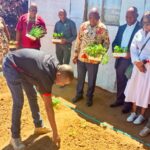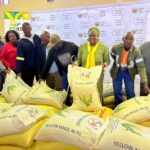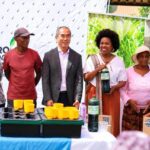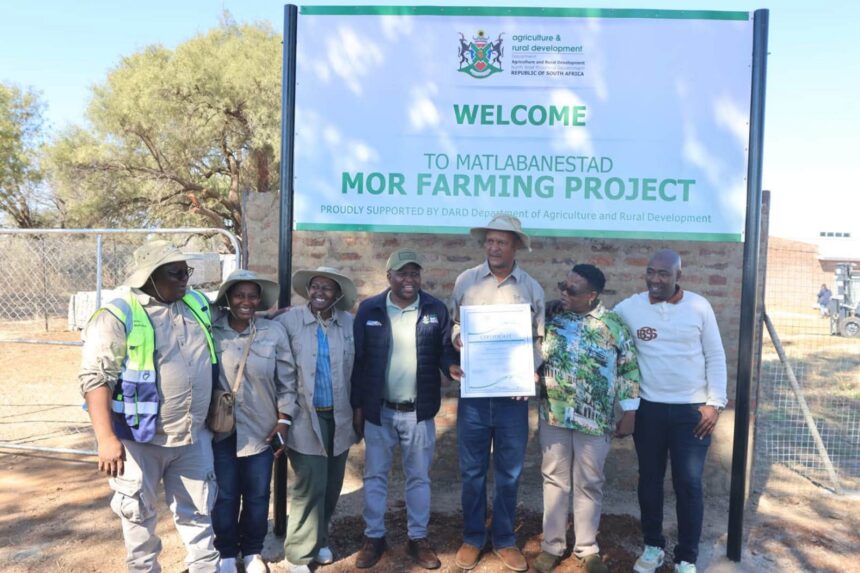
North West MEC for Agriculture and Rural Development, Madoda Sambatha, officially opened and handed over a state-of-the-art vegetable packhouse at Mor Farming’s Matlabane Stad Farm just outside Bloemhof in the Lekwa-Teemane Local Municipality on 24 August 2026. The new facility represents an important investment in agricultural infrastructure and is designed to help emerging farmers improve production, strengthen market access and grow sustainable farming businesses. The project forms part of the North West Department of Agriculture and Rural Development’s broader efforts to transform the provincial agricultural sector by supporting farmers beyond primary production. By providing infrastructure for cleaning, grading, sorting and packaging fresh produce, the packhouse can help farmers meet the quality and food safety requirements demanded by formal markets. The development also has the potential to contribute to job creation, local economic activity and stronger participation by emerging farmers in the agricultural value chain. For Mor Farming, the facility provides additional capacity to process and prepare vegetables for consumers and larger markets. The investment demonstrates how targeted agricultural support can help farmers move from production towards more commercially competitive and sustainable operations.
Mor Farming has developed into an established horticultural enterprise producing a diverse selection of vegetables for consumers and markets in and beyond the Bloemhof area. Its production includes butternut, pumpkin, beetroot, watermelon, green beans and green peppers, giving the enterprise a broad product base that can support different market opportunities throughout the year. The farm currently supplies customers across the North West Province as well as neighbouring provinces, including Gauteng, the Free State and the Northern Cape. It also serves local and informal markets in Bloemhof, allowing the business to contribute directly to food supply and economic activity within the local community. However, producing quality vegetables is only one part of building a successful commercial farming enterprise, as farmers also need reliable post-harvest infrastructure to prepare their products for demanding markets. The new vegetable packhouse addresses this important part of the value chain by creating a dedicated facility where harvested produce can be handled more efficiently. This can help improve consistency, reduce unnecessary losses and strengthen the farm’s ability to supply buyers with produce that meets required standards.
The North West Department of Agriculture and Rural Development invested in the construction of the packhouse as part of its support for Mor Farming and its efforts to expand the operational capacity of the enterprise. A modern packhouse plays an important role in agricultural production because vegetables can lose quality quickly if they are not handled, sorted, stored and packaged correctly after harvesting. The facility will provide space and equipment for processes such as cleaning, grading, sorting and packaging before produce reaches consumers or commercial buyers. These processes help farmers present their products more consistently while supporting compliance with food quality and safety requirements. Better post-harvest handling can also help farmers protect the value of their produce and reduce losses caused by poor handling or inadequate preparation. For emerging farmers seeking to enter formal retail and other structured markets, access to suitable infrastructure can make a significant difference in their ability to meet buyer specifications. The Mor Farming packhouse therefore represents more than a new building, as it provides an important link between agricultural production and commercial market participation.
The Department’s support for Mor Farming has extended beyond the construction of the packhouse, with the enterprise receiving various agricultural inputs and items of equipment to strengthen its production and post-harvest operations. This support has included seeds, packaging materials, harvest bins and baskets, as well as a forklift, food processors and vegetable cutters. These resources are intended to improve efficiency across different stages of the farming operation, from planting and harvesting to processing and packaging. Access to suitable equipment can reduce manual workloads, improve productivity and allow a farming business to handle larger volumes of produce as its markets grow. Packaging materials and harvest containers also play an important role in protecting fresh produce and maintaining quality during handling and transportation. The combination of infrastructure, equipment and agricultural inputs gives Mor Farming a stronger operational base from which to pursue additional commercial opportunities. It also illustrates the importance of coordinated government support when developing emerging agricultural businesses.
Food safety and agricultural compliance form another important part of the development, particularly as Mor Farming seeks to expand its access to formal markets. Farm owner Mr Moroeng participated in the South African Good Agricultural Practices, or SA-GAP, training programme to strengthen his understanding of the standards required for safe and responsible agricultural production. The programme covers areas including food safety, quality assurance, good agricultural practices and proper handling of agricultural produce. Through the training, Moroeng gained practical knowledge in soil management, chemical handling, post-harvest management, quality control, traceability, record-keeping and compliance with agricultural standards. These skills can help farmers establish stronger production systems and provide buyers with greater confidence in the safety and quality of their products. Compliance with recognised agricultural standards can also improve a farm’s readiness to pursue more formal and potentially more profitable market opportunities. For a growing horticultural enterprise, combining physical infrastructure with strong management and compliance practices can provide a more sustainable foundation for long-term expansion.
Moroeng expressed appreciation for the Department’s support and highlighted the practical benefits of the SA-GAP training for his farming operation. He explained that the programme had helped him develop valuable knowledge and practical skills covering food safety, soil management, chemical handling and post-harvest management. He also pointed to the importance of quality control, traceability, proper record-keeping and compliance with agricultural standards. According to Moroeng, the training had strengthened his ability to maintain high-quality standards and ensure that produce leaving the farm is safe for consumers. He further indicated that improved standards had enhanced the marketability of Mor Farming’s products and created opportunities to pursue more profitable local markets as well as potential export opportunities. This combination of skills and infrastructure can help the farm respond more effectively to the expectations of commercial buyers. It also shows that agricultural transformation requires investment in both physical resources and the knowledge needed to manage a modern farming enterprise.
Speaking during the official opening, MEC Madoda Sambatha positioned the Mor Farming packhouse within the Department’s wider strategy to strengthen the agricultural value chain across the North West. He said the Mor Farming facility is one of seven packhouses constructed by the Department across the province, with the remaining facilities expected to be officially launched in the coming months. The investment reflects an effort to address challenges that farmers face after harvesting, particularly around post-harvest handling, product preparation and access to formal markets. By improving infrastructure at this stage of the value chain, the Department aims to help farmers retain more value from the products they grow. The approach also supports the broader objective of increasing the number of successful farmers who can operate commercially and contribute to provincial economic development. For emerging producers, reliable packhouse infrastructure can provide the capacity needed to increase volumes and supply buyers more consistently. The rollout of additional facilities could therefore have a wider impact on agricultural enterprises across different parts of the province.
Sambatha also emphasised the connection between successful farming businesses, employment and local economic development. He said the Department is deliberately investing in infrastructure that enables farmers to grow and expand their businesses, with stronger farming enterprises capable of creating jobs and strengthening local economies. Agricultural development can generate economic activity across a wider network that includes farm workers, transport providers, input suppliers, packaging businesses, processors and market outlets. When farmers increase their production and gain access to more formal markets, these activities can create opportunities beyond the farm itself. Infrastructure such as packhouses can support this process by allowing farmers to handle greater quantities of produce while improving the quality and presentation of their products. The investment at Matlabane Stad Farm therefore has implications for both Mor Farming and the wider Bloemhof agricultural economy. Continued support for commercially viable farmers could help create stronger rural economies while encouraging more investment in agricultural production.
The Department’s emphasis on attracting young people to agriculture is another important element of the initiative. Sambatha stressed that the provincial government wants to increase the number of successful farmers while encouraging more young people to enter the agricultural sector. Modern agricultural infrastructure can help demonstrate that farming involves more than traditional primary production and can include processing, logistics, technology, quality assurance, marketing and business management. These areas can create different career and entrepreneurship opportunities for young people interested in agriculture and food production. Improved infrastructure can also make farming enterprises more competitive and potentially more attractive to investors, partners and market participants. For the agricultural sector to remain sustainable, it needs a new generation of farmers and agricultural professionals who can adopt modern production methods and respond to changing market requirements. The development at Mor Farming provides an example of how infrastructure and skills development can work together to create a more commercially focused agricultural environment.
The opening of the Mor Farming packhouse also highlights the importance of reducing post-harvest losses in South Africa’s agricultural sector. Fresh vegetables are highly perishable, meaning delays or poor handling after harvesting can result in quality deterioration and financial losses for farmers. A properly equipped packhouse provides a controlled environment where produce can move through essential handling stages more efficiently before distribution. Cleaning, grading, sorting and packaging can help farmers separate products according to quality and market requirements while improving the presentation of the final product. Better post-harvest management can also help farmers make more efficient use of what they produce by directing different grades of vegetables towards appropriate markets. This can strengthen the overall value of the harvest and reduce the amount of produce that fails to reach consumers. For a horticultural enterprise supplying several provinces, these improvements can become increasingly important as production volumes and customer expectations grow.
The project also demonstrates why market access remains a central part of agricultural development. Farmers may produce large quantities of high-quality crops, but without appropriate infrastructure, reliable logistics and access to buyers, they can struggle to convert production into sustainable income. A packhouse can help bridge this gap by allowing produce to be prepared according to the requirements of formal buyers before it leaves the farm. This can improve the farm’s ability to negotiate with larger customers and maintain consistent supply arrangements. Mor Farming’s existing reach across the North West, Gauteng, the Free State and the Northern Cape provides a foundation on which the enterprise can potentially build further commercial relationships. Its continued participation in local and informal markets also means the farm remains connected to consumers within Bloemhof. Strengthening both formal and local market channels can give the enterprise greater flexibility as it expands its production and business operations.
The Mor Farming development is part of a broader provincial effort to strengthen agricultural production, improve post-harvest handling and unlock new market opportunities for farmers. The construction of seven packhouses indicates that the Department is seeking to address infrastructure needs across multiple farming enterprises rather than focusing on a single project. The planned launch of the remaining facilities will provide further opportunities to assess how packhouse infrastructure can support farmers in different parts of the North West. The success of these investments will depend not only on the buildings and equipment but also on effective management, reliable production, compliance with standards, access to markets and ongoing technical support. Farmers will need to use the infrastructure efficiently and maintain the required quality and safety standards to gain the full commercial benefit of the facilities. Government departments, agricultural organisations and private-sector buyers can also play an important role in creating stronger connections between supported farmers and markets.
The official opening of the Mor Farming packhouse on 24 August 2026 marks an important step in the North West government’s efforts to strengthen agricultural value chains and support emerging farmers. The facility gives Mor Farming improved capacity to clean, grade, sort and package its vegetables while preparing the enterprise for broader market opportunities. Combined with government-provided inputs, equipment and SA-GAP training, the project provides a comprehensive support package aimed at improving productivity, food safety and commercial readiness. The development also reinforces the role of agriculture in creating employment, supporting rural economies and encouraging new participants, particularly young people, to consider farming and related agricultural businesses. As the Department prepares to launch six more packhouses, the focus will increasingly turn to ensuring that these facilities operate effectively and deliver measurable benefits for farmers and communities. If supported by strong production, management and market linkages, the infrastructure could help more North West farmers move from small-scale production towards sustainable commercial agriculture. The Mor Farming project therefore stands as a practical example of how investment in infrastructure, skills and market readiness can contribute to a stronger, more inclusive and competitive agricultural sector in the North West.
Join 'Farmers Mag' WhatsApp Channel
Get the latest Farming news and tips delivered straight to your WhatsApp
CLICK HERE TO JOIN