

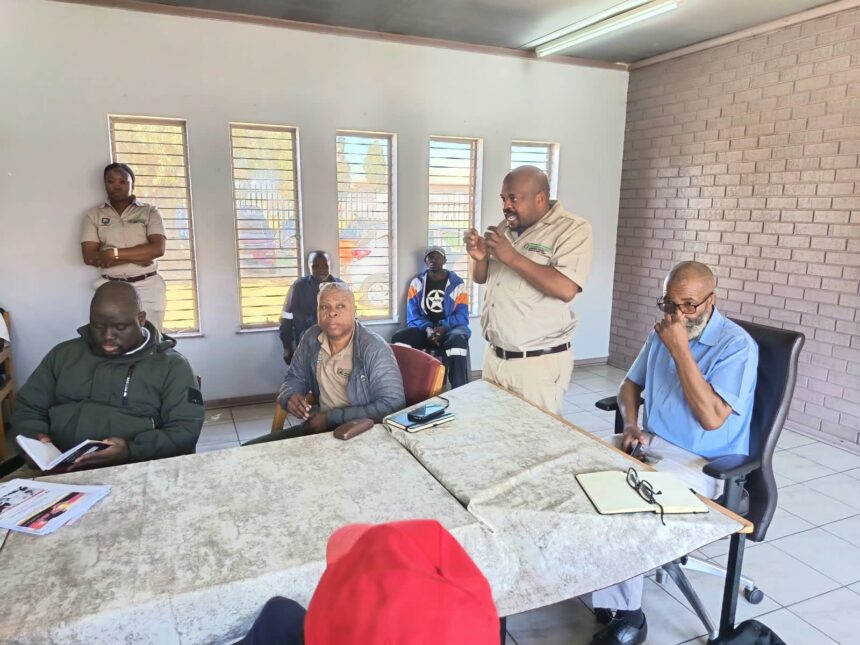
Farmers from across the Govan Mbeki Local Municipality gathered at the community hall in Embalenhle for an important agricultural capacity-building session hosted by the local office of the Department of Agriculture, Rural Development, Land and Environmental Affairs (DARDLEA). The session focused on practical knowledge that can help farmers protect their livestock, manage grazing resources and respond more effectively to agricultural disasters. Disaster management, grazing research, grass species and animal health formed the main areas of discussion during the engagement. The initiative provided farmers with an opportunity to strengthen their understanding of risks that can affect agricultural production and learn about measures they can take to protect their livelihoods. Such capacity-building programmes are particularly important in farming communities where weather conditions, livestock diseases and limited grazing resources can affect productivity and household incomes. By bringing technical information directly to farmers, DARDLEA is helping producers make informed decisions and build greater resilience within the local agricultural sector.
Disaster management was one of the key topics addressed during the session, with farmers receiving information about the importance of reporting agricultural disasters when they occur. Timely reporting allows authorities to assess the scale and impact of an incident and determine what support may be required by affected farming communities. Farmers were also informed about the process involved when considering the declaration of a provincial or national disaster. Understanding this process can help producers know what steps to follow when severe weather events or other agricultural emergencies cause significant losses. The recent cold spell and livestock mortalities provided an important example of why farmers need to report losses and document the effects of extreme weather conditions. Accurate information from farmers can assist authorities in understanding the extent of damage and developing appropriate responses.
The recent cold spell also highlighted the vulnerability of livestock to severe weather conditions, particularly when animals do not have adequate protection from low temperatures. Farmers were advised to provide suitable shelter for their livestock and ensure that animals have sufficient feed, especially during the dry season. Adequate shelter can protect animals from harsh weather while reducing exposure to cold conditions that may contribute to illness, weakness and mortality. Sufficient feed is equally important because livestock require adequate nutrition to maintain body condition and cope with environmental stress. During dry periods, natural grazing may become limited or lose nutritional value, making supplementary feed and proper pasture management increasingly important. Farmers who prepare for seasonal changes can reduce avoidable losses and improve the overall health and productivity of their livestock.
The disaster management discussions also reinforced the importance of preparedness rather than waiting until an emergency has already caused serious damage. Farmers can strengthen their preparedness by monitoring weather conditions, maintaining suitable livestock shelters and planning ahead for periods when grazing or feed supplies may become limited. Keeping accurate records of livestock numbers, losses and other farm assets can also make it easier to report the impact of a disaster. Early communication with agricultural officials can help ensure that emerging risks receive attention before they become more severe. Farmers can also benefit from sharing information within their communities when unusual weather conditions or agricultural problems arise. A well-informed farming community is better positioned to respond quickly and protect livestock and other productive resources.
The Research programme provided another important component of the capacity-building session, with attention given to grazing management and the carrying capacity of agricultural land. Farmers were encouraged to understand how much livestock their available grazing areas can support without causing long-term damage to vegetation and soil. Carrying capacity is an important consideration because keeping more animals on land than it can sustainably support can lead to overgrazing. Overgrazing can reduce the availability of desirable grass species, weaken vegetation cover and contribute to soil degradation. It can also leave livestock with insufficient nutritious forage, which may affect animal growth, reproduction and overall health. Effective grazing management therefore plays an important role in protecting both the natural resources used by farmers and the productivity of their livestock operations.
The discussion on grass species also highlighted the importance of understanding the nutritional value and palatability of different types of pasture. Not all grass species provide the same nutritional benefits, and livestock may prefer some species over others based on factors such as taste, texture and nutritional quality. Farmers who understand the grass species available on their land can make better decisions about grazing management and livestock numbers. Knowledge of palatability can also help producers identify which grasses are likely to receive heavier grazing pressure and which areas may require protection or controlled use. Managing grazing according to the characteristics of available vegetation can help maintain productive pastures while supporting better livestock nutrition. Research and practical knowledge can therefore provide farmers with useful tools for improving both pasture condition and animal performance.
Grazing management becomes particularly important during dry seasons when grass growth may slow and available forage can decline. If livestock continue grazing the same areas without adequate management, desirable plant species may become depleted and less productive vegetation may dominate. Farmers can reduce these risks by monitoring pasture conditions and adjusting livestock numbers or grazing patterns when necessary. Rotational grazing and other appropriate grazing strategies can help give certain areas time to recover before livestock return to them. The most suitable approach will depend on local conditions, the type of livestock being kept and the characteristics of the available land. Building farmer knowledge around carrying capacity and grass species can help producers protect their grazing resources while maintaining a sustainable source of livestock feed.
Animal Health was another major focus of the training, with farmers reminded about the importance of regular vaccination and ongoing monitoring of livestock health. Preventive animal healthcare can help reduce the risk of diseases that may cause serious losses on farms and can contribute to healthier and more productive herds. Farmers were encouraged to observe their animals regularly and identify changes in behaviour, appetite, movement or physical condition that could indicate illness. Early detection can allow farmers to seek veterinary assistance before a disease spreads or becomes more difficult to manage. Maintaining vaccination schedules is also important because certain livestock diseases can have significant effects on both individual animals and wider farming communities. Strong animal health practices form an essential part of protecting agricultural livelihoods and maintaining food production.
Particular emphasis was placed on vaccination against Foot-and-Mouth Disease, commonly known as FMD. FMD is a serious livestock disease that can have major consequences for animal health, farming operations and agricultural trade when outbreaks occur. Farmers therefore need to follow veterinary guidance on vaccination, disease prevention and the movement of livestock. Regular monitoring can help producers identify signs of illness and report concerns to the appropriate animal health authorities as quickly as possible. Good biosecurity practices can also reduce the risk of introducing or spreading diseases between farms and livestock groups. The emphasis on FMD vaccination during the session reinforced the need for farmers to treat animal health as an ongoing responsibility rather than a response only when disease appears.
The training also demonstrated how different aspects of agriculture are closely connected. Poor grazing management can affect livestock nutrition, while inadequate nutrition can make animals more vulnerable to health problems. Severe weather can create additional pressure by reducing available feed and exposing livestock to harsh conditions. Disease outbreaks can then compound these challenges by causing illness, mortality and economic losses for farmers. Addressing these risks requires an integrated approach that combines disaster preparedness, sustainable grazing practices, adequate nutrition and effective animal healthcare. The capacity-building session gave farmers information across these areas, helping them understand how decisions in one part of their farming operation can affect other aspects of productivity and resilience.
The involvement of farmers from around Govan Mbeki Local Municipality also created an important opportunity for direct engagement between agricultural officials and producers. Capacity-building sessions allow farmers to ask questions, share experiences and gain information that can be applied to their individual farming operations. Local engagement is particularly valuable because agricultural challenges can differ depending on weather conditions, grazing resources, livestock numbers and farming systems. Officials can use these interactions to understand challenges experienced by farmers and provide guidance that is relevant to local conditions. Farmers can also learn from one another by sharing practical experiences and approaches to managing livestock and natural resources. Continued engagement of this kind can contribute to stronger relationships between agricultural authorities and farming communities.
The session at the Embalenhle community hall ultimately highlighted the importance of equipping farmers with knowledge that can help them respond to both immediate and long-term agricultural challenges. Disaster management guidance can help farmers prepare for severe weather and report losses, while research-based information can support more sustainable grazing practices. Animal health training can help producers protect livestock through vaccination, disease monitoring and timely intervention. Together, these areas of support can strengthen the ability of farming communities to manage risks and maintain production under changing conditions. The lessons shared during the session are particularly relevant as farmers deal with seasonal changes, livestock health threats and pressure on grazing resources. Continued capacity building can help ensure that farmers have the knowledge and practical tools required to make sound decisions.
The Govan Mbeki agricultural capacity-building session provided farmers with valuable information on three critical areas of livestock farming: disaster management, sustainable grazing and animal health. The focus on recent livestock mortalities during the cold spell showed why preparedness, adequate shelter and sufficient feed are essential for protecting animals during difficult weather conditions. Discussions around carrying capacity and grass species reinforced the need to manage grazing responsibly and avoid practices that can damage valuable pasture resources. The emphasis on vaccination, including protection against Foot-and-Mouth Disease, highlighted the importance of preventative animal healthcare and regular livestock monitoring. By strengthening knowledge in these areas, DARDLEA’s local office is supporting farmers in building more resilient and sustainable agricultural operations. Continued cooperation between farmers, researchers, animal health professionals and government officials will remain important in protecting livestock, strengthening food security and supporting the long-term development of farming communities across Govan Mbeki Local Municipality.
Join 'Farmers Mag' WhatsApp Channel
Get the latest Farming news and tips delivered straight to your WhatsApp
CLICK HERE TO JOIN




