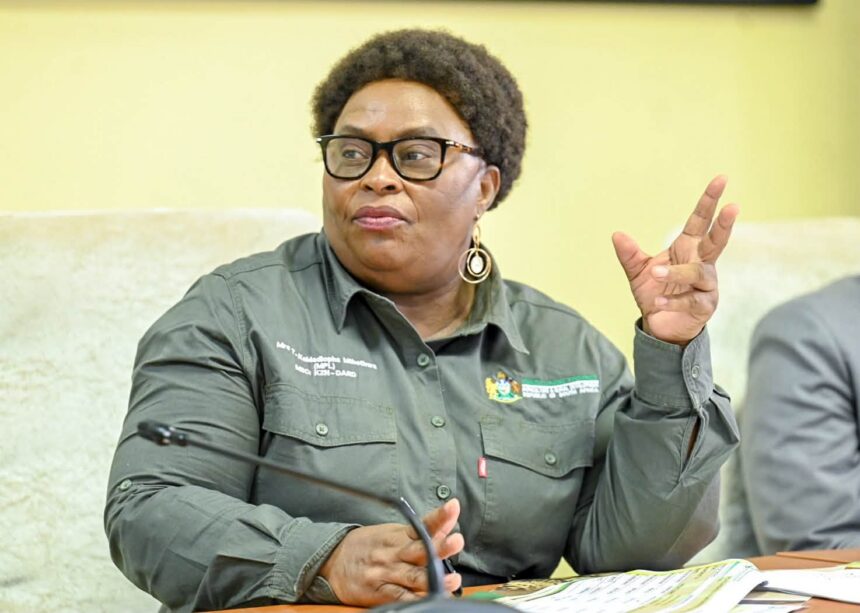
KwaZulu-Natal farmers are facing continued pressure from animal diseases, limited resources and the need to maintain productive and sustainable farming operations. These challenges were among the key issues discussed when MEC for Agriculture and Rural Development Hon. Thembeni kaMadlopha-Mthethwa, together with her executive team and the Agribusiness Development Agency, appeared before the Portfolio Committee at the KwaZulu-Natal Legislature. The engagement focused on the Department’s performance during the first quarter of the 2026/2027 financial year, including financial expenditure and progress with service delivery programmes. For farmers, these discussions are important because government budgets and programmes have a direct effect on agricultural support, veterinary services and rural development initiatives. The meeting also placed animal health firmly on the agenda, with foot-and-mouth disease, rabies and corridor diseases receiving attention.
Departmental executives led by Head of Department Dr Fikile Qwabe presented detailed reports on how the Department had performed during the first quarter. The reports covered budget spending as well as progress against planned service delivery targets, highlighting areas where the Department had made progress and those requiring improvement. Regular performance monitoring allows the Department to identify gaps early and make adjustments during the financial year. For farmers, effective monitoring matters because agricultural programmes need to translate into practical support, whether through veterinary services, farmer development, infrastructure or other interventions. Strong oversight can also help ensure that resources reach the communities and farming enterprises that need them most.
MEC kaMadlopha-Mthethwa, who participated in the meeting virtually, reaffirmed the Department’s commitment to clean governance and transparency. She stressed that public money must be used responsibly and that every rand spent should contribute to improving the livelihoods of farmers and rural communities. This message is particularly important in agriculture, where farmers often depend on government programmes and services to address challenges that they cannot overcome on their own. The MEC also acknowledged the important role played by the Portfolio Committee in providing advice and guidance as the Department works to improve service delivery. Responsible management of agricultural budgets can help ensure that limited resources are directed towards programmes that produce meaningful results for farmers.
Animal health was one of the most important issues raised during the engagement. The Portfolio Committee acknowledged the seriousness of the foot-and-mouth disease outbreak, which was declared a disaster earlier this year. Foot-and-mouth disease can have serious consequences for livestock farmers because outbreaks can affect animal movement, sales, production and household incomes. Effective disease management requires close cooperation between farmers, veterinary officials and government authorities. Farmers also need timely information and access to appropriate veterinary services so that they can take the necessary steps to protect their herds and limit the spread of disease.
While recognising the urgency of foot-and-mouth disease, members of the Portfolio Committee stressed that resources must also be shared fairly to address other animal health threats. Rabies and corridor diseases were specifically highlighted as concerns requiring continued attention. Different diseases can affect livestock communities in different ways, and focusing heavily on one outbreak should not result in other risks being overlooked. A comprehensive animal health programme needs to include disease surveillance, prevention, vaccination where appropriate, farmer education and rapid response to suspected outbreaks. Ensuring that these services reach farming communities across the province can help reduce losses and strengthen the resilience of livestock enterprises.
MEC kaMadlopha-Mthethwa acknowledged the concerns raised by the committee and confirmed that campaigns are already underway to address animal health challenges. The Department is working with farming communities to promote better animal husbandry and improve awareness of measures that can support healthier livestock. These campaigns are important because prevention often starts with farmers understanding how to identify risks and manage animals responsibly. Regular veterinary engagement can also help farmers receive guidance before health problems become more serious. Strengthening these connections between farmers and agricultural officials can improve early detection and contribute to more effective disease control.
The Department’s recent engagement in Mtubatuba provides an example of this approach. On Tuesday of the same week, officials were in Mtubatuba to address animal husbandry and food security as part of efforts to improve animal health in the province. Taking agricultural services directly into farming communities allows officials to engage with farmers about the challenges they experience on their farms. It also provides an opportunity to share information about livestock management, disease prevention and other practices that can improve agricultural production. For farmers, these local engagements can be valuable because they provide direct access to officials and technical information without relying solely on centralised services.
Good animal husbandry is an important part of protecting livestock and maintaining productive farming operations. Farmers need to pay attention to nutrition, housing, breeding, hygiene, vaccination and early identification of health problems. Poor management can increase the risk of disease and reduce livestock productivity, while good practices can help farmers maintain healthier herds. Government campaigns and veterinary services can support farmers by providing technical information and guidance on appropriate management practices. Combining this support with responsible farming practices can help livestock producers reduce avoidable losses and improve the long-term sustainability of their enterprises.
Animal health is also closely connected to food security and rural livelihoods. Livestock farmers contribute to the supply of meat and other agricultural products while generating income for households and supporting employment in rural areas. When disease outbreaks result in animal losses or restrictions on livestock movement, the effects can extend beyond individual farmers to traders, processors, transporters and other businesses. Protecting livestock therefore supports both individual farming enterprises and the wider agricultural economy. Continued investment in veterinary services, disease prevention and farmer education is essential to maintaining a stable food system.
The Q1 engagement also highlighted the importance of farmers having a voice in agricultural planning and service delivery. Government officials can develop stronger programmes when they understand the practical conditions farmers face in different parts of the province. Direct engagement can reveal common challenges and help Agricultural Advisors identify areas where coordinated interventions may be needed. It can also help farmers understand government programmes and the services available to them. Maintaining regular communication between the Department and farming communities can therefore improve the alignment between agricultural policies and the realities experienced by producers.
The appearance before the Portfolio Committee provided an opportunity for the Department and ADA to demonstrate how they are using their resources and implementing their programmes during the 2026/2027 financial year. It also placed important agricultural issues before the committee, particularly the need for a balanced response to animal diseases. The Department’s commitment to clean governance and transparent spending is important because farmers need confidence that agricultural support programmes are being managed effectively. At the same time, government support must remain focused on practical outcomes such as healthier livestock, improved production, stronger food security and sustainable rural livelihoods. Continued oversight can help ensure that identified gaps are addressed as the financial year progresses.
For KwaZulu-Natal farmers, the discussions provide a reminder that animal health remains a shared responsibility involving producers, veterinary professionals and government authorities. Foot-and-mouth disease requires urgent attention, but farmers also need continued support to manage rabies, corridor diseases and other livestock health risks. The Department’s campaigns, including its recent engagement with farmers in Mtubatuba, can help strengthen awareness and improve animal husbandry practices across the province. As the 2026/2027 financial year continues, effective use of agricultural budgets, transparent governance and regular farmer engagement will be essential. By keeping farmers at the centre of service delivery and strengthening cooperation on animal health, KwaZulu-Natal can work towards more productive farms, stronger rural livelihoods and improved food security.
Join 'Farmers Mag' WhatsApp Channel
Get the latest Farming news and tips delivered straight to your WhatsApp
CLICK HERE TO JOIN